Rechercher dans ce blog

Tuesday, June 2, 2020

Hydroxychloroquine study questioned as journal issues 'expression of concern' about research - NBC News

Concerns are mounting about studies in two influential medical journals on drugs used in people with coronavirus, including one that led multiple countries to stop testing a malaria pill.

The New England Journal of Medicine issued an "expression of concern" Tuesday on a study it published May 1 that suggested widely used blood pressure medicines were not raising the risk of death for people with COVID-19.

Full coverage of the coronavirus outbreak

The study relied on a database with health records from hundreds of hospitals around the world. “Substantive concerns” have been raised about the quality of the information, and the journal has asked the authors to provide evidence it’s reliable, the editors wrote.

May 19, 202002:31

The same database by the Chicago company Surgisphere Corp., was used in an observational study of nearly 100,000 patients published in Lancet that tied the malaria drugs hydroxychloroquine and chloroquine to a higher risk of death in hospitalized patients with the virus. Lancet issued a similar expression of concern about its study on Tuesday, saying it was aware “important scientific questions” had been raised.

Although it wasn’t a rigorous experiment that could give definitive answers, the Lancet study had wide influence because of its size. The World Health Organization said it would temporarily stop a study of hydroxychloroquine and France stopped allowing its use in hospitals.

The drug has been mired in controversy since President Donald Trump repeatedly promoted it and even took it himself without clear evidence that it’s safe or effective for preventing or treating coronavirus infection.

Download the NBC News app for full coverage of the coronavirus outbreak

Dr. Mandeep Mehra of Brigham and Women’s Hospital in Boston led both studies, and the authors include Desai Sapan, Surgisphere’s founder.

A hospital statement says the authors launched an independent audit of the data in the New England Journal paper on Monday. A second statement notes that the Lancet posted a correction Friday on a discrepancy found in that study, and that an independent review would be done of its data too. The correction did not change the overall results or conclusions.

A statement on Surgisphere's site says it stands behind the integrity of its studies, and notes that observational data like what it supplied from electronic health records are not a substitute for rigorous experiments to test a drug.

The Lancet and the authors need to do more to address the many concerns that scientists have raised, said Dr. Eric Topol, a research methods expert and director of the Scripps Research Translational Institute in San Diego.

“I had accepted the Lancet paper on its face" because the journal and lead author are highly regarded, and because the results are consistent with prior research — 13 studies have found no benefit from hydroxychloroquine for coronavirus, Topol said.

With the new concerns and correction, the cloud around the database "has now been greatly amplified,” Topol said.

Follow NBC HEALTH on Twitter & Facebook.

Let's block ads! (Why?)


Health - Latest - Google News
June 03, 2020 at 05:24AM
https://ift.tt/2yXSfpX

Hydroxychloroquine study questioned as journal issues 'expression of concern' about research - NBC News
Health - Latest - Google News
https://ift.tt/2zrj9Ud

Monday, June 1, 2020

Six Months of Coronavirus: Here’s Some of What We’ve Learned - The New York Times

We don’t really know when the novel coronavirus first began infecting people. But as we turn a page on our calendars into June, it is fair to say that Sars-Cov-2 has been with us now for a full six months.

At first, it had no name or true identity. Early in January, news reports referred to strange and threatening symptoms that had sickened dozens of people in a large Chinese city with which many people in the world were probably not familiar. After half a year, that large metropolis, Wuhan, is well-known, as is the coronavirus and the illness it causes, Covid-19.

In that time, many reporters and editors on the health and science desk at The New York Times have shifted our journalistic focus as we have sought to tell the story of the coronavirus pandemic. While much remains unknown and mysterious after six months, there are some things we’re pretty sure of. These are some of those insights.

Credit...Jens Mortensen for The New York Times

Summer is almost here, states are reopening and new coronavirus cases are declining or, at least, holding steady in many parts of the United States. At least 100 scientific teams around the world are racing to develop a vaccine.

That’s about it for the good news.

The virus has shown no sign of going away: We will be in this pandemic era for the long haul, likely a year or more. The masks, the social distancing, the fretful hand-washing, the aching withdrawal from friends and family — those steps are still the best hope of staying well, and will be for some time to come.

“This virus just may become another endemic virus in our communities, and this virus may never go away,” Dr. Mike Ryan, the executive director of the World Health Organization’s health emergencies program, warned last month. Some scientists think that the longer we live with the virus, the milder its effects will become, but that remains to be seen.

Predictions that millions of doses of a vaccine may be available by the end of this year may be too rosy. No vaccine has ever been created that fast.

The disease would be less frightening if there were a treatment that could cure it or, at least, prevent severe illness. But there is not. Remdesivir, the eagerly awaited antiviral drug? “Modest” benefit is the highest mark experts give it.

Which brings us back to masks and social distancing, which have come to feel quite antisocial. If only we could go back to life the way it used to be.

We cannot. Not yet. There are just enough wild cards with this disease — perfectly healthy adults and children who inexplicably become very, very sick — that no one can afford to be cavalier about catching it. About 35 percent of infected people have no symptoms at all, so if they are out and about, they could unknowingly infect other people.

Enormous questions loom. Can workplaces be made safe? What about trains, subways, airplanes, school buses? How many people can work from home? When would it be safe to reopen schools? How do you get a 6-year-old with the attention span of a squirrel to socially distance?

The bottom line: Wear a mask, keep your distance. When the time comes in the fall, get a flu shot, to protect yourself from one respiratory disease you can avoid and to help keep emergency rooms and urgent care from being overwhelmed. Hope for a treatment, a cure, a vaccine. Be patient. We have to pace ourselves. If there’s such a thing as a disease marathon, this is it.

[Like the Science Times page on Facebook. | Sign up for the Science Times newsletter.]

Credit...Jens Mortensen for The New York Times

The debate over whether Americans should wear face masks to control coronavirus transmission has been settled. Although public health authorities gave confusing and often contradictory advice in the early months of the pandemic, most experts now agree that if everyone wears a mask, individuals protect one another.

Researchers know that even simple masks can effectively stop droplets spewing from an infected wearer’s nose or mouth. In a study published in April in Nature, scientists showed that when people who are infected with influenza, rhinovirus or a mild cold-causing coronavirus wore a mask, it blocked nearly 100 percent of the viral droplets they exhaled, as well as some tiny aerosol particles.

Still, mask wearing remains uneven in many parts of the United States. But governments and businesses are beginning to require, or at least recommend, that masks be worn in many public settings.

There is also growing evidence that some kinds of masks may protect you from other people’s germs. High-grade N95 masks are cleared by federal public health agencies because they filter out at least 95 percent of particles that are 0.3 microns in diameter when properly worn. One study showed that N95s were able to capture over 90 percent of viral particles, even if the particles were about one-fifth the size of a coronavirus. Other studies have shown that flat, blue surgical masks block between 50 to 80 percent of particles, whereas cloth masks block 10 to 30 percent of tiny particles.

“Wearing a mask is better than nothing,” said Dr. Robert Atmar, an infectious disease specialist at Baylor College of Medicine. Because the coronavirus typically infects people by entering their body through the mouth and nose, covering these areas can act as the first line of defense against the virus, he said.

Donning a face covering is also likely to prevent you from touching your face, which is another way the coronavirus can be transmitted from contaminated surfaces to unsuspecting individuals. And when combined with hand washing and other protective measures, such as social distancing, masks help reduce the transmission of disease, Dr. Atmar said.

Credit...Jens Mortensen for The New York Times

The United States knows how to fight wars. But, as the past few months have shown, the American response to pathogens can easily become a shambles — even though pathogens kill more Americans than many wars have.

We have no viral Pentagon. The Centers for Disease Control and Prevention is more of an F.B.I. for outbreak investigations than a war machine. For years — under both the Obama and Trump administrations — its leaders have had to seek clearance for almost every utterance.

Dr. Anthony S. Fauci, the most prominent of the doctors advising the coronavirus task force, is actually the head of a research institute, the National Institute for Allergy and Infectious Disease, rather than of the medical equivalent of a combat battalion.

The Surgeon General is essentially an admiral without a crew. He dispenses health warnings and recommendations, but the Public Health Services Commissioned Corps, which reports to him, are only about 6,500 strong, and many members have other jobs, often at the C.D.C.

Almost all the front-line troops — the contact tracers, the laboratory technicians, the epidemiologists, the staff in state and city hospitals — are paid by state and local health departments whose budgets have shriveled for years. These soldiers are led by 50 commanders, in the form of governors, and with that many in charge, it is amazing that any response moves forward.

The rest of the response is in the hands of thousands of private militias — hospitals, insurers, doctors, nurses, respiratory technicians, pharmacists and so on, all of whom have individual employers. Within limits, they can do what they want. When they cannot get something they need from overseasthey are largely powerless without federal logistical help.

As war does to defeated nations, pandemics expose the weaknesses of their systems. Our patchwork and uncoordinated response has produced more than 100,000 deaths; surely we can do better.

“The superpowers have their priorities all wrong,” Dr. Michael Ryan, the head of the W.H.O.’s emergencies program, said recently.

“They spend billions on missiles and submarines, and on fighting terrorism, and pennies on viruses. You can start peace talks with your enemy. You can change your policies to lessen the threat of terrorism. But you cannot negotiate with a virus, and we know that new threats are coming along every year.”

The federal government has spent hundreds of billions of dollars and promised to spend more than $2 trillion to address the coronavirus pandemic.

Of that money, $2 billion has gone to helping companies develop new vaccines, expanding testing capacity nationwide and shoring up the economic fallout since the beginning of March. (Even more could be on the way, but how much and when is unclear.)

The vast majority of this spending has been aimed at blunting the economic pain of small businesses shutting down and people losing their jobs or being furloughed. Congress also provided additional money for Medicaid and other social programs.

Hospitals, community health centers and other providers have been allocated $175 billion to cover the cost of caring for patients with Covid-19 and for the visits, procedures and surgeries that were canceled because of the pandemic. In the latest bill, $25 billion was targeted for coronavirus testing.

Many experts say more funding is needed, but there is ample controversy over how the money already allocated is being spent and which entities are getting funds. Various groups like the Committee for a Responsible Federal Budget are tracking the spending. By that organization’s calculation, roughly $1.6 trillion has already been disbursed or committed. The Federal Reserve has also provided more than $2 trillion in emergency lending, asset purchases and other activities, it said.

The landscape for testing looks far better than it did in the early days of the outbreak, when a botched rollout of coronavirus tests failed to detect the spread of the virus in the United States.

Today, hundreds of thousands of tests a day are being conducted in the United States, and in some areas it is so widely available that public health officials have complained they do not have enough takers. In Los Angeles, where testing is free to everyone, a drive-through site at Dodgers Stadium can process 6,000 people a day.

The range of tests available is also expanding. Tests that once required a health care worker to insert a swab through the nose to the back of the throat can now be done with a swipe inside the nose, or by spitting into a cup. A handful of companies now sell at-home test kits, and a test from Abbott can detect the virus in as little as five minutes.

In addition to the tests that detect active infections, Americans can also get tested for antibodies to the virus, which shows whether they have ever been infected, and could help give a better picture for how widely the coronavirus has spread in communities.

But despite this progress, the United States still has a long way to go. Public health experts say that anywhere from 900,000 tests to millions a day will be needed to screen hospital patients, nursing home residents and employees returning to work.

And even as testing is abundant in some areas, it is still hard to come by in others. Shortages of key supplies needed to run the tests — such as swabs and chemical reagents — have persisted. The federal government has effectively delegated oversight to the states, creating a patchwork of policies and putting states in competition with one another. Even tracking the number of tests conducted has proved difficult, after the C.D.C. and several states began lumping tests for the virus as well as antibodies together, to the bafflement of epidemiologists trying to track active infections, which the antibody tests do not show.

The idea is simplicity itself: If enough of the population has antibodies to the novel coronavirus, the virus will hit too many dead ends to continue infecting people. That is herd immunity.

That is the great hope for a vaccine. But it may not happen, even if a vaccine becomes available, as experience with flu vaccines shows.

Dr. Paul Offit of Children’s Hospital of Philadelphia and the University of Pennsylvania noted that while vaccines eliminated measles, rubella and smallpox and almost eliminated polio in the United States, vaccines against influenza and whooping cough have not stopped outbreaks. (With some parents declining measles vaccines, the disease is coming back.)

Influenza and whooping cough have spread, even after enough people in a community have been vaccinated to, in theory, stop the diseases. That’s because the antibodies that protect people against viruses infecting mucosal surfaces like the lining of the nose tend to be short-lived.

Vaccines against respiratory diseases are, at best, modestly effective, agreed Dr. Arnold Monto of the University of Michigan,

Since the coronavirus usually starts by infecting the respiratory system, Dr. Monto suspects that a Covid-19 vaccine would have a similar effect to a flu vaccine — it will reduce the incidence of the disease and make it less severe on average, but it will not make Covid-19 go away.

  • Frequently Asked Questions and Advice

    Updated June 1, 2020

    • How do we start exercising again without hurting ourselves after months of lockdown?

      Exercise researchers and physicians have some blunt advice for those of us aiming to return to regular exercise now: Start slowly and then rev up your workouts, also slowly. American adults tended to be about 12 percent less active after the stay-at-home mandates began in March than they were in January. But there are steps you can take to ease your way back into regular exercise safely. First, “start at no more than 50 percent of the exercise you were doing before Covid,” says Dr. Monica Rho, the chief of musculoskeletal medicine at the Shirley Ryan AbilityLab in Chicago. Thread in some preparatory squats, too, she advises. “When you haven’t been exercising, you lose muscle mass.” Expect some muscle twinges after these preliminary, post-lockdown sessions, especially a day or two later. But sudden or increasing pain during exercise is a clarion call to stop and return home.

    • My state is reopening. Is it safe to go out?

      States are reopening bit by bit. This means that more public spaces are available for use and more and more businesses are being allowed to open again. The federal government is largely leaving the decision up to states, and some state leaders are leaving the decision up to local authorities. Even if you aren’t being told to stay at home, it’s still a good idea to limit trips outside and your interaction with other people.

    • What’s the risk of catching coronavirus from a surface?

      Touching contaminated objects and then infecting ourselves with the germs is not typically how the virus spreads. But it can happen. A number of studies of flu, rhinovirus, coronavirus and other microbes have shown that respiratory illnesses, including the new coronavirus, can spread by touching contaminated surfaces, particularly in places like day care centers, offices and hospitals. But a long chain of events has to happen for the disease to spread that way. The best way to protect yourself from coronavirus — whether it’s surface transmission or close human contact — is still social distancing, washing your hands, not touching your face and wearing masks.

    • What are the symptoms of coronavirus?

      Common symptoms include fever, a dry cough, fatigue and difficulty breathing or shortness of breath. Some of these symptoms overlap with those of the flu, making detection difficult, but runny noses and stuffy sinuses are less common. The C.D.C. has also added chills, muscle pain, sore throat, headache and a new loss of the sense of taste or smell as symptoms to look out for. Most people fall ill five to seven days after exposure, but symptoms may appear in as few as two days or as many as 14 days.

    • How can I protect myself while flying?

      If air travel is unavoidable, there are some steps you can take to protect yourself. Most important: Wash your hands often, and stop touching your face. If possible, choose a window seat. A study from Emory University found that during flu season, the safest place to sit on a plane is by a window, as people sitting in window seats had less contact with potentially sick people. Disinfect hard surfaces. When you get to your seat and your hands are clean, use disinfecting wipes to clean the hard surfaces at your seat like the head and arm rest, the seatbelt buckle, the remote, screen, seat back pocket and the tray table. If the seat is hard and nonporous or leather or pleather, you can wipe that down, too. (Using wipes on upholstered seats could lead to a wet seat and spreading of germs rather than killing them.)

    • How many people have lost their jobs due to coronavirus in the U.S.?

      More than 40 million people — the equivalent of 1 in 4 U.S. workers — have filed for unemployment benefits since the pandemic took hold. One in five who were working in February reported losing a job or being furloughed in March or the beginning of April, data from a Federal Reserve survey released on May 14 showed, and that pain was highly concentrated among low earners. Fully 39 percent of former workers living in a household earning $40,000 or less lost work, compared with 13 percent in those making more than $100,000, a Fed official said.

    • Should I wear a mask?

      The C.D.C. has recommended that all Americans wear cloth masks if they go out in public. This is a shift in federal guidance reflecting new concerns that the coronavirus is being spread by infected people who have no symptoms. Until now, the C.D.C., like the W.H.O., has advised that ordinary people don’t need to wear masks unless they are sick and coughing. Part of the reason was to preserve medical-grade masks for health care workers who desperately need them at a time when they are in continuously short supply. Masks don’t replace hand washing and social distancing.

    • What should I do if I feel sick?

      If you’ve been exposed to the coronavirus or think you have, and have a fever or symptoms like a cough or difficulty breathing, call a doctor. They should give you advice on whether you should be tested, how to get tested, and how to seek medical treatment without potentially infecting or exposing others.

    • How can I help?

      Charity Navigator, which evaluates charities using a numbers-based system, has a running list of nonprofits working in communities affected by the outbreak. You can give blood through the American Red Cross, and World Central Kitchen has stepped in to distribute meals in major cities.


He would like the virus to disappear, of course, but a vaccine that reduces the disease’s spread and severity is a lot better than nothing.

“As an older person, what I want is not to end up on a respirator,” Dr. Monto said.

Credit...Jens Mortensen for The New York Times

Covid-19 is a viral respiratory illness. Many early descriptions of symptoms focused on patients being short of breath and eventually being placed on ventilators. But the virus does not confine its assault to the lungs, and doctors have identified a number of symptoms and syndromes associated with it.

In some patients, the virus propels the immune system into overdrive, causing the lungs to fill with fluid and damaging multiple organs, including the brain, heart, kidneys and liver.

The first symptoms of an infection are usually a cough and shortness of breath. But in April the C.D.C. added to the list of early signs sore throat, fever, chills and muscle aches. Gastrointestinal upset, such as diarrhea and nausea, has also been observed.

Another telltale sign of infection may be a sudden, profound diminution of one’s sense of smell and taste. Teenagers and young adults in some cases have developed painful red and purple lesions on the fingers and toes, but few other serious symptoms.

Severe disease leads to pneumonia and acute respiratory distress syndrome. The blood oxygen levels plummet, and patients may get supplemental oxygen or be placed on a machine, called a ventilator, to help them breathe.

But even without lung impairment, the disease can cause injury to the kidneys, heart or liver. Critically ill patients are prone to developing dangerous blood clots in the legs and the lungs. In rare cases, the disease triggers ischemic strokes that block the arteries supplying blood to the brain, or brain impairments, such as altered mental status or encephalopathy.

Death can result from heart failure, kidney failure, multiple organ failure, respiratory distress or shock.

Credit...Jens Mortensen for The New York Times

The news, when it was reported, added a frightening twist to the threat from the coronavirus: A study in March in The New England Journal of Medicine found that under laboratory conditions, the virus can survive for up to three days on some surfaces, such as plastic and steel, and on cardboard for up to 24 hours.

Other studies reported finding the virus on air vents in hospital rooms and on computer mice, sickbed handrails and doorknobs.

Many people grew worried that by touching a surface that had been covered in droplets by an infected person, and then touching their own mouth, nose or eyes, they then would contract the virus.

You should still wear a mask, avoid touching your face in public and keep washing your hands. But none of these studies tested for live virus, only for traces of its genetic material. Other scientists commenting on these studies said virus on these surfaces might degrade more quickly. The Centers for Disease Control and Prevention has said since March that contaminated surfaces are “not thought to be the main way” the virus spreads.

The main driver of infection is thought to be directly inhaling droplets released when an infected person sneezes, coughs, sings or talks. The C.D.C. recently made changes to its website to make this message even more explicit.

In February, three experts on viruses published an editorial in a journal headlined “We Shouldn’t Worry When a Virus Mutates During Outbreaks.”

But worry we did. As the coronavirus pandemic swept the planet, headlines and tweets poured forth that the new coronavirus was undergoing dangerous mutations.

Many of these worries were based on a misunderstanding of what it means when a virus mutates. When an infected cell produces new viruses, it sometimes makes mistakes in copying the viral genes. Those mistakes are mutations, and it turns out that most are bad for the viruses, getting in the way of their ability to hijack our cells.

The viruses that do manage to spread to new hosts have mutations, too. But those mutations often don’t have any significant effect. The alterations they bring to a virus’s genes don’t lead to any change in how the virus works.

Scientists have identified harmless new mutations in different lineages of the new coronavirus. These lineages are not dangerous new strains.

Some of these lineages have come to be the most common version of the coronavirus in some countries. Again, that doesn’t mean that they’ve got some evolutionary edge. There’s a very common phenomenon in nature called the founder effect: Whatever mutations happen to be common in the founders of a new population will end up common in their descendants.

It is possible for viruses to gain mutations that do affect the way they work. The new coronavirus will be no different. But the only way to know if a new mutation is significant or not is to carry out research. It will take a lot of evidence to reject the more likely hypothesis: that a new mutation has no importance at all.

Fortunately, it doesn’t look like coronaviruses will be picking up these new mutations very quickly. Compared with other viruses, scientists have found, the new coronavirus has a relatively slow rate of new mutations.

That’s a big relief for vaccine makers. Influenza viruses mutate so quickly that people need to get a new flu shot each year to stay protected. H.I.V. has so much genetic diversity that an effective vaccine against it has yet to be found. The new coronavirus poses immense challenges to vaccine makers, but most of them have to do with manufacturing billions of doses in a matter of months.

We have enough worries when it comes to Covid-19; no need to add needless ones to the list.

Credit...Jens Mortensen for The New York Times

The hot and humid weather of summer will not stop the pandemic. More sunlight and humidity may slow down its spread, but we probably won’t know by how much. Other factors, like reduced travel, increased personal distance, closed schools, canceled gatherings and mask-wearing, have effects that would outweigh the influence of the weather.

A few things are known about conditions that do or do not favor the virus. The ultraviolet rays in sunlight help destroy the virus on surfaces and some studies have shown a small effect from humidity. It seems to last longest on hard surfaces like plastic and metal. It won’t survive in pool or lake or seawater. Wind disperses it. Risk of transmission is lower outdoors than indoors.

A wooden bench under a bright sun at a breezy beach is a better bet than a metal and plastic recliner on the shady side of the pool. But if someone infected sits near you and coughs, or talks a lot or sings, it doesn’t really matter where you’re sitting and how nice a day it is.

“The virus doesn’t need favorable conditions,” said Peter Juni, an epidemiologist at the University of Toronto. It has a world population with no immunity waiting to be infected. Bring on the sun; the novel coronavirus will survive.

Air conditioning may blow the virus right to your restaurant table.

On Memorial Day, many people in the United States gathered in congenial closeness in lovely weather without masks. If any of them were infected and breathing, they probably infected someone else. The same will be true on July 4. Even if the weather is glorious.

Let's block ads! (Why?)


Health - Latest - Google News
June 02, 2020 at 07:03AM
https://ift.tt/3dAX87a

Six Months of Coronavirus: Here’s Some of What We’ve Learned - The New York Times
Health - Latest - Google News
https://ift.tt/2zrj9Ud

Coronavirus Not Less Potent Now: WHO After Italian Doctor's Claim - NDTV

Coronavirus Not Less Potent Now: WHO After Italian Doctor's Claim

WHO said that the new coronavirus had not suddenly become less pathogenic.(Representational)

Geneva:

Top scientists, health officials and the WHO on Monday rushed to counter claims made by a leading Italian doctor who said the new coronavirus "no longer exists" in the country.

The row came as Italy prepared the next stage of its gradual easing of a national lockdown imposed three months ago to fight the spread of the deadly virus.

"In reality, the virus clinically no longer exists in Italy," said Alberto Zangrillo, head of the San Raffaele Hospital in Milan.

"The swabs performed over the past 10 days have showed a viral load that is absolutely infinitesimal in quantitative terms compared to those carried out a month or two months ago," he said in an interview on RAI television on Sunday.

"Someone has to take responsibility for terrorising the country," Zangrillo added.

Milan is the capital of the northern region of Lombardy, which took the brunt of the pandemic in Italy.

Several specialists, in Italy and abroad, were quick to object to Zangrillo's remarks.

Dr. Oscar MacLean, of the MRC-University of Glasgow Centre for Virus Research, said Zangrillo's claims were "not supported by anything in the scientific literature, and also seem fairly implausible on genetic grounds".

Martin Hibberd, a professor at the London School of Hygiene and Tropical Medicine, said: "In a situation where the numbers of severe cases are falling, there may be time to start observing people with less severe symptoms -- giving the impression that the virus is changing."

'Still a killer virus': WHO

And the World Health Organization also stressed that the new coronavirus had not suddenly become less pathogenic.

"We need to be careful: this is still a killer virus," WHO emergencies director Michael Ryan told journalists.

"We need to be exceptionally careful not to create a sense that, all of a sudden, the virus, by its own volition, has now decided to be less pathogenic," said Ryan, who has a background in epidemiology.

"It is not the case at all."

The head of Italy's National Health Council, Franco Locatelli, said he was "baffled" by Zangrillo's comments.

"It's enough to look at the number of new positive cases confirmed every day to see the persistent circulation in Italy of the new coronavirus," he said.

The director of the prestigious Spallazani infectious diseases institute in Rome, Giuseppe Ippolito, also said there was no scientific proof the virus had mutated or changed in potency.

The government has insisted this is one of the most dangerous phases of a pandemic that has claimed over 33,000 lives in the country.

It has urged people to abide by social distancing rules and wear masks to prevent the virus from spreading once again.

A contact-tracing app to help the country avoid a virus relapse was being launched Monday in four of the country's 20 regions, with others soon to follow.

As part of the next stage of reopening the country, from Wednesday, foreign tourists will be able to enter Italy again and people will be able to move between regions.

(Except for the headline, this story has not been edited by NDTV staff and is published from a syndicated feed.)

Let's block ads! (Why?)


Health - Latest - Google News
June 02, 2020 at 02:00AM
https://ift.tt/3cpjjMq

Coronavirus Not Less Potent Now: WHO After Italian Doctor's Claim - NDTV
Health - Latest - Google News
https://ift.tt/2zrj9Ud

George Floyd protests could impact coronavirus containment measures, experts warn - Fox News

Get all the latest news on coronavirus and more delivered daily to your inbox. Sign up here.

As thousands around the country take to the streets to protest the death of George Floyd, medical experts worry that these large gatherings could hinder progress made to contain the spread of the novel coronavirus.

In recent days, people in at least 75 cities across the nation have demonstrated in response to Floyd's death. But the lack of social distancing and uniform use of face masks at such events has put political leaders and public health experts on edge, warning that these large gatherings could lead to a “second wave” of the novel coronavirus especially as states have only recently begun to lift lockdown restrictions and report a decline in hospitalizations and deaths from COVID-19.

CORONAVIRUS: WHAT YOU NEED TO KNOW

“I recognized the importance of the protests but I am concerned people are putting themselves at greater risks for contracting coronavirus. Although the protests are outside, which helps with dissipating any virus, people are very close together. Certainly not six feet apart. Many are not wearing masks,” Dr. John Whyte, the chief medical officer for the healthcare website WebMD, told Fox News in an email.

The virus that causes COVID-19 is primarily spread from respiratory droplets that are expelled when an infected person sneezes or coughs. But shouting and chanting can also spread infectious particles, possibly resulting in a spike in cases, he warned.

“The main method of transmission is respiratory droplets. The yelling, shouting, and screaming is likely expelling virus and people that are in close contact are likely getting infected,” he continued. “We know that people of color seem to be disproportionately impacted by [the] coronavirus and have worse outcomes when infected. This may [put the] efforts and progress we have made in the last few months in jeopardy.”

Preliminary data from the Centers for Disease Control and Prevention (CDC) shows that people of color are disproportionately affected by the coronavirus, with hospitalization and death rates exceeding those of other groups such as whites and Asians.

“We will see in about 10 days the impact of the virus,” Whyte added of a possible surge in cases.

Dr. Summer Johnson McGee, the dean of the School of Health Sciences at the University of New Haven, also remarked on the potential dangers of large gatherings at a time when the U.S. has recorded more than 100,000 virus-related deaths.

“It is a great concern that communities of color, who have disproportionately suffered due to COVID-19, have gathered in large groups without masks and social distancing in many cases. The structural racism and bias that these groups are protesting have also caused these communities to have higher case and fatality rates from COVID-19 and a wider range of health disparities,” she told Fox News in an email.

“Protesters should assemble safely with face coverings and abide by social distancing requirements as much as possible,” she continued, noting the country “cannot lose sight of the fight we are engaged in against this virus while these groups fight for equality.”

In a statement provided to Fox News, Dr. Joseph A. Bocchini, Jr., the president of the National Foundation for Infectious Diseases (NFID), stood behind the demonstrators' right to protest peacefully but urged the use of face masks and other precautionary measures while doing so.

"Our hearts go out to all affected by the tragic death of George Floyd. We affirm the right of all individuals to protest peacefully. The fact that the COVID-19 pandemic continues to afflict the country and affects African-Americans in disproportionate numbers reminds us of the critical importance of following public health recommendations essential to controlling the pandemic while protesting," he said. "The National Foundation for Infectious Diseases urges all who protest to do so as safely as possible: wear a face mask, stay at least six feet away from others, use hand sanitizer, use signs and noise-makers instead of yelling, and try to limit your contact to small groups of people.”

The protests have prompted government officials to issue similar warnings, with Atlanta Mayor Keisha Lance Bottoms advising protestors “to go get a COVID test this week” because "there's still a pandemic in America that's killing black and brown people at higher numbers." Meanwhile, Los Angeles Mayor Eric Garcetti warned that the protests could become “super-spreader events.” In New York City, the country’s epicenter for the novel virus, Dr. Theodore Long, who is leading the city’s contact tracing initiative, also encouraged demonstrators to get tested. 

The New York City Department of Health and Mental Hygiene also took to Twitter over the weekend with guidance for protesting during the coronavirus epidemic.

GEORGE FLOYD'S FAMILY EXPECTED TO RELEASE INDEPENDENT AUTOPSY TODAY

Dr. Scott Gottlieb, the former commissioner for the Food and Drug Administration (FDA), also remarked on the protests in relation to the coronavirus, noting that “this country isn’t through this epidemic.”

"There's going to be a lot of issues coming out of what's happened in the last week, but one of them is going to be that chains of transmission will have become lit from these gatherings," Gottlieb told CBS News’ "Face the Nation" on Sunday.

Let's block ads! (Why?)


Health - Latest - Google News
June 02, 2020 at 01:07AM
https://ift.tt/3023xED

George Floyd protests could impact coronavirus containment measures, experts warn - Fox News
Health - Latest - Google News
https://ift.tt/2zrj9Ud

Coronavirus updates: George Floyd protests could fuel COVID cases, Trump postpones G7 summit - USA TODAY

Nationwide protests sparked by the deaths of African Americans in police custody could fuel the pandemic, and President Donald Trump postponed the G7 summit until at least September amid coronavirus concerns.

Also, the Supreme Court ruled against allowing houses of worship in California and Illinois to reopen with more people than allowed by their state restrictions. The ruling comes as the U.S. closes in on 1.8 million confirmed cases, more than a quarter of all COVID-19 cases worldwide. 

According to Johns Hopkins University data, the virus has killed more than 103,000 people in the U.S. and more than 369,000 worldwide.

Our live blog is being updated throughout the day. Refresh for the latest news, and get updates in your inbox with The Daily Briefing. Scroll down for more details.

Here are a few key developments to know Sunday:

  • New York Governor Andrew Cuomo has created a death benefit for the families of state and local government workers who 'gave their lives for us.'
  • The Supreme Court ruled against allowing churches in California and Illinois to reopen with more worshippers than allowed by current state restrictions, calling it a decision for elected officials and not unelected judges.

Floyd protests could spark coronavirus outbreaks

Civil unrest across the nation fueled by racial injustice is raising fears of new coronavirus outbreaks.

Melanie Campbell, president of the National Coalition on Black Civic Participation, said anger in the black community has been building for years. Floyd's death spurred them to take to the streets even as the coronavirus has taken a disproportionate toll on African Americans.

"Black people are risking their lives protesting in the middle of a pandemic that’s killing black folks. That’s real," she said. "There is no convenient time to fight back."

Atlanta Mayor Keisha Lance Bottoms warned that "if you were out protesting last night, you probably need to go get a COVID test this week.” Bottoms warned that “there is still a pandemic in America that’s killing black and brown people at higher numbers" than white people. 

In Minneapolis, where a police officer faces a third-degree murder charge in the death of George Floyd, the Minnesota health commissioner warned that the protests are almost certain to fuel new infections. Said Mayor Jacob Frey: “We have two crises that are sandwiched on top of one other."

Health experts fear carriers of the virus who have no symptoms could unwittingly infect others at protests where social distancing is simply not taking place. The merits of the protesters' cause "doesn’t prevent them from getting the virus,” said Bradley Pollock, chairman of the Department of Public Health Sciences at the University of California, Davis.

—Contributing: Deborah Barfield Berry, USA TODAY

Cuomo signs bill giving death benefits to families of frontline workers

New York Gov. Andrew Cuomo on Saturday signed a bill into law that creates a death benefit for the families of state and local government workers who have been on the front lines of the state's coronavirus response, according to a statement.  Those workers "gave their lives for us," Cuomo said.

New York has been the state hardest hit by the coronavirus. On Saturday, Cuomo also confirmed 1,376 new cases of the virus. According to the governor's office, that brings the statewide total to 369,660 confirmed cases. 

Trump pushes G7 summit to September — or later

President Donald Trump has pushed the G7 summit to at least September, according to multiple reports Saturday. Trump originally had floated the idea of a virtual summit in June, when it was originally scheduled, to ease coronavirus concerns. He then suggested it would take place later this summer. German Chancellor Angela Merkel, however, has declined to attend any in-person summit during the coronavirus pandemic.

“I’m postponing it because I don’t feel as a G7 it probably represents what’s going on in the world. It’s a very outdated group of countries," Trump said, per a press pool report. He said he wanted to invite other nations, including Russia, Australia, South Korea and India.

—Heather Tucker, USA TODAY

United Airlines announces executive cuts

United Airlines will cut 13 of its 67 senior-executive positions, the company said. Eight of its executives will leave Oct. 1 and five openings will not be filled. 

The moves are part of United’s plan to cut management and support staff by at least 30% in October, the earliest it can do so under terms of the $5 billion in federal aid it is getting to help cover payroll cost, according to the Associated Press.

United Airlines President Scott Kirby has issued multiple bleak outlooks since the coronavirus crisis began hitting U.S. airlines in late February.

—Morgan Hines, USA TODAY

More coronavirus news and information from USA TODAY

  • Memory loss, gnarled fingers, panic attacks: COVID-19 didn't kill these Americans, but many might never be the same.
  • Keep your distance: How to stay safe from coronavirus at the pool and at the beach.
  • COVID and cancer: Patients encouraged to still get treatment

Supreme Court won't force California, Illinois to speed up church reopenings

A deeply divided Supreme Court refused Friday night to allow churches in California and Illinois to reopen during the coronavirus pandemic with more worshippers than allowed by state restrictions.

Chief Justice John Roberts, who cast the deciding vote in the more consequential California case, said choosing when to lift restrictions during a pandemic is the business of elected officials, not unelected judges. He was joined in the vote, announced just before midnight, by the court's four liberal justices.

Writing for three of the four conservative justices who dissented, Associate Justice Brett Kavanaugh said California's current 25% occupancy limit on churches amounted to "discrimination against religious worship services."

The legal battle reached the nation's highest court days before Pentecost Sunday, when churches that have been restricted to virtual or drive-by services since before Easter are eager to greet congregants. 

–Richard Wolf, USA TODAY

Without more coronavirus relief, schools slash budgets, prep layoffs

School districts around the nation are scrambling to respond to a double whammy: a reduction in money from states and an increase in costs to operate safely as the pandemic wears on. A $3 trillion House bill backed by Democrats in early May included nearly $1 trillion for states and local governments, but Republicans are balking. Senate Majority Leader Mitch McConnell said lawmakers would decide in the next few weeks whether there would be another relief bill, according to CNBC.

Even if there is, McConnell signaled it would have to be narrower in scope than what the House passed. Time is running out; many state and school district fiscal years begin July 1. Around the country, school boards and grassroots groups are pressuring lawmakers to send more stabilization funds before then.

–Erin Richards, USA TODAY

Many with coronavirus deal with lingering symptoms

Many of the more than 1.7 million Americans who've contracted the virus are confronting puzzling, lingering symptoms, including aches, anxiety attacks, night sweats, rapid heartbeats, breathing problems and loss of smell or taste. Many are living a life unrecognizable from the one they had before.

USA TODAY interviewed more than a dozen COVID-19 survivors to capture their thoughts on beating the virus that has infected more than 6 million people worldwide and learn how their lives have changed. Read their stories here. 

More coronavirus headlines from USA TODAY

  • The next 100 days: How coronavirus will continue to change our everyday lives.
  • Shopping reinvented: America's stores, malls reopen with masks, curbside pickup and closed fitting rooms.
  • Will restaurants feel like hospital cafeterias in the future? Chefs struggle to bring back dining out.
  • Staying Apart, Together: USA TODAY brings a newsletter about how to cope with these trying times straight to your inbox. Sign up here.

Let's block ads! (Why?)


COVID-19 - Latest - Google News
May 31, 2020 at 08:57PM
https://ift.tt/2TVbUhE

Coronavirus updates: George Floyd protests could fuel COVID cases, Trump postpones G7 summit - USA TODAY
COVID-19 - Latest - Google News
https://ift.tt/2VQ2gy8

Trump encouraged coronavirus protesters. He has criticized policing protests. - Washington Post

[unable to retrieve full-text content]

Trump encouraged coronavirus protesters. He has criticized policing protests.  Washington PostView Full Coverage on Google News

COVID-19 - Latest - Google News
June 02, 2020 at 04:47AM
https://ift.tt/36VbYmO

Trump encouraged coronavirus protesters. He has criticized policing protests. - Washington Post
COVID-19 - Latest - Google News
https://ift.tt/2VQ2gy8

Sunday, May 31, 2020

Retailers already hit by coronavirus board up as U.S. protests rage - Reuters

NEW YORK (Reuters) - Target Corp and Walmart said on Sunday they shuttered stores across the United States as retailers already reeling from closures because of the coronavirus pandemic shut outlets amid protests that included looting in many U.S. cities.

FILE PHOTO: People walk past boarded up stores as demonstrations against the death in Minneapolis police custody of George Floyd continue, in Minneapolis, Minnesota, U.S., May 30, 2020. REUTERS/Lucas Jackson

Protests turned violent in places including New York and Chicago following the death in Minneapolis of a black man, George Floyd, seen on video gasping for breath as a white police officer knelt on his neck.

In Los Angeles, protests led to the looting of the Alexander McQueen clothing store on Rodeo Drive, and a Gucci store on the vaunted strip was marked with the graffiti slogan: “Eat the rich,” according to local media reports.

In the nearby Grove Shopping Center, which houses 51 upscale stores, Nordstrom, Ray Ban and Apple were broken into. Nordstrom Inc temporarily closed all its stores on Sunday, it told Reuters in an emailed statement.

“We hope to reopen our doors as soon as possible,” the statement said. “We had impacts at some of them and are in the process of assessing any damage so we can resume serving customers.”

Apple Inc said in an email statement it also had decided to keep a number of its U.S. stores closed on Sunday. The company did not specify how many stores were closed, or if the closures would be extended.

The violence was widespread, and Minnesota-based Target said it was closing or limiting hours at more than 200 stores. It did not specify how long the closures would last.

The company told Reuters it was beginning to board up its Lake Street store in Minneapolis, near where Floyd was killed, for safety and to begin recovery efforts. The company said in a statement that it would plan to reopen the store late this year.

“There is certainly potential for the resulting social unrest to hurt certain businesses like retailers and restaurants, and for it to further dent consumer and business sentiment,” said Robert Phipps, director at Per Stirling. “It is even possible, particularly if the unrest continues and spreads, that it would, all other things being equal, have a significant impact on investor psychology and the markets.” 

Walmart closed some stores in Minneapolis and Atlanta after protests Friday, and closed several hundred stores at 5 p.m. on Sunday, a spokesman said. “We’ll look at them each day, and at how each community is impacted and make decisions then,” the spokesman said.

Online retailer Amazon said it was monitoring the situation closely. “In a handful of cities we’ve adjusted routes or scaled back typical delivery operations to ensure the safety of our teams,” the company said in an emailed statement.

U.S. retail sales have posted record declines as the novel coronavirus pandemic kept Americans at home, putting the economy on track for its biggest contraction in the second quarter since the Great Depression in the 1930s.

Reporting by Jessica Resnick-Ault; Additional reporting by Sinead Carew and Ismail Shakil; Editing by Chizu Nomiyama, Peter Cooney and Diane Craft

Let's block ads! (Why?)


COVID-19 - Latest - Google News
June 01, 2020 at 09:03AM
https://ift.tt/3gPPSXo

Retailers already hit by coronavirus board up as U.S. protests rage - Reuters
COVID-19 - Latest - Google News
https://ift.tt/2VQ2gy8

Featured Post

Measles is “growing global threat,” CDC tells doctors in alert message - Ars Technica

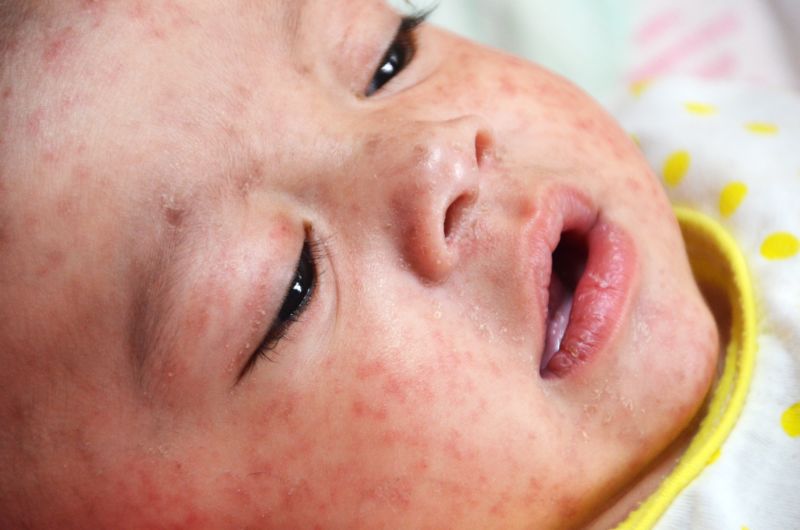
Enlarge / A baby with measles. CDC The Centers for Disease Control and Prevention is putting clinicians on alert about the growing r...

Popular Posts