Researchers may have finally figured out why it’s been so difficult to tell where the coronavirus SARS-CoV-2 — which causes COVID-19 — came from within the animal kingdom.
While most evidence suggests that the virus spread among bats before infecting people, a genetic analysis of it never identified a perfect match among known bat diseases. Now, scientists think that’s because SARS-CoV-2 is actually a genetic hybrid, Ars Technica reports: it seems to be the result of two separate viruses that swapped genes somewhere along the way.
The surface of SARS-CoV-2 is dotted with spike proteins that help it stick onto human cells, like biological Velcro. While the rest of its genetic code matches a bat virus, the portion of SAR-CoV-2’s genome that creates those spike proteins does not.
Instead, relevant genes appear to have come from a pangolin coronavirus, according to research published Friday in the journal Science Advances. At some point prior to infecting humans, the researchers believe, the two coronaviruses engaged in a process called recombination to create a hybrid that is now causing a pandemic in humans around the world.
Recombination can occur between two unrelated viruses — like a bat and pangolin coronavirus — if they’ve infected the same host, Ars Technica reports. One virus’s cellular machinery messes up while trying to reproduce itself, and the other virus takes over, inserting its genome into the partially-completed strand of genetic material.
On one hand, Ars Technica reports, the study explains the origin of SARS-CoV-2 in terms of natural biological processes, helping debunk the conspiracy theory that it was engineered in a lab.
But it also suggests that other hybrids could be out there, forming on their own in unknowing animal hosts — an ominous possibility.
Looting and vandalism in cities across the country have dealt another blow to small businesses that were already reeling from the coronavirus outbreak.
Along with big chain stores like Target, Walgreen and Macy’s, independent retailers in neighborhoods and downtown sections were targets of vandals and looters who struck as police mobilized to contain large demonstrations over the killing of George Floyd in Minneapolis.
Many businesses had been closed by state and local government orders as officials tried to contain the spread of the coronavirus, leaving owners with little or no revenue since March. Now, already facing an uncertain future amid ongoing restrictions related to the virus, owners must figure out how to rebuild or relocate their companies.
Over three nights, Ahmed Muhumud’s Minneapolis optician shop was vandalized, looted and burned, leaving Midtown Eye Care in ruins. The store was just getting back to business after having been shut since mid-March by the virus outbreak.
“This has been a difficult couple of months, and now with the protesters and everything that followed — it’s very difficult,” Muhumud said.
He’s trying to figure out what to do next; the building, which may not be salvageable, is in a hard-hit area with many minority-owned businesses that were also looted and burned.
“We don’t know where to move,” Muhumud said.
Small businesses employ nearly 60 million people, or nearly half the U.S. workforce. Since the coronavirus brought the U.S. economy to a virtual standstill, the government has loaned businesses hundreds of billions of dollars to help them survive and keep their employees on staff as unemployment soars toward 20%. But some won’t make it, and bankruptcies are already on the rise.
Even as they pick up pieces of broken glass and try to assess their losses, many owners say they understand the anger over the killing of Floyd, who died after a police officer pressed his knee into Floyd’s neck for several minutes even after he stopped moving and pleading for air.
Johnny Grimes reopened his hair salon in Birmingham, Alabama, on Sunday after being closed for two months due to the virus outbreak. That night the windows of the Wheelhouse Salon were shattered and the establishment looted.
As Grimes boarded up the salon Monday, he said he was devastated by what had happened to his business but was sympathetic with those who demonstrated against police brutality.
“I just hope that this isn’t all for nothing,” he said. “I hope that this does spark some kind of national conversation on race, racial reconciliation, police brutality and how the African American, the black community, is treated in America,” said Grimes, who is white.
Sam Mabrouk tried to save his denim clothing store from being vandalized and left barren amid demonstrations Friday in downtown Columbus, Ohio. Mabrouk, who arrived from Egypt over a decade ago, owns two retail stores in the city; one, 89 and Pine, was destroyed.
Mabrouk said he tried to convince the people ransacking his store and other minority-owned businesses nearby that he understood their cause and begged them to leave his store alone.
“I lost everything in one night,” Mabrouk said of the estimated $70,000 in stolen merchandise. “That was my savings from 11 years of working. That’s what hurts more than anything.”
Mabrouk had already lost business due to being shut down amid the virus outbreak but said he wouldn’t give up.
“Even if I only have a thousand pairs of jeans to sell and nothing else, I will start from there,” Mabrouk said.
In Boston, vandals shattered the front windows at Clarendon Wines Sunday night and stole much of the alcohol at the front of the shop in the city’s high-end Back Bay neighborhood.
“We never thought this could happen,” said Kayla Levine, a manager at the store that’s been family-owned since the 1940s. “Boston has been good about protests. They’ve been mostly peaceful. We were hoping for the best this time.”
Levine said she supported the mostly peaceful demonstrations but felt other people had taken advantage of Sunday’s protests to cause destruction.
“It’s just really sad because the message gets skewed,” she said.
Like other stores, Clarendon Wines has been contending with a steep drop in revenue due to the pandemic. The store normally relies heavily on workers in nearby office complexes for its sales, but those customers have been working from home.
The pandemic remains an issue for businesses that are able to keep operating because social distancing requirements and weak consumer spending are likely to limit their revenue and income. Many owners, especially restaurateurs, have been uncertain about the future because of the virus, and the violence following Floyd’s death has added to that uncertainty.
On Monday, one of Patrick & Co.’s two San Francisco stationery stores was held up at knifepoint; the thief took backpacks and threatened employees but no one was hurt. The attack came after both stores had windows broken and merchandise stolen, not only during the protests, but also twice as they were shut due to the pandemic.
Owner Jamie Patrick estimates that even with insurance reimbursement, the damage will cost between $15,000 and $20,000, a lot of money in the best of times for a small business, but harder to come up with when revenue is still down because of the pandemic.
“Having to replace windows and deal with everything else at this point is tough. But we stand with all the people who are protesting peacefully,” Patrick said.
Mercado, a Minneapolis marketplace for Latino retailers and restaurants, has been closed since March because of the virus outbreak. The restaurants planned to open for outdoor seating on Monday, but last week’s violence and looting has forced a delay, says Mercado general manager Eduardo Barrera.
The tenants have not yet visited Mercado, and so the damage was still being assessed, Barrera said.
“I have no idea when we’re going to begin coming back,” he said.
_____
Associated Press reporters Farnoush Amiris in Columbus, Ohio; Jay Reeves in Birmingham, Alabama; and Philip Marcelo in Boston contributed to this story.
On the morning of May 23, Daniel Thorson rejoined society after an absence of two and a half months.
He had spent that time in silent meditation in a cabin in remote northwestern Vermont, where he is part of a Buddhist monastic community. During his 75 days in isolation, his hair had grown out. The last snow of winter had melted, and the trees had budded. Frogs had come out of hibernation and begun peeping.
Mr. Thorson, a podcaster and enthusiastic online philosopher, had also missed 75 news cycles. And so, less than two hours after ending his silent retreat, Mr. Thorson logged back onto Twitter.
The last week was a strange one for Mr. Thorson, 33, a staff member at the Monastic Academy, as he tried to catch up with the changes that had taken place during his absence.
He learned of Boris Johnson’s hospitalization — and his recovery. He learned that meat packing plants had emerged as pockets of infection and death. He learned that his cousin had met her new love interest on a social-distance dating website. And that there is now such a thing as a Zoom channel devoted to ecstatic dance.
Re-engaging — with his mom, with the supermarket, with the internet — was at times intensely pleasurable. Other times it was just intense. He had trouble sleeping.
People wanted to talk to him. They compared him to Rip Van Winkle, the fictional character who falls asleep in the Catskills and wakes up 20 years later to discover that his beard is a foot long and the United States is no longer ruled by the British Crown.
It stunned him to discover that the many and various topics that interested him — global warming, electoral politics, the health care system — had been subsumed by a single topic of conversation, the coronavirus.
“While I was on retreat, there was a collective traumatic emotional experience that I was not a part of,” he said, on the second day. “To what degree do I have to piece it back together?”
Mr. Thorson is not the kind of Buddhist to shy from current events.
After graduating from college, he was an organizer for Occupy Wall Street, camping in Zuccotti Park in Lower Manhattan and engaging with pedestrians. He logged a few years with the Buddhist Geeks movement, promoting the use of online technology for enlightenment seeking. His podcast, Emerge, seeks to explore “the next phase of the human experiment.”
So he was eager, after ending his 75 days of silence, to see what was going on in the world.
“I was thinking, is it going to be Mad Max out there, like are we the last survivors?” he said. “How is humanity doing?”
After leaving the meditation center, the first evidence he saw was a gas station, and people coming in and out wearing shorts, a scene so characteristic of northern Vermont that he was deeply reassured.
“It’s Vermont,” he said. “Somebody’s getting gas.”
But a new set of impressions followed. He ventured into a Shaw’s supermarket, eager for human contact and what he found instead was anxiety. When he passed people, their eyes darted around, as if they were scanning for threats. One thing that seemed to scare them was Mr. Thorson, who hadn’t gotten the hang of social distancing.
“I would turn a corner in the grocery store, and someone would be there, and they would recoil,” he said. “I haven’t installed the Covid operating system. At first, I was, like, whoa, what did I do?”
He had looked forward to plunging back into his online world, a setting he had always found “nourishing.”
But when he reviewed two and a half months of posts from people he admires, he found, to his shock, that they were only talking about one thing. “Everything else is gone,” he said. “There’s nothing about the election! It’s amazing! The Australian wildfires, what happened there? Didn’t Brexit happen?”
But there was nothing close to a consensus.
“Everybody has extremely strongly held, very different opinions about everything: how dangerous it is, what the response should have been, how it’s going, whether or not we need to isolate, how to treat it if you get it,” he said. “There is one consensus proposition that, it seems to me, everybody holds. It’s that whatever happened in the last three months is one of the most significant events in modern history.”
Talking through the preceding months, he often felt he had stumbled into something painful, conflicts that dated back to March or April.
“People are so desperate to make sense of it,” he said.
And it was true, he had missed a lot of friction, even in the ideological bubble of a Buddhist monastic community in Vermont. In mid-March, Soryu Forall, the group’s head teacher, had just begun a weeklong silent retreat with a larger group of students. They had just ended communication with their families and the internet, when state governments began banning large gatherings and advising people to stay home.
Will protests set off a second viral wave of coronavirus?
Mass protests against police brutality that have brought thousands of people onto the streets in cities across America are raising the specter of new coronavirus outbreaks, prompting political leaders, physicians and public health experts to warn that the crowds could cause a surge in cases. While many political leaders affirmed the right of protesters to express themselves, they urged the demonstrators to wear face masks and maintain social distancing, both to protect themselves and to prevent further community spread of the virus. Some infectious disease experts were reassured by the fact that the protests were held outdoors, saying the open air settings could mitigate the risk of transmission.
How do we start exercising again without hurting ourselves after months of lockdown?
Exercise researchers and physicians have some blunt advice for those of us aiming to return to regular exercise now: Start slowly and then rev up your workouts, also slowly. American adults tended to be about 12 percent less active after the stay-at-home mandates began in March than they were in January. But there are steps you can take to ease your way back into regular exercise safely. First, “start at no more than 50 percent of the exercise you were doing before Covid,” says Dr. Monica Rho, the chief of musculoskeletal medicine at the Shirley Ryan AbilityLab in Chicago. Thread in some preparatory squats, too, she advises. “When you haven’t been exercising, you lose muscle mass.” Expect some muscle twinges after these preliminary, post-lockdown sessions, especially a day or two later. But sudden or increasing pain during exercise is a clarion call to stop and return home.
My state is reopening. Is it safe to go out?
States are reopening bit by bit. This means that more public spaces are available for use and more and more businesses are being allowed to open again. The federal government is largely leaving the decision up to states, and some state leaders are leaving the decision up to local authorities. Even if you aren’t being told to stay at home, it’s still a good idea to limit trips outside and your interaction with other people.
What’s the risk of catching coronavirus from a surface?
Touching contaminated objects and then infecting ourselves with the germs is not typically how the virus spreads. But it can happen. A number of studies of flu, rhinovirus, coronavirus and other microbes have shown that respiratory illnesses, including the new coronavirus, can spread by touching contaminated surfaces, particularly in places like day care centers, offices and hospitals. But a long chain of events has to happen for the disease to spread that way. The best way to protect yourself from coronavirus — whether it’s surface transmission or close human contact — is still social distancing, washing your hands, not touching your face and wearing masks.
What are the symptoms of coronavirus?
Common symptoms include fever, a dry cough, fatigue and difficulty breathing or shortness of breath. Some of these symptoms overlap with those of the flu, making detection difficult, but runny noses and stuffy sinuses are less common. The C.D.C. has also added chills, muscle pain, sore throat, headache and a new loss of the sense of taste or smell as symptoms to look out for. Most people fall ill five to seven days after exposure, but symptoms may appear in as few as two days or as many as 14 days.
How can I protect myself while flying?
If air travel is unavoidable, there are some steps you can take to protect yourself. Most important: Wash your hands often, and stop touching your face. If possible, choose a window seat. A study from Emory University found that during flu season, the safest place to sit on a plane is by a window, as people sitting in window seats had less contact with potentially sick people. Disinfect hard surfaces. When you get to your seat and your hands are clean, use disinfecting wipes to clean the hard surfaces at your seat like the head and arm rest, the seatbelt buckle, the remote, screen, seat back pocket and the tray table. If the seat is hard and nonporous or leather or pleather, you can wipe that down, too. (Using wipes on upholstered seats could lead to a wet seat and spreading of germs rather than killing them.)
How many people have lost their jobs due to coronavirus in the U.S.?
More than 40 million people — the equivalent of 1 in 4 U.S. workers — have filed for unemployment benefits since the pandemic took hold. One in five who were working in February reported losing a job or being furloughed in March or the beginning of April, data from a Federal Reserve survey released on May 14 showed, and that pain was highly concentrated among low earners. Fully 39 percent of former workers living in a household earning $40,000 or less lost work, compared with 13 percent in those making more than $100,000, a Fed official said.
How do I take my temperature?
Taking one’s temperature to look for signs of fever is not as easy as it sounds, as “normal” temperature numbers can vary, but generally, keep an eye out for a temperature of 100.5 degrees Fahrenheit or higher. If you don’t have a thermometer (they can be pricey these days), there are other ways to figure out if you have a fever, or are at risk of Covid-19 complications.
Should I wear a mask?
The C.D.C. has recommended that all Americans wear cloth masks if they go out in public. This is a shift in federal guidance reflecting new concerns that the coronavirus is being spread by infected people who have no symptoms. Until now, the C.D.C., like the W.H.O., has advised that ordinary people don’t need to wear masks unless they are sick and coughing. Part of the reason was to preserve medical-grade masks for health care workers who desperately need them at a time when they are in continuously short supply. Masks don’t replace hand washing and social distancing.
What should I do if I feel sick?
If you’ve been exposed to the coronavirus or think you have, and have a fever or symptoms like a cough or difficulty breathing, call a doctor. They should give you advice on whether you should be tested, how to get tested, and how to seek medical treatment without potentially infecting or exposing others.
He began to get emails and phone calls from his students’ families, insisting that he end the silent retreat. “Everyone wanted their children to come home immediately,” Mr. Forall said.
But he refused, saying they should be allowed to finish their week of silence.
“It was painful for the parents, painful for me,” he said. “It was a very strenuous time.”
He said he valued Mr. Thorson’s perspective precisely because he hadn’t lived through it.
“His clarity is just what the world needs now,” he said. “He’s been hit by all of it in one wave.”
And it was true: In his first days out, Mr. Thorson found himself in demand, the subject of intense curiosity.
“I feel like an oddity, I feel like a curiosity,” he said. “I don’t know what they expect me to say.”
Part of him wonders whether he needs to catch up on the clamor and dispute of the last months at all. And so he has taken a few small steps back, particularly from the internet. He has begun to regard his phone use, he said on the Stoa, a philosophy podcast, with fear.
“This whole thing is a hell of a drug,” he said. “It really, really, really has an impact on my nervous system.”
On day 3 after he returned to the modern world, Mr. Thorson restored color to the screen of his mobile phone, which had been locked in gray scale throughout his retreat. But he found that the colors now hurt his eyes. “The red on the phone is nothing like the red of a flower,” he said. “It was a kind of super-stimulating thing.”
And so, on day 4, he set it back to gray scale, and that is where it has remained.
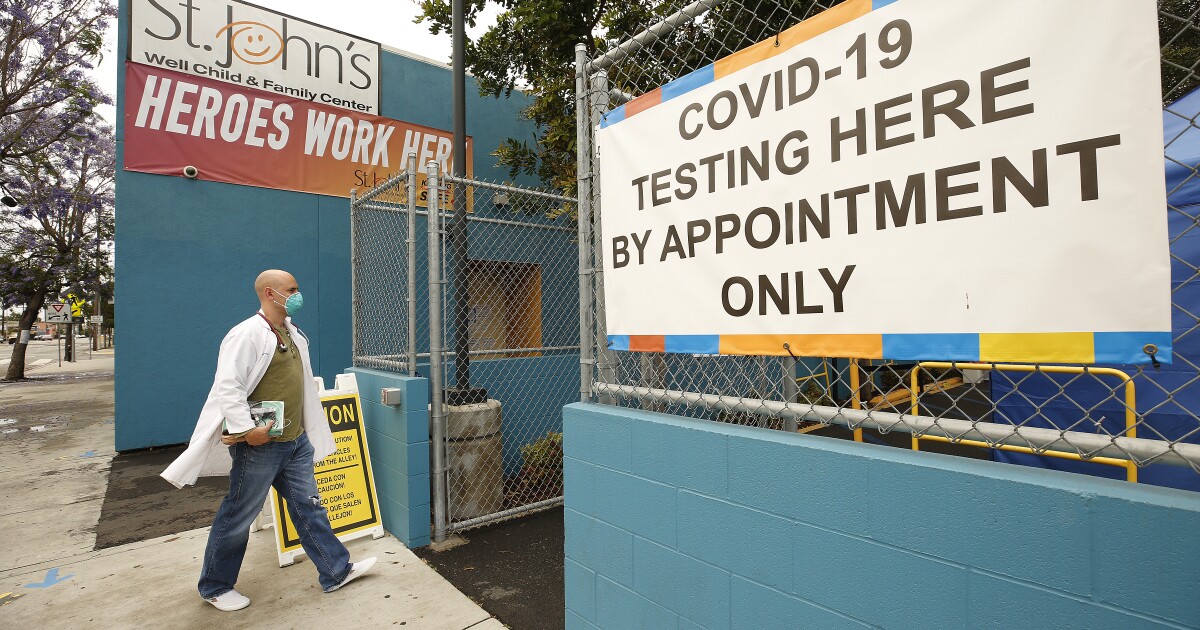
Los Angeles County officials have long stressed the need for residents to be tested for the coronavirus in an effort to prevent its spread, especially as more restrictions have been lifted in the county.
“We are continuing to ensure that our testing sites are safe for both patients and staff. Testing remains a priority as we continue to fight the spread of coronavirus in L.A. County,” said Dr. Christina Ghaly, director of the Los Angeles County Department of Health Services.
In Los Angeles, Dodger Stadium and Kedren Community Health Center remain the only sites where city officials will conduct tests Tuesday, after others have been shut down. Officials hope to reopen test centers Wednesday.
Advertisement
The county and city of Los Angeles oversee 30 testing sites, which are separate from a handful of state-run and independent locations throughout the area. At least 20 of those sites have been affected. Residents who had an appointment for tests were notified via phone or email, officials said. Those seeking appointments should check the county or city website for available appointments, or reach out to their medical practitioner.
Officials reported Tuesday an additional 60 deaths and 1,202 new cases. More than 57,000 people have been infected by the virus in L.A. County and 2,443 have died. Black communities have been hit especially hard, a reality that Los Angeles County Public Health Director Barbara Ferrer said Monday is tied to a system of unequal healthcare access that hurts marginalized communities. Ferrer said it was impossible to separate that inequality from the outrage over the death of Floyd, a black man in Minneapolis, in the custody of a police officer.
The coronavirus crisis is ongoing, officials said. Without a vaccine or medical therapies to combat the disease, changed behavior, including social distancing and masks, has led to modest improvements in slowing the virus’ impact.
But as crowds take to the streets and forego social distancing practices, it’s unclear if the virus will intensify its spread.
Advertisement
“I’m always worried about a surge,” Ferrer said Monday when asked whether she feared the protests could lead to an uptick in cases.
Political protest is one of two large gatherings allowed under the state and county order. The other is gatherings for religious worship.
Public health officials have instructed people, including protesters, to continue wearing face masks while in public and to maintain a six-foot distance from those in other households.
Advertisement
“Protesters who have had close contact with nonhousehold members not wearing face coverings, should when possible, self-quarantine at their residence for 14 days and monitor themselves for COVID-19 symptoms. If they develop symptoms, they should call their healthcare provider and consider testing,” officials said in a statement Tuesday.
Testing capacity has been one of the top priorities set by Gov. Gavin Newsom in allowing counties to ease stay-at-home restrictions. In L.A. County, officials were scrutinized for the lack of testing availability when the pandemic began. But in recent weeks, the county has expanded testing sites and has allowed all residents, both symptomatic and asymptomatic, to get tested in an effort to better understand the impact of the virus and prevent its widespread effects.
To date, nearly 612,000 of the county’s 10 million residents have been tested for the virus. Of those individuals, 8% have tested positive.
The county implemented a state of emergency Saturday night, just one day after allowing hair salons, barbershops and restaurants to fully reopen. Counties throughout the state have continued to ease modifications.
Advertisement
In Santa Clara County, officials announced that all in-store retail, outdoor dining, manufacturing, small service businesses, childcare and summer programs will be allowed to resume Friday.
“As a community and as a nation, we are experiencing some of the most difficult and challenging times many of us have ever experienced,” said County Health Officer Dr. Sara Cody. “The COVID-19 virus has had an impact on every aspect of our lives. It has been particularly devastating to low income communities and communities of color in our county and across our state and nation. This has been compounded by structural inequities that exist in our society that are unjust, persistent and damaging.”
The county pointed to increased testing as a key metric in its decision to continue lifting modifications.
COVID-19 - Latest - Google News
June 03, 2020 at 02:07AM
https://ift.tt/2z1hLus
Floyd protests: L.A. County reports 60 coronavirus deaths as test sites shut again - Los Angeles Times
COVID-19 - Latest - Google News
https://ift.tt/2VQ2gy8
Science's COVID-19 reporting is supported by the Pulitzer Center.
On its face, it was a major finding: Antimalarial drugs touted by the White House as possible COVID-19 treatments looked to be not just ineffective, but downright deadly. A study published on 22 May in The Lancet used hospital records procured by a little-known data analytics company called Surgisphere to conclude that coronavirus patients taking chloroquine or hydroxychloroquine were more likely to show an irregular heart rhythm—a known side effect thought to be rare—and were more likely to die in the hospital.
Within days, some large randomized trials of the drugs—the type that might prove or disprove the retrospective study’s analysis—screeched to a halt. Solidarity, the World Health Organization’s (WHO’s) megatrial of potential COVID-19 treatments, paused recruitment into its hydroxychloroquine arm, for example.
Related
But just as quickly, the Lancet results have begun to unravel—and Surgisphere, which provided patient data for two other high-profile COVID-19 papers, has come under withering online scrutiny from researchers and amateur sleuths. They have pointed out many red flags in the Lancet paper, including the astonishing number of patients involved and details about their demographics and prescribed dosing that seem implausible. “It began to stretch and stretch and stretch credulity,” says Nicholas White, a malaria researcher at Mahidol University in Bangkok.
Today, The Lancetissued an Expression of Concern (EOC) saying “important scientific questions have been raised about data” in the paper and noting that “an independent audit of the provenance and validity of the data has been commissioned by the authors not affiliated with Surgisphere and is ongoing, with results expected very shortly.”
Hours earlier, The New England Journal of Medicine (NEJM) issued its own EOC about a second study using Surgisphere data, published on 1 May. The paper reported that taking certain blood pressure drugs including angiotensin-converting enzyme (ACE) inhibitors didn’t appear to increase the risk of death among COVID-19 patients, as some researchers had suggested. (Several studies analyzing other groups of COVID-19 patients support the NEJM results.) “Recently, substantive concerns have been raised about the quality of the information in that database,” an NEJM statement noted. “We have asked the authors to provide evidence that the data are reliable.”
A third COVID-19 study using Surgisphere data has also drawn fire. In a preprint first posted in early April, Surgisphere founder and CEO Sapan Desai and co-authors conclude that ivermectin, an antiparasitic drug, dramatically reduced mortality in COVID-19 patients. In Latin America, where ivermectin is widely available, that study has led government officials to authorize the drug—although with precautions—creating a surge in demand in several countries.
Chicago-based Surgisphere has not publicly released the data underlying the studies, but today Desai told Science through a spokesperson that he was "arranging a nondisclosure agreement that will provide the authors of the NEJM paper with the data access requested by NEJM.”
Meanwhile, the questions swirling around the Lancet paper have left leaders of the halted chloroquine trials weighing whether to restart. “The problem is, we are left with all the damage that has been done,” says White, a co-investigator on a trial of hydroxychloroquine for COVID-19 prevention that was halted at the request of U.K. regulators last week. Headlines proclaiming deadly effects will make it hard to recruit patients to key studies, he says. “The whole world thinks now that these drugs are poisonous.”
A striking observation
Desai’s co-authors on the Lancet paper were cardiologist Mandeep Mehra of Harvard University’s Brigham and Women’s Hospital (BWH), cardiologist Frank Ruschitzka of the University Hospital Zürich, and cardiac surgeon Amit Patel, who listed affiliations with the University of Utah and HCA Research Institute in Nashville, Tennessee. Their study described an analysis of Surgisphere-provided electronic health record data from patients already treated for COVID-19 at 671 hospitals on six continents.
According to the paper, the analysis included nearly 15,000 patients prescribed chloroquine or hydroxychloroquine, alone or in combination with a class of antibiotics that has been suggested to boost its effects. A control group consisted of more than 81,000 patients who hadn’t gotten the experimental drugs. After controlling for potentially confounding factors such as age, race, pre-existing disease, and COVID-19 severity, the researchers found that the risk of dying in the hospital was 9.3% for the control group versus 23.8% for those getting hydroxychloroquine alongside an antibiotic—apparently the riskiest of the treatment combinations. The results echoed a preprint published last month, based on a much smaller group of patients in U.S. Veterans Health Administration medical centers, which suggested an increased risk of death for patients who were prescribed hydroxychloroquine alone (though not in combination with an antibiotic).
In 25 May media briefing, WHO Director-General Tedros Adhanom Ghebreyesus cited the Lancet results in announcing a “temporary pause” in Solidarity’s hydroxychloroquine arm. Regulators in France and the United Kingdom also instructed investigators, including White’s team, to halt enrollment in trials of the malaria drug. And Sanofi, which manufactures the branded hydroxychloroquine drug Plaquenil, said it would temporarily stop recruiting patients to its two clinical trials of the drug.
The Lancet authors acknowledged that their results needed confirmation from more rigorous randomized trials, but in an interview with TRT World, a Turkish channel for international news, Desai expressed confidence. “The real question is: With data like this, do we even need a randomized controlled trial?" he said.
Other researchers immediately took issue with the analysis. The study doesn’t properly control for the likelihood that patients getting the experimental drugs were sicker than the controls, says Matthew Semler, a critical care physician at Vanderbilt University. “If you have a physician sitting with two patients who have coronavirus, and the physician chooses to give one of them hydroxychloroquine, they’re doing it for a reason,” he says. The patient may be relying on high levels of supplemental oxygen, for example, or getting worse over time. But those kinds of details aren’t available about the patients in the Lancet study, he notes.
Other researchers were befuddled by the data themselves. Though 66% of the patients were reportedly treated in North America, the reported doses tended to be higher than the guidelines set by the U.S. Food and Drug Administration, White notes. The authors claim to have included 4402 patients in Africa, 561 of whom died, but it seems unlikely that African hospitals would have detailed electronic health records for so many patients, White says.
The study also reported more deaths in Australian hospitals than the country’s official COVID-19 death statistics, The Guardian reported. On 29 May, The Lancetissued a correction updating a supplemental table and saying that a hospital assigned to the study's “Australasia” group should have been assigned to Asia. “There have been no changes to the findings of the paper,” the correction notice said.
Deepening skepticism
The brief response left some researchers frustrated. “This was very, very annoying, that The Lancet were just going to let them write this absurd reply … without addressing any of the other concerns,” says James Watson, a statistician at Mahidol who on 28 May published an open letter to the journal and the study's co-authors, signed by more than 200 clinicians and researchers, that calls for the release of Surgisphere’s hospital-level data, an independent validation of the results, and publication of the peer review comments that led to the Lancet publication.
Today, many of the same researchers published an open letter to NEJM and the authors of the ACE inhibitor study, citing similar problems in that journal’s paper. The letter notes a discrepancy between the small number of hospitals in each country that are reported to have shared patient data with Surgisphere and the high proportion of those countries’ confirmed COVID-19 cases reported in the study. It also notes inconsistencies in the reported increases in the risk of COVID-19 death with increasing age of participants.
Mehra and Patel declined to speak to reporters about the various papers, referring inquiries to BWH, which released a statement on Mehra’s behalf this evening saying “independent of Surgisphere, the remaining co-authors of the recent studies published in The Lancet and The New England Journal of Medicine have initiated independent reviews of the data used in both papers after learning of the concerns that have been raised about the reliability of the database.” (Ruschitzka, who is on the Lancet paper, has not yet responded to Science’s requests for comment.)
Oddities also appear in the ivermectin study, says Carlos Chaccour of the Institute for Global Health in Barcelona, who knows the drug well because he’s studying its potential role in mosquito control. There’s evidence that ivermectin has antiviral properties, and a study from an Australian team published in Antiviral Research on 3 April showed that it inhibits SARS-CoV-2 in a test tube. A 6 April preprint co-authored by Patel, Desai, and Mehra, along with David Grainger of the University of Utah, used Surgisphere data reportedly collected at 169 hospitals around the world between 1 January and 1 March. It included three patients in Africa who received ivermectin—despite the fact that only two COVID-19 cases had been reported in all of Africa by 1 March, Chaccour and two colleagues note in a recent blog post.
Chaccour says after he inquired about the discrepancy, the authors posted a second, longer version of the manuscript on 19 April, containing data collected between 1 January and 31 March. (The first version was removed but Chaccour has archived it on his institute’s website.) The new manuscript contained data on 704 COVID-19 patients treated with ivermectin and 704 controls in 169 hospitals on three continents. It reported that ivermectin reduced the need for mechanical ventilation by 65% and slashed the death rate by 83%.
But the revision had other problems, Chaccour and his colleagues wrote in their blog post. For example, the mortality rate for patients who received mechanical ventilation but no ivermectin was just 21%, which is strikingly low; a recent case series from New York City area found that 88% of COVID-19 patients who needed ventilation died. Also, the data shown in a figure were wildly different from those reported in the text. (Science also attempted to reach Grainger, but received no reply to an email and call.)
The ivermectin study has had a significant impact in Latin America, where the drug is well known and often sold over the counter to treat scabies, Chaccour says. The Peruvian Health Ministry modified its COVID-19 treatment protocol to include ivermectin (as well as hydroxychloroquine) for mild and severe cases of COVID-19. Demand for the drug in Peru has surged, and in the San Martín de Porres district, police confiscated 20,000 bottles of veterinary ivermectin intended to be sold for human treatments. In Trinidad, Bolivia, the city government aimed to hand out more than 350,000 free doses of ivermectin after the country’s Ministry of Health authorized its use against COVID-19. Physicians in the Dominican Republic, Peru, and Chile, citing the test-tube study and the Surgisphere preprint, say they performed informal trials of ivermectin with COVID-19 patients and saw good outcomes.
(In a guest editorial in TheAmerican Journal of Hygiene and Tropical Medicine, Chaccour and three colleagues cautioned against the risks of using ivermectin without solid evidence and urged rigorous clinical trials. Eighteen such studies are ongoing, according to the website ClinicalTrials.gov, including one led by Chaccour in Pamplona, Spain.)
Surgisphere’s sparse online presence—the website doesn’t list any of its partner hospitals by name or identify its scientific advisory board, for example—have prompted intense skepticism. Physician and entrepreneur James Todaro of the investment fund Blocktown Capital wondered in a blog post why Surgisphere's enormous database doesn’t appear to have been used in peer-reviewed research studies until May. Another post, from data scientist Peter Ellis of the management consulting firm Nous Group, questioned how LinkedIn could list only five Surgisphere employees—all but Desai apparently lacking a scientific or medical background—if the company really provides software to hundreds of hospitals to coordinate the collection of sensitive data from electronic health records. (This morning, the number of employees on LinkedIn had dropped to three.) And Chaccour wonders how such a tiny company was able to reach data-sharing agreements with hundreds of hospitals around the world that use many different languages and data recording systems, while adhering to the rules of 46 different countries on research ethics and data protection.
Desai’s spokesperson responded to inquiries about the company by saying it has 11 employees and has been developing its database since 2008. Desai, through the spokesperson, also said of the company’s work with patient data: “We use a great deal of artificial intelligence and machine learning to automate this process as much as possible, which is the only way a task like this is even possible.”
What next?
The potential of hydroxychloroquine for treating COVID-19 has become a political flashpoint, and the questions around the Lancet paper have provided new fodder to the drug’s supporters. French microbiologist Didier Raoult, whose own widely criticized studies suggested a benefit from the drug, derided the new study in a video posted today, calling the authors “incompetent.” On social media, some speculated that the paper was part of a conspiracy against hydroxychloroquine.
For scientists running randomized trials of hydroxychloroquine, an urgent question has been how to respond to the paper and the many questions raised about it. Some studies were not halted at all. A hydroxychloroquine trial known as ORCHID, funded by the U.S. National Heart, Lung, and Blood Institute, opted to keep running after its data and safety monitoring board (DSMB) reviewed safety data from already enrolled participants, says Semler, a co-investigator on the study.
WHO’s paused Solidarity trial is awaiting a similar review from its DSMB, says Soumya Swaminathan, the organization’s chief scientist. The pause will allow time for a review of published studies and interim data from Solidarity itself, she says. WHO paused the trial to show investigators and potential study participants that the agency takes safety issues seriously, she says. “We want to reassure people that the WHO didn’t make any kind of value judgment on the use of hydroxychloroquine.”
But some say WHO had a knee-jerk reaction to a questionable study. “This is a drug that has been used for decades. It’s not like we know nothing about its safety,” says Miguel Hernán, a Harvard epidemiologist and co-investigator on an ongoing trial of hydroxychloroquine in Spain and Latin America for COVID-19 prevention in health care workers.
The controversy has been an unfortunate distraction, Hernán adds. “If you do something as inflammatory as this without a solid foundation, you are going to make a lot of people waste time trying to understand what is going on.”
Chaccour says both NEJM and TheLancet should have scrutinized the provenance of Surgisphere’s data more closely before publishing the studies. “Here we are in the middle of a pandemic with hundreds of thousands of deaths, and the two most prestigious medical journals have failed us,” he says.
With reporting by Rodrigo Pérez Ortega, Charlie Piller, and John Travis.
Health - Latest - Google News
June 03, 2020 at 06:55AM
https://ift.tt/2yXZ3Ux
A mysterious company's coronavirus papers in top medical journals may be unraveling - Science Magazine
Health - Latest - Google News
https://ift.tt/2zrj9Ud
Santa Clara and Alameda counties each recorded a death from coronavirus, and Contra Costa County went over 1,500 confirmed COVID-19 cases during the pandemic with its biggest one-day spike in six weeks, health officials said Tuesday.
Health departments in those counties updated their current statistics before 3 p.m. The numbers reflect totals through Monday night.
Santa Clara County has recorded 143 deaths since the pandemic started, the most in the 10-county Bay Area, while Alameda County has recorded the most cases with more than 3,500.
California: State hits daily high of new cases
The state recorded more than 3,000 positive cases for the second time in a week, adding 3,128 to its ledger, according to data compiled by this news organization. Overall, 115,302 infections have been diagnosed during the pandemic, and the latest seven-day average is 2,608 new cases, the highest since May 29.
A total of 47 new deaths Monday brought the state’s overall mark to 4,219.
The state has now administered 1.5 million tests for the virus, one reason health experts have said the number of new cases in the state continues to grow.
Santa Clara County: Another death for Bay Area leader
The latest death kept the county 46 ahead of Alameda County for the most in the Bay Area and was the second in two days in June. The county recorded 30 deaths in May.
An additional 17 new cases brought the number of confirmed COVID-19 cases to 2,819 for the pandemic, the Bay Area’s second-highest figure. Health officials have added an average of 21 new cases per day over the past week and about 20.5 over the past two.
Thirty-eight people remained in hospitals with COVID-19.
Contra Costa County: Worst one-day spike in six weeks
An additional 38 confirmed cases of the coronavirus marked the biggest single-day jump since April 21 and took the county past the 1,500 barrier. The 1,506 cases rank fifth in the Bay Area. Even with the spike, the county has averaged about 22 new cases a day over the past week. Richmond residents have seen 322 cases, the most in the county and more than twice the number (158) of Concord, which is No. 2.
Health officials also reduced the county’s death toll by one, back to 37. A death from another jurisdiction previously had been part of the total, health officials said.
There were 11 coronavirus patients in hospitals, down from 15 late last week.
Alameda County: More than 3,500 cases now confirmed
Another 45 cases were added, bringing the total to a Northern California-high of 3,515, a figure that ranks sixth in the state. Alameda County, which trailed Santa Clara County in confirmed cases for much of the pandemic, moved past the county two weeks ago and is more than 700 ahead of that county.
Oakland, with 1,267 cases (36%), has seen the most cases, while Hayward has seen the highest frequency of cases, with about 410 cases for every 100,000 people.
The one additional death brought that total to 97, the seventh-most in the state. Only four who have died have been under 51 years old.
There were 99 people hospitalized and 37 in the ICU.
San Mateo County: Fewer confirmed cases
Health officials added 23 cases, bringing the county’s county to 2,188. That’s the Bay Area’s fourth-highest total. The 23 cases were the fewest added since May 20; the county has averaged 40.5 per day over teh past week. San Mateo (533 cases, 24.3%) and Daly City (351, 16%) have seen the most cases.
The death toll remained at 84 and has not changed since May 29. Of the 84 deaths, only one victim has been below 50 years old, and 56 have been over 80.
In hospitals, 56 people were hospitalized with the virus and 27 were in the ICU. The county had 39 (44%) of its regular ICU beds available, as well as 261 (95%) of its surge ICU beds and 189 (93%) of its ventilators.
San Francisco: A three-day positive trend
Health officials added 17 confirmed cases, bringing the city’s total to 2,587, the Bay Area’s third-most. Over the past three days, though, they’ve added only 55 cases, four fewer than were added on Saturday. The county has averaged 26.9 new cases per day over the past week.
The number of total deaths remained at 43, and 51 people were hospitalized, 18 in the ICU. Another 26 patients were suspected to have it.
National Guard members walk at the area in the aftermath of a protest after a white police officer was caught on a bystander's video pressing his knee into the neck of African-American man George Floyd, who later died at a hospital, in Minneapolis, Minnesota, U.S., May 29, 2020.
Carlos Barria | Reuters
The Minnesota National Guard plans to test all of its deployed members for the coronavirus after one tested positive and nine others have reported symptoms, a spokesman told CNBC on Tuesday.
The state's National Guard has deployed nearly 7,000 officers in response to mass protests sparked by George Floyd's death, caused by a Minneapolis police officer who knelt on the unarmed black man's neck for nearly nine minutes, according to spokesman Scott Hawks.
"Upon activation, all of our members were screened for health readiness, including for symptoms of COVID-19," Lt. Col. Dean Stulz said in a statement, adding that one service member tested positive for Covid-19 and has been placed in isolation. "Screening and testing of those activated guard members has been a part of our plan since the earliest days, it is not a response action to having a positive result."
The state's National Guard is now developing plans to test every one of its deployed members for the coronavirus, Hawks said, though a timeline remains unknown. It's unclear when the infected service member tested positive and how much interaction they had with other service members and the public.
"We have made efforts to wear masks and to encourage social distancing where possible, however when you create a line to protect people or buildings you are shoulder to shoulder," Hawks said in a statement. "These are the required risks that we accept when in uniform to keep the public safe and restore peace and order."
The news comes as epidemiologists and public health specialists publicly worry that the mass protests, which have engulfed the nation, could allow the coronavirus to rapidly spread just as states begin to reopen large sectors of the economy.
Broad testing of everyone involved in the protests will be key to ensuring that the virus doesn't spread unchecked from the protests to new communities, said Dr. David Eisenman, director of the Center for Public Health and Disasters at UCLA.
Minnesota has processed 258,747 diagnostic tests for the coronavirus since March 6, according to data compiled by the Covid Tracking Project. Through May, the state of more than 5 million conducted about 5,780 tests per day on average, according to data from the volunteer effort founded by reporters at The Atlantic magazine.
Some health specialists and economists have repeatedly called for the U.S. to ramp up its ability to test broadly throughout the population. While the country's average daily number of tests nearly doubled in May compared with April, it still falls short of the massive testing programs some epidemiologists have called for.
"Now is the time when we need to be having testing more than ever, given the likelihood of spread," Eisenman said. "We need to be doing everything we can to protect those protesters and to protect the communities they go back into, the families they go back to every night."
The activities expected to take place at protests, such as yelling and chanting could prove to exacerbate spread of the virus, said epidemiologist Bob Bednarczyk at Emory University. People are forced into close contact at such protests where there's a lot of shouting and chanting, which are both factors that contribute to spread he said. He added that the use of tear gas on groups of protesters could also cause people to cough and spread the virus even more.
"I am very concerned about the use of tear gas to break up these protests," he said. "When there is a respiratory disease pandemic occurring, the use of a chemical that causes people to cough violently can lead to more spread of disease."
COVID-19 - Latest - Google News
June 03, 2020 at 05:07AM
https://ift.tt/36Ve8CC
Minnesota National Guard says it will test all of its deployed members for coronavirus after one tests positive amid George Floyd protests - CNBC
COVID-19 - Latest - Google News
https://ift.tt/2VQ2gy8