A new flu virus found in pigs in China has become more infectious to humans and needs to be watched closely in case it becomes a potential "pandemic virus", a new study has found.
A team of Chinese researchers looked at influenza viruses found in pigs from 2011 to 2018 and found a "G4" strain of H1N1 with "all the essential hallmarks of a candidate pandemic virus", according to the paper, which was published in the US journal, Proceedings of the National Academy of Sciences (PNAS).
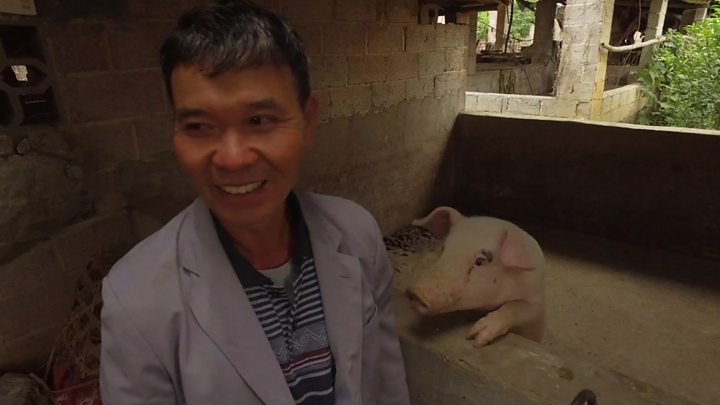
Workers on pig farms showed elevated levels of the virus in their blood, the authors said, adding that "close monitoring in human populations, especially the workers in the swine industry, should be urgently implemented.
"Pigs are intermediate hosts for the generation of pandemic influenza virus. Thus, systematic surveillance of influenza viruses in pigs is a key measure for prewarning the emergence of the next pandemic influenza," the study said.
The peer-reviewed study was authored by academics at the China Agricultural University, Shandong Agricultural University, the Chinese Center for Disease Control and Prevention, the Chinese Academy of Sciences, and the University of Nottingham.
'Mixing vessels'
The study highlights the risks of viruses crossing the species barrier into humans, especially in densely populated areas where millions live in close proximity to farms, breeding facilities, slaughterhouses and wet markets.
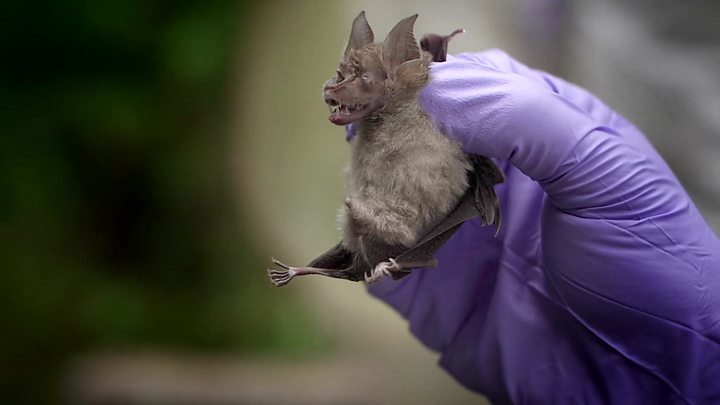
The novel coronavirus that caused the COVID-19 pandemic is believed to have originated in horseshoe bats in southwest China, and could have spread to humans via a seafood market in Wuhan, where the virus was first identified.
The PNAS study said pigs are considered important "mixing vessels" for the generation of pandemic influenza viruses and called for "systematic surveillance" of the problem.
China took action against an outbreak of avian H1N1 in 2009, restricting incoming flights from affected countries and putting tens of thousands of people into quarantine.
The new virus identified in the study is a recombination of the 2009 H1N1 variant and a once prevalent strain found in pigs.
But while it is capable of infecting humans, there is no imminent risk of a new pandemic, said Carl Bergstrom, a biologist at the University of Washington.
"There's no evidence that G4 is circulating in humans, despite five years of extensive exposure," he said on Twitter after the paper's publication. "That's the key context to keep in mind."
Brooklyn Nets center DeAndre Jordan has tested positive for the coronavirus and opted out of next month's Orlando, Florida, restart with his team, he announced Monday.
"Found out last night and confirmed again today that I've tested positive for Covid while being back in market," Jordan wrote on Twitter. "As a result of this, I will not be in Orlando for the resumption of the season."
Found out last night and confirmed again today that I've tested positive for Covid while being back in market. As a result of this, I will not be in Orlando for the resumption of the season.
Jordan's agent with Excel Sports informed management of the decision on Monday, sources said.
Jordan and guard Spencer Dinwiddie tested positive for COVID-19, though Dinwiddie has yet to officially rule himself out, he told The Athletic on Monday.
Forward Wilson Chandler told ESPN on Sunday that he opted out of the season's restart, citing family concerns.
Even prior to these positive tests, some Nets players -- like others on several NBA teams -- discussed the possibility of sitting out the restart in Orlando, sources said. As the Nets lose more players, it perhaps becomes easier for other key players to decide that there isn't a compelling competitive reason to travel and play.
The Nets are one of the 22 NBA teams scheduled to resume games on July 30 in Orlando, Florida. They are in seventh place in the Eastern Conference, a half-game ahead of the Orlando Magic for the final playoff spot.
The Nets haven't had organized team workouts at the team's Brooklyn facility for several days, sources said. NBA regulations mandate that current team workouts in marketplaces are socially distanced and include no contact among players. Teams won't start formal training camps until they arrive in Orlando in mid-July.
Teams must submit rosters of eligible players to the NBA on Wednesday. The Nets are signing free agent Justin Anderson as a substitute player for Chandler, agent Mark Bartelstein of Priority Sports told ESPN, and sources said the Nets plan to sign a substitute for Jordan, too.
A new strain of flu that has the potential to become a pandemic has been identified in China by scientists.
It emerged recently and is carried by pigs, but can infect humans, they say.
The researchers are concerned that it could mutate further so that it can spread easily from person to person, and trigger a global outbreak.
While it is not an immediate problem, they say, it has "all the hallmarks" of being highly adapted to infect humans and needs close monitoring.
As it's new, people could have little or no immunity to the virus.
The scientists write in the journal Proceedings of the National Academy of Sciences that measures to control the virus in pigs, and the close monitoring of swine industry workers, should be swiftly implemented.
Pandemic threat
A bad new strain of influenza is among the top disease threats that experts are watching for, even as the world attempts to bring to an end the current coronavirus pandemic.
The last pandemic flu the world encountered - the swine flu outbreak of 2009 that began in Mexico - was less deadly than initially feared, largely because many older people had some immunity to it, probably because of its similarity to other flu viruses that had circulated years before.
That virus, called A/H1N1pdm09, is now covered by the annual flu vaccine to make sure people are protected.
The new flu strain that has been identified in China is similar to 2009 swine flu, but with some new changes.
Media playback is unsupported on your device
So far, it hasn't posed a big threat, but Prof Kin-Chow Chang and colleagues who have been studying it, say it is one to keep an eye on.
The virus, which the researchers call G4 EA H1N1, can grow and multiply in the cells that line the human airways.
They found evidence of recent infection starting in people who worked in abattoirs and the swine industry in China.
Current flu vaccines do not appear to protect against it, although they could be adapted to do so if needed.
Prof Kin-Chow Chang, who works at Nottingham University in the UK, told the BBC: "Right now we are distracted with coronavirus and rightly so. But we must not lose sight of potentially dangerous new viruses."
While this new virus is not an immediate problem, he says: "We should not ignore it."
Prof James Wood, head of the Department of Veterinary Medicine at the University of Cambridge, said the work "comes as a salutary reminder" that we are constantly at risk of new emergence of pathogens, and that farmed animals, with which humans have greater contact than with wildlife, may act as the source for important pandemic viruses.
Nasal swabs from more than 30,000 Chinese pigs over 7 years found an increase in an avianlike influenza virus that has swapped genes from several strains.
What the world doesn’t need now is a pandemic on top of a pandemic. So a new finding that Chinese pigs are more and more frequently becoming infected with a strain of influenza that has the potential to jump to humans has infectious disease researchers worldwide taking serious notice. Robert Webster, an influenza investigator who recently retired from St. Jude Children’s Research Hospital, says it’s a “guessing game” as to whether this strain will mutate to readily transmit between humans, which it has not done yet. “We just do not know a pandemic is going to occur until the damn thing occurs,” Webster says, noting that China has the largest pig population in the world. “Will this one do it? God knows.”
When multiple strains of influenza viruses infect the same pig, they can easily swap genes, a process known as “reassortment.” The new study, published today in the Proceedings of the National Academy of Sciences, focuses on an influenza virus dubbed G4. The virus is a unique blend of three lineages: one similar to strains found in European and Asian birds, the H1N1 strain that caused the 2009 pandemic, and a North American H1N1 that has genes from avian, human, and pig influenza viruses.
The G4 variant is especially concerning because its core is an avian influenza virus—to which humans have no immunity—with bits of mammalian strains mixed in. “From the data presented, it appears that this is a swine influenza virus that is poised to emerge in humans,” says Edward Holmes, an evolutionary biologist at the University of Sydney who studies pathogens. “Clearly this situation needs to be monitored very closely.”
As part of a project to identify potential pandemic influenza strains, a team led by Liu Jinhua from the China Agricultural University (CAU) analyzed nearly 30,000 nasal swabs taken from pigs at slaughterhouses in 10 Chinese provinces, and another 1000 swabs from pigs with respiratory symptoms seen at their school’s veterinary teaching hospital. The swabs, collected between 2011 and 2018, yielded 179 swine influenza viruses, the vast majority of which were G4 or one of five other G strains from the Eurasian avianlike lineage. “G4 virus has shown a sharp increase since 2016, and is the predominant genotype in circulation in pigs detected across at least 10 provinces,” they write.
Sun Honglei, the paper’s first author, says G4’s inclusion of genes from the 2009 H1N1 pandemic “may promote the virus adaptation” that leads to human-to-human transmission. Therefore, “It’s necessary to strengthen the surveillance” of Chinese pigs for influenza viruses, says Sun, also at CAU.
Influenza viruses frequently jump from pigs to humans, but most do not then transmit between humans. Two cases of G4 infections of humans have been documented and both were dead-end infections that did not transmit to other people. “The likelihood that this particular variant is going to cause a pandemic is low,” says Martha Nelson, an evolutionary biologist at the U.S. National Institutes of Health’s Fogarty International Center who studies pig influenza viruses in the United States and their spread to humans. But Nelson notes that no one knew about the pandemic H1N1 strain, which jumped from pigs to people, until the first human cases surfaced in 2009. “Influenza can surprise us,” Nelson says. “And there’s a risk that we neglect influenza and other threats at this time” of COVID-19.
The new study offers but a tiny glimpse into swine influenza strains in China, which has 500 million pigs. While Nelson thinks the predominance of G4 in their analysis is an interesting finding, she says it’s hard to know whether its spread is a growing problem, given the relatively small sample size. “You’re really not getting a good snapshot of what is dominant in pigs in China,” she adds, stressing the need for more sampling in Chinese pigs.
In the paper, Sun and colleagues—including George Gao, head of the Chinese Center for Disease Control and Prevention—describe lab dish studies that show how G4s have become adept at infecting and copying themselves in human airway epithelial cells. The viruses also readily infected and transmitted between ferrets, a popular animal model used to study human influenza. The researchers found antibodies to the G4 strain in 4.4% of 230 people studied in a household survey—and the rate more than doubled in swine workers.
In addition to stepping up surveillance, Sun says it makes sense to develop a vaccine against G4 for both pigs and humans. Webster says at the very least, the seed stock to make a human vaccine—variants of a strain that grow rapidly in the eggs used to make a flu vaccine—should be produced now. “Making the seed stock is not a big deal, and we should have it ready,” Webster says.
China rarely uses influenza vaccines in swine. Nelson says U.S. farms commonly do, but the vaccine has little effect because it’s often outdated and doesn’t match circulating strains.
Ideally, Nelson says, we would produce a human G4 vaccine and have it in the stockpile, but that’s an involved process that requires substantial funding. “We need to be vigilant about other infectious disease threats even as COVID is going on because viruses have no interest in whether we’re already having another pandemic,” Nelson says.
Health - Latest - Google News
June 30, 2020 at 02:00AM
https://ift.tt/38dVzdI
Swine flu strain with human pandemic potential increasingly found in Chinese pigs - Science Magazine
Health - Latest - Google News
https://ift.tt/2zrj9Ud
It was the first abortion ruling since two judges appointed by President Trump joined the court. The vote was 5 to 4, with Chief Justice John Roberts Jr. voting with the court’s four-member liberal wing in the third major case in two weeks. Above, an anti-abortion activist in front of the Supreme Court in Washington today.
The court also let stand an appeals court ruling allowing the Trump administration to resume executions in federal death penalty cases after a 17-year hiatus. The order cleared the way for the executions of four men in the coming months.
Credit...Mike Blake/Reuters
2. Drug prices are back in focus as a coronavirus treatment cost is set.
The bill, which has no chance in the Senate, passed just hours after the Trump administration said it had secured 500,000 treatment courses of a drug to treat Covid-19, remdesivir. Gilead Sciences will charge $2,340 per course.
In Austin, Texas, two friends got a coronavirus test at the same emergency center. One of them paid in cash and was charged $199. The other, who paid with insurance, was charged $6,408. Experts say such differences arise because the government does not regulate prices.
The governors of New York and New Jersey, worried by the surge in coronavirus cases in the South and West, said they were reconsidering plans to allow indoor dining in the coming days.
Lawyers for the officers cited “multiple inappropriate public comments” from local officials that they said had already prejudiced potential jurors. Above, the defendants, from left to right, Derek Chauvin, Tou Thao, Alexander Kueng and Thomas Kiernan Lane.
The dying words “I can’t breathe” first came to wide attention after Eric Garner said them to the New York police officer who had him in a chokehold in 2014. They were Mr. Floyd’s last words to a Minneapolis officer.
But at least 70 people have died in law enforcement custody after saying “I can’t breathe” over the past decade, The Times found.
Credit...Doug Mills/The New York Times
4. President Trump is losing swing voters as he focuses on his base.
And only 17 percent of independents strongly approve of Mr. Trump’s job performance, the poll shows. Above, Trump supporters at a rally in Tulsa on Saturday.
“It’s not enough to win re-election,” said Sara Fagen, the White House political director for President George W. Bush.
Credit...Erin Schaff/The New York Times
5. Moves to combat hate on social media are growing.
The social networking website Reddit banned its biggest community devoted to President Trump, called “The_Donald” and home to more than 790,000 users, saying it had consistently allowed people to target and harass others with hate speech.
And Facebook has been hit by a growing boycott of advertisers, which are protesting its policies on misinformation and hate speech. Coca-Cola, Diageo, Starbucks, Levi Strauss and Patagonia have stopped ads on either all social networks or Facebook specifically.
Today, Mr. Trump retweeted a video of an armed white couple confronting protesters in St. Louis, a day after sharing on Twitter a video with a supporter yelling “white power.”
6. Nearly twice as many U.S. properties may be at risk of flooding as previously thought.
Cities as diverse as Fort Lauderdale, Fla., Buffalo, N.Y., and Chattanooga, Tenn., show a large gap in the risk assessments. In Chicago alone, 75,000 properties have a previously undisclosed flood risk.
The group did not give a reopening date. But many shows don’t expect a return to the stage until late winter or early spring, given the unpredictability of the pandemic.
And the 2021 edition of the Sundance Film Festival will be held simultaneously at theaters in its home town of Park City, Utah, and at least 20 other locales across the country, and perhaps in Mexico, too, because of the virus.
Credit...Chang W. Lee/The New York Times
9. The history of working from home has been strewn with failure.
Just ask IBM, Aetna, Best Buy, Bank of America, Yahoo, AT&T and Reddit, some of the companies that pulled back from telecommuting over the past decade.
Remote employees often felt marginalized, which made them less loyal. Creativity, innovation and serendipity seemed to suffer. While the technology is better today, and coronavirus fears may make flexible working permanent for many people, concerns remain.
“It’s good P.R., and very romantic, and very unrealistic,” warned one chief executive with a failed experiment under his belt. “We’ll be back in the office as soon as there’s a vaccine.”
Credit...Zack Wittman for The New York Times
10. And finally, if you have to work from home, how to Zoom Shirt.
The vast portion of the rest of us just slip into and out of our Zoom Shirt: a top typically kept on the back of the computer chair, ready the moment our webcam lights up.
Some people go to a one-garment extreme. Others rotate a couple of shirts, depending on the formality of the video call. Some take their Zoom Shirt on and off for every meeting, while others wear theirs all day.
Have a casual evening.
Your Evening Briefing is posted at 6 p.m. Eastern.