Rechercher dans ce blog

Wednesday, July 1, 2020

Amid Virus Surge, Republicans Abruptly Urge Masks Despite Trump’s Resistance - The New York Times

CHICAGO — Protesters marched on the State Capitol in Texas, holding signs declaring that masks equal “medical tyranny.” Lawsuits filed in Florida courts argue that mask laws violate constitutional rights. President Trump mocked former Vice President Joseph R. Biden Jr. for wearing a mask and has rarely worn one himself.

But even as some conservatives and libertarians have made opposition to masks a political cause, Republican governors and others in their party are suddenly trying to send a different message as the pandemic has hit hard in their home states, ending any notion that the coronavirus is not a real menace.

Vice President Mike Pence has abruptly begun regularly wearing and recommending a mask. Gov. Doug Ducey of Arizona, facing an uncontrolled outbreak of the coronavirus in his state, made a plea this week: “Arm yourself with a mask.” And Representative Liz Cheney of Wyoming tweeted a photograph of her father, the former vice president, wearing a fleece vest, cowboy hat and pale blue surgical mask covering his face. “Dick Cheney says WEAR A MASK,” she wrote, adding the hashtag “#realmenwearmasks.”

On Tuesday, Senator Lamar Alexander of Tennessee, the Republican chairman of the Senate Health Committee, appealed to the president himself: Wear a mask, Mr. Alexander implored, and end a dangerous partisan divide over the practice, with some Republicans shunning masks because Mr. Trump has declined to wear them.

“The stakes are too high,” Mr. Alexander said at a hearing, “for this political debate about pro-Trump, anti-Trump to continue.”

The sudden overtures have followed a surge in coronavirus outbreaks in several states, a spike in hospitalizations among younger people and a growing realization that the virus is once again out of control. But unlike in the earliest months of the pandemic, some of the hardest-hit areas are in the South and West.

The new entreaties follow months of misinformation, debate and confusion about the question of wearing a mask. Early in the pandemic, government officials instructed Americans not to buy or wear masks. In April, they revised that guidance, advising that cloth face coverings were recommended.

“Aristotle always said, a long time ago, that when you put a message on a blank slate, that first message is critical,” Dr. Robert Redfield, the director of the Centers for Disease Control and Prevention, said in an interview on Tuesday. “When you want to rechannel a message, it’s always a problem.”

State and local officials have carved out their own rules along the way, making masks mandatory in some places and a mere suggestion in others.

Resistance to masks began with Mr. Trump, who, as the C.D.C. urged Americans to wear face coverings, stressed that the measure was voluntary, and said, “I don’t think I’m going to be doing it.”

The president has continued to resist wearing a mask and views it as a “personal choice,” his spokeswoman said on Monday, a stance that has led many of his supporters to refuse to wear one, even in cities and businesses where they are required. Mr. Trump has repeatedly downplayed the severity and danger of the virus, and some of his supporters have responded with similar doubts.

“The problem there is that the issue has become a political issue and people have lost sight of the fact that the enemy is the virus,” said Dr. David Persse, the health authority at the Houston Health Department. “People have decided that the enemy is some sort of a political agenda.”

Initially, many Republicans had followed Mr. Trump’s lead. But the recent chorus of encouragement on mask-wearing has come from all directions: on the Senate floor and on social media, from Republicans who are no longer in office and from those whose states are experiencing an alarming uptick in coronavirus cases.

On Monday, Gov. Brian Kemp of Georgia posted a selfie wearing a mask decorated with the University of Georgia’s bulldog mascot. “Wear your mask, Georgia — and go Dawgs!” he wrote.

Senator Mitch McConnell of Kentucky, who regularly wears a mask in public, said in Washington this week that there must be “no stigma” about wearing masks. “Wearing simple face coverings is not about protecting ourselves, it is about protecting everyone we encounter,” he said.

Credit...Anna Moneymaker/The New York Times

Dennis Bonnen, the Republican speaker of the Texas House of Representatives, has been outspoken on the necessity of mask-wearing in order to reopen the state’s economy.

“It’s time to stand up to the mask naysayers who speak loudly but act irresponsibly,” he said in a statement last week.

They have echoed messages from some other Republicans, including Gov. Larry Hogan of Maryland and Gov. Mike DeWine of Ohio, who routinely wear them and urge their constituents to do the same. Democratic officials have overwhelmingly endorsed face masks, arguing for months that they are a valuable tool in slowing the spread of the virus, particularly indoors and in crowded places where social distancing is impossible.

“We have been trying to work against the headwinds of partisanship on face masks,” Gov. Gavin Newsom of California, a Democrat, said in an interview on Wednesday.

Most of the public does not appear to have an aversion to masks. In a New York Times/Siena College poll published last week, 54 percent of people said they always wear a mask when they expect to be in proximity to other people, while another 22 percent said they usually wear a mask. Just 22 percent said they rarely or never wear a mask.

But pleas to wear masks have not always been received warmly by constituents. Mr. DeWine said he had struggled to convince the public of the usefulness of masks in fighting the spread of a highly contagious virus — in part because the C.D.C. has been inconsistent in its guidance.

“We certainly were hindered by some of the health messages coming out from C.D.C. and others,” Mr. DeWine said. “We had mixed messages that were not helpful.”

In the early weeks of the coronavirus pandemic, the directive from administration officials, governors and mayors was clear: There is no need for most people to wear masks.

By the start of February, the C.D.C. issued its first formal guidance on its website, saying that the agency “does not currently recommend the use of face masks among the general public.”

“Seriously people — STOP BUYING MASKS!” Jerome M. Adams, the U.S. surgeon general, tweeted later that month.

At that time, the mask-wearing guidance rested on several points: that medical masks needed to be reserved for medical workers, that they may offer a false sense of security, that they are often improperly worn and, most important, that they likely would not offer much protection from the virus.

But evidence grew in February and March that the virus was being spread by asymptomatic people, and in April, the C.D.C. changed course, advising that cloth face coverings were recommended.

“The reality was that it was based on data and science,” Dr. Redfield said on Tuesday, adding that as soon as the agency had “significant” evidence that asymptomatic transmission was occurring, it moved to recommend face coverings.

“We believe that wearing a face covering is a critically important tool,” he said. “It’s our best weapon to intervene with human-to-human transmission right now.”

Credit...Pool photo by Al Drago

Local and state public health officials, who have extensive experience fighting infectious disease, joined the consensus that face masks were critical in combating the coronavirus.

At the same time, a small but vocal opposition to masks was emerging.

Groups that fiercely opposed restrictions, including stay-at-home orders and closures of businesses and schools, began holding rallies in state capitals in April, organizing on Facebook and flouting directives from health officials to observe social distancing and wear masks.

  • Frequently Asked Questions and Advice

    Updated June 30, 2020

    • What are the symptoms of coronavirus?

      Common symptoms include fever, a dry cough, fatigue and difficulty breathing or shortness of breath. Some of these symptoms overlap with those of the flu, making detection difficult, but runny noses and stuffy sinuses are less common. The C.D.C. has also added chills, muscle pain, sore throat, headache and a new loss of the sense of taste or smell as symptoms to look out for. Most people fall ill five to seven days after exposure, but symptoms may appear in as few as two days or as many as 14 days.

    • Is it harder to exercise while wearing a mask?

      A commentary published this month on the website of the British Journal of Sports Medicine points out that covering your face during exercise “comes with issues of potential breathing restriction and discomfort” and requires “balancing benefits versus possible adverse events.” Masks do alter exercise, says Cedric X. Bryant, the president and chief science officer of the American Council on Exercise, a nonprofit organization that funds exercise research and certifies fitness professionals. “In my personal experience,” he says, “heart rates are higher at the same relative intensity when you wear a mask.” Some people also could experience lightheadedness during familiar workouts while masked, says Len Kravitz, a professor of exercise science at the University of New Mexico.

    • I’ve heard about a treatment called dexamethasone. Does it work?

      The steroid, dexamethasone, is the first treatment shown to reduce mortality in severely ill patients, according to scientists in Britain. The drug appears to reduce inflammation caused by the immune system, protecting the tissues. In the study, dexamethasone reduced deaths of patients on ventilators by one-third, and deaths of patients on oxygen by one-fifth.

    • What is pandemic paid leave?

      The coronavirus emergency relief package gives many American workers paid leave if they need to take time off because of the virus. It gives qualified workers two weeks of paid sick leave if they are ill, quarantined or seeking diagnosis or preventive care for coronavirus, or if they are caring for sick family members. It gives 12 weeks of paid leave to people caring for children whose schools are closed or whose child care provider is unavailable because of the coronavirus. It is the first time the United States has had widespread federally mandated paid leave, and includes people who don’t typically get such benefits, like part-time and gig economy workers. But the measure excludes at least half of private-sector workers, including those at the country’s largest employers, and gives small employers significant leeway to deny leave.

    • Does asymptomatic transmission of Covid-19 happen?

      So far, the evidence seems to show it does. A widely cited paper published in April suggests that people are most infectious about two days before the onset of coronavirus symptoms and estimated that 44 percent of new infections were a result of transmission from people who were not yet showing symptoms. Recently, a top expert at the World Health Organization stated that transmission of the coronavirus by people who did not have symptoms was “very rare,” but she later walked back that statement.

    • What’s the risk of catching coronavirus from a surface?

      Touching contaminated objects and then infecting ourselves with the germs is not typically how the virus spreads. But it can happen. A number of studies of flu, rhinovirus, coronavirus and other microbes have shown that respiratory illnesses, including the new coronavirus, can spread by touching contaminated surfaces, particularly in places like day care centers, offices and hospitals. But a long chain of events has to happen for the disease to spread that way. The best way to protect yourself from coronavirus — whether it’s surface transmission or close human contact — is still social distancing, washing your hands, not touching your face and wearing masks.

    • How does blood type influence coronavirus?

      A study by European scientists is the first to document a strong statistical link between genetic variations and Covid-19, the illness caused by the coronavirus. Having Type A blood was linked to a 50 percent increase in the likelihood that a patient would need to get oxygen or to go on a ventilator, according to the new study.

    • How many people have lost their jobs due to coronavirus in the U.S.?

      The unemployment rate fell to 13.3 percent in May, the Labor Department said on June 5, an unexpected improvement in the nation’s job market as hiring rebounded faster than economists expected. Economists had forecast the unemployment rate to increase to as much as 20 percent, after it hit 14.7 percent in April, which was the highest since the government began keeping official statistics after World War II. But the unemployment rate dipped instead, with employers adding 2.5 million jobs, after more than 20 million jobs were lost in April.

    • How can I protect myself while flying?

      If air travel is unavoidable, there are some steps you can take to protect yourself. Most important: Wash your hands often, and stop touching your face. If possible, choose a window seat. A study from Emory University found that during flu season, the safest place to sit on a plane is by a window, as people sitting in window seats had less contact with potentially sick people. Disinfect hard surfaces. When you get to your seat and your hands are clean, use disinfecting wipes to clean the hard surfaces at your seat like the head and arm rest, the seatbelt buckle, the remote, screen, seat back pocket and the tray table. If the seat is hard and nonporous or leather or pleather, you can wipe that down, too. (Using wipes on upholstered seats could lead to a wet seat and spreading of germs rather than killing them.)

    • What should I do if I feel sick?

      If you’ve been exposed to the coronavirus or think you have, and have a fever or symptoms like a cough or difficulty breathing, call a doctor. They should give you advice on whether you should be tested, how to get tested, and how to seek medical treatment without potentially infecting or exposing others.


One group, passing itself off as a government entity called the Freedom to Breathe Agency, sold fraudulent cards on the internet that allowed users to claim a medical exemption to masks.

Some of the anti-mask fury was directed at businesses that required masks to enter. Bystanders captured cellphone videos of angry mask skeptics hurling produce in the aisles of grocery stores before storming out. Employees wearily endured verbal harangues from customers.

Some businesses have lost patience.

Hugo’s Tacos, a taqueria in Los Angeles, said this week that it was temporarily closing its two locations after a barrage of attacks from customers who refused to wear masks.

“Staff have been harassed, called names, and had objects and liquids thrown at them,” a message on its website says. “A mask isn’t symbolic of anything other than our desire to keep our staff healthy.”

The message adds, “Thank you to the majority of our guests who are always respectful and kind.”

Credit...Sergio Flores/Reuters

In recent days, as new coronavirus cases climbed, state and local officials have anxiously looked for ways to tamp down outbreaks. They have frequently turned to the same tool: face masks.

Governor Newsom, eyeing an explosion of cases in California, instituted mandatory masking statewide on June 18. In Jacksonville, Fla., where the Republican convention is expected to be held in August, city officials issued an order on Monday making masks mandatory indoors, joining scores of cities across the country.

Face masks will soon be mandated in at least 19 states, including New York, Illinois, Massachusetts and Kansas, whose Democratic governor, Laura Kelly, on Monday said she would issue an executive order requiring their use in public.

Ms. Kelly said that as cases continue to rise in that state, a mask mandate offered the best route to maintaining public safety while allowing businesses to remain open.

“I do expect that there will be some who will be outraged by this order,” she acknowledged at a news conference.

Some Republicans in Kansas immediately registered opposition, arguing against a uniform policy for a state with both urban and suburban areas as well as vast rural expanses, even though the virus is highly contagious and has affected both densely and sparsely populated communities.

“A lot of people take their liberty quite seriously — they prefer to have education and make informed decisions, as opposed to a mandate,” said Mike Kuckelman, the chairman of the Kansas Republican Party. “This just seems heavy-handed and unnecessary for large portions of our state.”

In Texas churches last weekend, the tension among conservatives was evident. At a Sunday service in Dallas, Mr. Pence said masks were “a good idea” and pointedly wore one.

But the night before, at a megachurch in Houston, a well-known pastor, Ed Young, received applause from the socially distanced congregation after declaring that masks should be voluntary.

“You can wear a mask, or you can not wear a mask,” he said. “Oh my goodness, tell everybody, you have to wear a mask? We don’t do business that way.”

Credit...Saul Martinez for The New York Times

In Palm Beach County, Fla., local officials debated last week whether to adopt an indoor mask mandate and heard testimony from residents who were deeply opposed to the measure.

Commissioner Melissa McKinlay said the commenters, even as their speeches ricocheted around social media, did not reflect the opinion of most residents. The mandate unanimously passed.

“The fact that we were spending time — so much time — debating whether or not to wear a mask takes away time from when we should be debating getting grants to our small businesses or getting testing done,” she said. “Geez, pick your battle. My battle is to keep people safe. I shouldn’t have to argue about whether or not to put a mask on.”

Reporting was contributed by Steve Eder from New York, David Goodman from Houston, Katie Glueck from Leawood, Kan., Patricia Mazzei from Miami, Melina Delkic from St. Louis, and Sheryl Stolberg from Washington.

Let's block ads! (Why?)


"virus" - Google News
July 02, 2020 at 07:02AM
https://ift.tt/2YPT1iL

Amid Virus Surge, Republicans Abruptly Urge Masks Despite Trump’s Resistance - The New York Times
"virus" - Google News
https://ift.tt/2OagXru

Coronavirus Briefing: What Happened Today - The New York Times

This is the Coronavirus Briefing, an informed guide to the global outbreak. Sign up here to get the briefing by email.


When the protests against police brutality erupted nationwide, there were fears that the large gatherings could be breeding grounds for the coronavirus. Now, a month after the first demonstrations, we’re wondering: What effect have the protests had on the spread of the virus?

For insight we turned to Mitch Smith, a reporter at The Times who is tracking Covid-19 cases. While he and his team are still collecting data, Mitch told us that they have reached out to health officials in 140 cities and counties where there have been protests and have researched protest-linked cases from local news reports.

“So far we have confirmed more than 50 people who were at protests, either protesting or working, who were later found to have had the virus,” Mitch told us. “But we are not aware of any place where there’s been a major cluster tied to protests. I mean, we’ve tied more cases to a single restaurant in East Lansing, Mich., in the last week than we have to every protest in the country.”

Mitch’s data comes with a few caveats. He told us that his numbers are certainly an undercount: Not every health department gave him data, some departments are not tracking protest-linked cases, and some demonstrators who contracted the virus may not have revealed that information to the government. And in some cities with large protests, like Atlanta, Seattle and Los Angeles, cases are on the rise — though many other cities with protests have not seen a similar increase.

“That said, I think there’s a growing consensus that we haven’t yet seen the cataclysmic results like we’ve feared we could,” Mitch told us.

A new working paper from the National Bureau of Economic Research backs up that theory. It examined protests in 315 of the largest U.S. cities and found no evidence that protests reignited growth in cases in the three weeks after the events. Officials in Minnesota tested 3,300 people who participated in Black Lives Matter protests and found they had a lower positive rate than the surrounding community.

“I’d be shocked if there weren’t additional protest cases that we just don’t know about,” Mitch told us. “But we’re a month in now, and so far we’re not seeing a direct line between protests and huge clusters.”


The coronavirus is far from being under control, but the next global health crisis may already be on the horizon. A strain of the H1N1 swine flu virus is spreading silently in farm workers in China and needs to be controlled “urgently,” a new study warns.

H1N1 is highly transmissible and sparked a pandemic in 2009, killing about 285,000 people. A newer strain, known as G4 EA H1N1, has been common on Chinese pig farms since 2016, the study found, and has become a growing problem. The virus replicates efficiently in human airways, and though it has infected people without causing disease so far, mutations could change that.

The findings are based on a yearslong observation of pigs in 10 Chinese provinces and hundreds of blood samples from farm workers and people in nearby households. More than 10 percent of the workers and 4 percent of the residents tested positive for the H1N1 strain. Young workers were the most affected, with a fifth of those aged 18 to 35 becoming infected.

But another pandemic can be avoided. Controlling the spread of H1N1 in pigs and monitoring humans for the virus are crucial, the researchers say. One critical next step will be figuring out whether any of the workers got the virus from other humans or spread it to their families.

A promising step: A Covid-19 vaccine has been cleared for military use in China after clinical trials proved it was safe and showed some efficacy, the maker, CanSino Biologics, said.

  • Frequently Asked Questions and Advice

    Updated June 30, 2020

    • What are the symptoms of coronavirus?

      Common symptoms include fever, a dry cough, fatigue and difficulty breathing or shortness of breath. Some of these symptoms overlap with those of the flu, making detection difficult, but runny noses and stuffy sinuses are less common. The C.D.C. has also added chills, muscle pain, sore throat, headache and a new loss of the sense of taste or smell as symptoms to look out for. Most people fall ill five to seven days after exposure, but symptoms may appear in as few as two days or as many as 14 days.

    • Is it harder to exercise while wearing a mask?

      A commentary published this month on the website of the British Journal of Sports Medicine points out that covering your face during exercise “comes with issues of potential breathing restriction and discomfort” and requires “balancing benefits versus possible adverse events.” Masks do alter exercise, says Cedric X. Bryant, the president and chief science officer of the American Council on Exercise, a nonprofit organization that funds exercise research and certifies fitness professionals. “In my personal experience,” he says, “heart rates are higher at the same relative intensity when you wear a mask.” Some people also could experience lightheadedness during familiar workouts while masked, says Len Kravitz, a professor of exercise science at the University of New Mexico.

    • I’ve heard about a treatment called dexamethasone. Does it work?

      The steroid, dexamethasone, is the first treatment shown to reduce mortality in severely ill patients, according to scientists in Britain. The drug appears to reduce inflammation caused by the immune system, protecting the tissues. In the study, dexamethasone reduced deaths of patients on ventilators by one-third, and deaths of patients on oxygen by one-fifth.

    • What is pandemic paid leave?

      The coronavirus emergency relief package gives many American workers paid leave if they need to take time off because of the virus. It gives qualified workers two weeks of paid sick leave if they are ill, quarantined or seeking diagnosis or preventive care for coronavirus, or if they are caring for sick family members. It gives 12 weeks of paid leave to people caring for children whose schools are closed or whose child care provider is unavailable because of the coronavirus. It is the first time the United States has had widespread federally mandated paid leave, and includes people who don’t typically get such benefits, like part-time and gig economy workers. But the measure excludes at least half of private-sector workers, including those at the country’s largest employers, and gives small employers significant leeway to deny leave.

    • Does asymptomatic transmission of Covid-19 happen?

      So far, the evidence seems to show it does. A widely cited paper published in April suggests that people are most infectious about two days before the onset of coronavirus symptoms and estimated that 44 percent of new infections were a result of transmission from people who were not yet showing symptoms. Recently, a top expert at the World Health Organization stated that transmission of the coronavirus by people who did not have symptoms was “very rare,” but she later walked back that statement.

    • What’s the risk of catching coronavirus from a surface?

      Touching contaminated objects and then infecting ourselves with the germs is not typically how the virus spreads. But it can happen. A number of studies of flu, rhinovirus, coronavirus and other microbes have shown that respiratory illnesses, including the new coronavirus, can spread by touching contaminated surfaces, particularly in places like day care centers, offices and hospitals. But a long chain of events has to happen for the disease to spread that way. The best way to protect yourself from coronavirus — whether it’s surface transmission or close human contact — is still social distancing, washing your hands, not touching your face and wearing masks.

    • How does blood type influence coronavirus?

      A study by European scientists is the first to document a strong statistical link between genetic variations and Covid-19, the illness caused by the coronavirus. Having Type A blood was linked to a 50 percent increase in the likelihood that a patient would need to get oxygen or to go on a ventilator, according to the new study.

    • How many people have lost their jobs due to coronavirus in the U.S.?

      The unemployment rate fell to 13.3 percent in May, the Labor Department said on June 5, an unexpected improvement in the nation’s job market as hiring rebounded faster than economists expected. Economists had forecast the unemployment rate to increase to as much as 20 percent, after it hit 14.7 percent in April, which was the highest since the government began keeping official statistics after World War II. But the unemployment rate dipped instead, with employers adding 2.5 million jobs, after more than 20 million jobs were lost in April.

    • How can I protect myself while flying?

      If air travel is unavoidable, there are some steps you can take to protect yourself. Most important: Wash your hands often, and stop touching your face. If possible, choose a window seat. A study from Emory University found that during flu season, the safest place to sit on a plane is by a window, as people sitting in window seats had less contact with potentially sick people. Disinfect hard surfaces. When you get to your seat and your hands are clean, use disinfecting wipes to clean the hard surfaces at your seat like the head and arm rest, the seatbelt buckle, the remote, screen, seat back pocket and the tray table. If the seat is hard and nonporous or leather or pleather, you can wipe that down, too. (Using wipes on upholstered seats could lead to a wet seat and spreading of germs rather than killing them.)

    • What should I do if I feel sick?

      If you’ve been exposed to the coronavirus or think you have, and have a fever or symptoms like a cough or difficulty breathing, call a doctor. They should give you advice on whether you should be tested, how to get tested, and how to seek medical treatment without potentially infecting or exposing others.


  • In Arizona, which announced a record 4,600 new cases today, Gov. Doug Ducey ordered a 30-day pause on the operations of bars, gyms, movie theaters and water parks, and he banned gatherings of 50 or more people.

  • California had its highest single-day case count yesterday — more than 7,000 — as total infections in the state surpassed 200,000. One hot spot has been the San Quentin prison, where nearly one-third of its 3,700 inmates have been infected.

  • In North Carolina, more than 80 soldiers in a class of about 110 have tested positive for the virus after three weeks of survival training.

  • In Australia, parts of Melbourne will be on lockdown starting tomorrow night after a spike in new cases.

  • Here’s a roundup of restrictions in all 50 states.


  • At a Senate health committee hearing today, Senator Lamar Alexander, the Republican committee chairman, urged President Trump to set a better example on masks.

  • In the town where Italy’s first registered victim lived, 40 percent of the cases showed no symptoms, a new study found.

  • The governors of New York, New Jersey and Connecticut called for visitors from California and several other states to quarantine for 14 days upon arriving.

  • What does Europe’s travel ban mean for Americans? Here’s everything you need to know.

  • The virus devastated one family in New Jersey, killing five members and infecting at least 19 others. Now, the survivors are taking part in research to help find a remedy.

  • Many workers in the U.S. are being laid off a second time as case surges put reopenings on hold, The Washington Post reports.

  • For homebound workers, the “Zoom Shirt” — a top, typically kept on the back of the computer chair or a nearby hanger, thrown on moments before a meeting starts — is the breakout garment of quarantine.


I am searching for our family history. So far I have found five generations including myself, my children, my mother, grandparents and great-grandparents, some of whom were abolitionists with a possible Underground Railroad station on the Wisconsin River just south of town.

— Florence Mary Bird, Spring Green, Wis.

Let us know how you’re dealing with the outbreak. Send us a response here, and we may feature it in an upcoming newsletter.

Sign up here to get the briefing by email.


Let's block ads! (Why?)


Health - Latest - Google News
July 01, 2020 at 04:11PM
https://ift.tt/2VuO259

Coronavirus Briefing: What Happened Today - The New York Times
Health - Latest - Google News
https://ift.tt/2zrj9Ud

Did Floyd Protests Lead to a Virus Surge? Here’s What We Know - The New York Times

For more than two months, the authorities had been urging New Yorkers to stay indoors and keep their distance from others. But after the police killed George Floyd in Minneapolis, tens of thousands of New Yorkers poured into the streets, day and night, to protest police brutality and racism.

Epidemiologists braced for a surge of new coronavirus cases. But it has not come yet.

On May 27, the day before the protests began in New York City, some 754 Covid-19 cases were diagnosed, according to the city’s Department of Health. That was the last time the city recorded more than 700 cases on a single day.

By the end of the first week of protests, the city was recording slightly more than 500 cases a day. By the end of the second week of protests, the case counts were in the low 400s or high 300s a day. They’ve continued to drop slightly. The last time New York City recorded more than 300 cases was on June 22.

“We’ve been looking very closely at the number of positive cases every day to see if there is an uptick in the context of the protests,” Ted Long, executive director of the city’s contact tracing program, said. “We have not seen that.”

In interviews, several epidemiologists expressed either surprise or relief, and offered theories for what occurred. This is what we know:

The lockdown enacted in March worked. By the end of May, when the protests began, the virus was not as prevalent in New York as it had been when the lockdown began.

“It seems we in New York City did achieve a substantial decrease in the number of cases so that made the odds of encountering a case of Covid-19 in these protests quite low,” said Wafaa El-Sadr, an epidemiology professor at Columbia University.

Exactly how low is tough to gauge. Throughout June, somewhere between 10,000 and 35,000 New Yorkers per day were tested for Covid-19. The percentage of coronavirus tests in New York City consistently turning up positive declined in June, from about 3 percent at the start to 2 percent. But New York City has released little specific information about current hot spots or clusters, or current infection rates among different age groups.

Some cities and states have made a point of testing demonstrators and released their findings.

Credit...Byron Smith for The New York Times

In Minnesota, an initiative that targeted demonstrators found that 1.5 percent of them tested positive. In Massachusetts, fewer than 3 percent of protesters did. A positive test does not necessarily mean a person is likely to still be contagious; people can continue to test positive for weeks after becoming ill and starting to recover.

In New York, Governor Cuomo pledged in early June to dedicate 15 testing sites in the city exclusively to people who attended protests. But a state Health Department spokesman said that data is not yet available.

Kitaw Demissie, an epidemiologist and dean of SUNY Downstate School of Public Health in Brooklyn, said it was possible that in areas with accelerating outbreaks — such as some southern and western states — the mass demonstrations could well play a role in the spread of the virus.

Conditions at the demonstrations may not have been conducive for transmission, mainly because the protests occurred outdoors, epidemiologists said.

The virus spreads far more easily indoors than outdoors, and close contact indoors is believed to be the main driver of transmission, epidemiologists say. One study based on a review of 110 cases in Japan found that the odds of transmission were 18.7 times higher in closed environments — everything from fitness studios to tents — than in open-air environments. Another study involving a review of thousands of cases in China found only a single instance of outdoor transmission.

In Minnesota, where Mr. Floyd was killed, cases among young adults climbed substantially over June. But officials said that gatherings in re-opened bars were partly to blame.

The virus is thought to be spread primarily through the virus-laden droplets emitted when a contagious person coughs, sneezes or talks. When outdoors, this virus-laden air is more quickly diluted and carried away than it would be in a poorly ventilated room. Because a certain quantity of virus is needed for an infectious dose, the dilution can make a significant difference, epidemiologists say.

Another potential factor: Demonstrators were often on the move, marching at a brisk pace. That may have promoted dilution and also spaced people out from each other.

Credit...Simbarashe Cha for The New York Times

“This doesn’t say that being in a crowd is not risky,” said Howard Markel, a physician and historian of medicine at the University of Michigan who has written on past epidemics. He said that protesters in New York may have just been “incredibly lucky.”

He noted that outdoor crowds can accelerate the spread of respiratory viruses — most notoriously during a war bond parade in Philadelphia during the 1918 influenza pandemic.

New York City’s Health Department had gone so far as to urge protesters not to chant or yell — which can increase the likelihood of transmission — but to instead carry signs and consider bringing a drum.

But while that bit of advice went largely unheeded, most protesters adhered to another: Wear a mask.

Carlos Polanco, 21, from Brooklyn, who protested for 22 or 23 days straight, often out front at protests with a bullhorn, said that organizers made a point of bringing extra masks and distributing them to demonstrators. Mr. Polanco, a rising senior at Dartmouth College, said that he tried to wear a mask except when he was delivering a speech or leading chants — during which time he tried to keep his six feet of distance from others, he said.

And many protesters complained when police officers at protests did not wear masks.

Some scientists say it’s still too early to tell how much transmission occurred at the demonstrations in New York. One reason is that many protesters were young adults — a demographic in whom severe cases and hospitalizations are less common. As a result, a rise in cases that started within this demographic might remain undetected by public health officials for longer.

“We don’t know the impact. We’ll see that in the next two weeks,” Florian Krammer, a virologist at the Icahn School of Medicine at Mount Sinai, said in an interview last week.

Moreover, city officials have instructed contact tracers not to ask new Covid-19 patients if they attended protests, according to a report in The City, a nonprofit news organization.

And the protests continue. Hundreds gathered at City Hall Park over the past week, to demand deep cuts to the New York Police Department budget. Some protesters are camping out in sleeping bags or under tarps. The gathering is drawing some comparisons to the Occupy Wall Street encampment at nearby Zuccotti Park in 2011. Rarely remembered, a vicious cough, called “Zuccotti lung,” circulated around that encampment.

So far there has been no clear increase in patients in emergency rooms complaining of pneumonia or flu-like symptoms — a metric the city’s Health Department tracks as an early warning system for Covid-19 transmission.

But public health experts cautioned against drawing too much reassurance from New York’s experience. “Like most every other aspect of this pandemic the most predictable thing is the unpredictability,” said Professor Markel, the historian and physician from the University of Michigan.

Let's block ads! (Why?)


"virus" - Google News
July 01, 2020 at 04:58PM
https://ift.tt/3eKf009

Did Floyd Protests Lead to a Virus Surge? Here’s What We Know - The New York Times
"virus" - Google News
https://ift.tt/2OagXru

Where Are Coronavirus Cases Getting Worse? Explore Risk Levels County By County : Shots - Health News - NPR

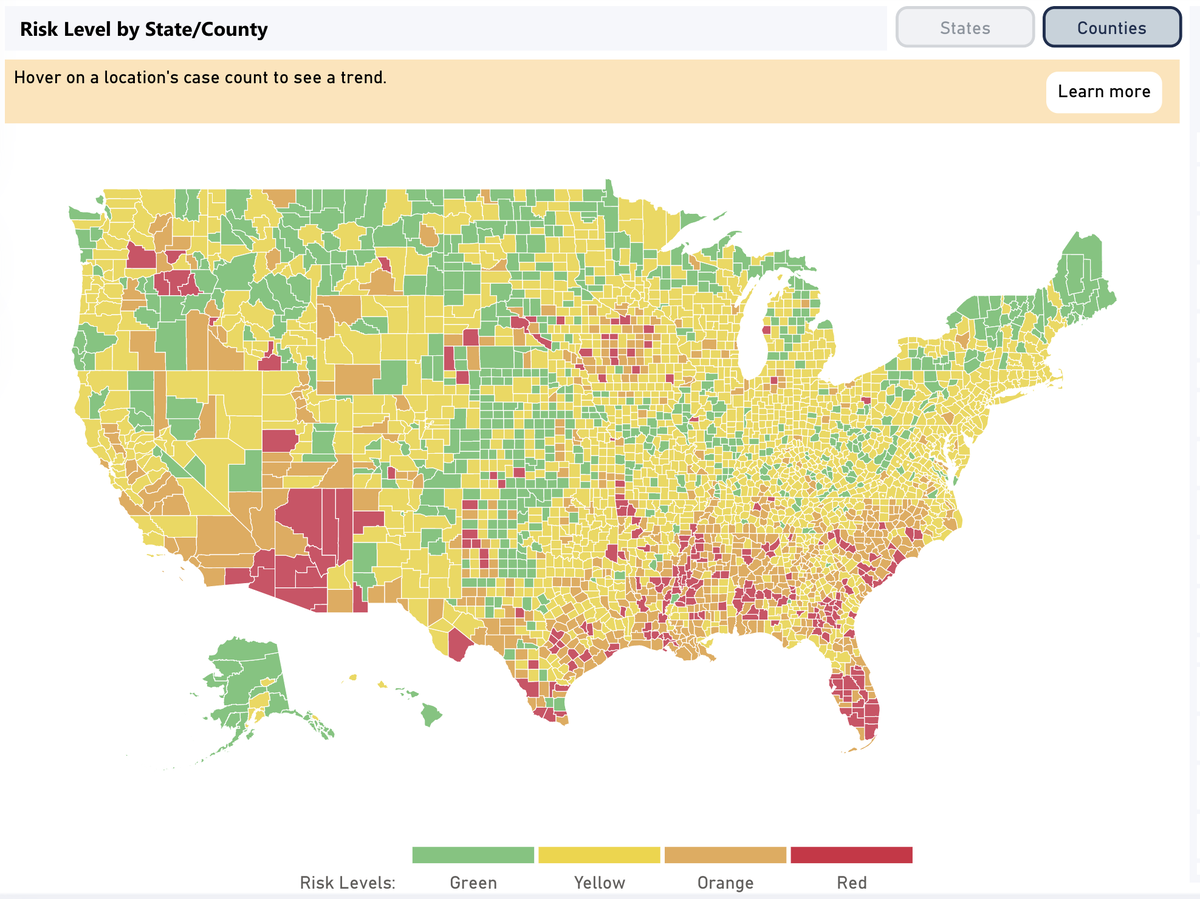
This interactive map lets you find out how bad your county's coronavirus outbreak is. Harvard Global Health Institute/Microsoft AI/Screenshot by NPR hide caption

toggle caption
Harvard Global Health Institute/Microsoft AI/Screenshot by NPR

How severe is the spread of COVID-19 in your community? If you're confused, you're not alone. Though state and local dashboards provide lots of numbers, from case counts to deaths, it's often unclear how to interpret them — and hard to compare them to other places.

"There hasn't been a unified, national approach to communicating risk, says Danielle Allen, a professor and director of Edmond J. Safra Center for Ethics at Harvard University. "That's made it harder for people," she says.

Allen, along with researchers at the Harvard Global Health Institute, is leading a collaboration of top scientists at institutions around the country who have joined forces to create a unified set of metrics, including a shared definition of risk levels — and tools for communities to fight coronavirus.

The collaboration launched these tools Wednesday, including a new, online risk-assessment map that allows people to check the state or the county where they live and see a COVID-19 risk rating of green, yellow, orange or red. The risk levels are based upon the number of new daily cases per 100,000 people.

To find your county's risk level, explore the county-level map here.

A community that has fewer than one daily new case per 100,000 is green. One to 10 is yellow; between 10 to 25 is orange; and above 25 puts you in the red. "When you get into that orange and red zone it means, in all likelihood, you're seeing a lot of velocity, a kind of fast upward trend," Allen says.

This is by no means the only attempt to categorize risk levels across the U.S. There are a number of frameworks out there using different measures. And that can lead to confusion, says Allen. "What we really need is a shared vocabulary and shared way of presenting data across jurisdictions," she says. This effort represents the consensus of eight institutions and over a dozen individual experts, who have agreed on these metrics.

Loading...

Of course, there are other important metrics when it comes to tracking the spread and severity of COVID-19. Local public health leaders need to know how many people are dying and how many people are hospitalized. They need to know how many tests are coming back positive in an area. (The lower the positivity rate, the more likely a community is testing enough to accurately detect the spread of the virus.)

But the group settled on tying the alert level to numbers of new cases per 100,000, because that's a good indicator to show the current picture of outbreaks and compare them in a consistent way. It's a standard way to measure the risk against the total population.

"It allows you to compare a rural area in upstate New York compared to New York City and have an apples to apples comparison for relative impact and relative caseload," says Ellie Graeden of Talus Analytics and the Center for Global Health, Science and Security at Georgetown University, which is part of the convergence group that developed the metrics.

Also, by sticking with a standard, core metric you can compare trends over time. "You want to know whether things are going up or down," Allen says.

For the public, this means you can now compare the case incidence where you live to that of, say, a nearby county where you're considering going on an errand. Or the county where your parents live if you're considering a visit. It gives you a way to assess your community's risk level compared to others, at a glance, and modify your behavior accordingly.

For policy-makers, the risk levels are meant to signal the intensity of the effort needed to control COVID-19 and to trigger specific interventions. The collaborative released guidance for how state and local leaders should manage their response, depending on their risk level.

"As this [pandemic] unfolded, a lot of us were waiting for the federal government to stand up and really produce... some practical guidance on how those at the state and local level should be responding," says Graeden. But in the in the absence of that clear guidance, this collaboration aims to fill the void.

If a jurisdiction is at the green level, they're on track for containing the virus. At yellow, a community should implement measures such as mask-wearing and social distancing and have an active program of testing, contact tracing and isolation — including targeted testing of those in high-risk environments. Orange is considered "dangerous," and requires surging testing and contact tracing efforts — or if that's not possible, may call for stay-home orders.

At the red level, "jurisdictions have reached a tipping point for uncontrolled spread" according to the collaborative's guidance. At this level, "you really need to be back at a stay-at-home [advisory]" Graeden says.

Currently, two states — Arizona and Florida — are at the red level and 13 are orange. Only Hawaii is green. But there's a great deal of variation county-by-county. In orange Texas, for instance, more than 20 counties are red.

The idea is to take some of the guesswork out of the policy response at a local level, says Graeden, and offer a more standardized way to communicate the risk and the response options.

"We've all modified our metrics to align more accurately across the different platforms," she says. "We're now communicating and all agreeing on the same basic thresholds for the types of actions that need to be taken. "

The shared metrics and guidance will be incorporated into a number of initiatives and sites focused on COVID-19 response, including Covidlocal.org, led by a group of disease outbreak experts and former public health officials, CovidActNow, led by former technology executives and a group of academics. The convergence group hopes to see it adopted more widely and used by local and state governments.

Let's block ads! (Why?)


COVID-19 - Latest - Google News
July 01, 2020 at 04:56PM
https://ift.tt/2NKTMU2

Where Are Coronavirus Cases Getting Worse? Explore Risk Levels County By County : Shots - Health News - NPR
COVID-19 - Latest - Google News
https://ift.tt/2VQ2gy8

New type of swine flu found in China has human pandemic potential, researchers say - South China Morning Post

[unable to retrieve full-text content]

  1. New type of swine flu found in China has human pandemic potential, researchers say  South China Morning Post
  2. WHO says 'we cannot let our guard down' after China pigs study  Reuters
  3. Dr. Anthony Fauci: New virus in China has traits of 2009 swine flu and 1918 pandemic flu  CNBC Television
  4. New "Animal" Virus Discovered in China  Novinite.com
  5. Swine Flu in China Triggers Fears of New Pandemic  Bloomberg Markets and Finance
  6. View Full Coverage on Google News


Health - Latest - Google News
July 01, 2020 at 12:27PM
https://ift.tt/31y2TQ8

New type of swine flu found in China has human pandemic potential, researchers say - South China Morning Post
Health - Latest - Google News
https://ift.tt/2zrj9Ud

Featured Post

Measles is “growing global threat,” CDC tells doctors in alert message - Ars Technica

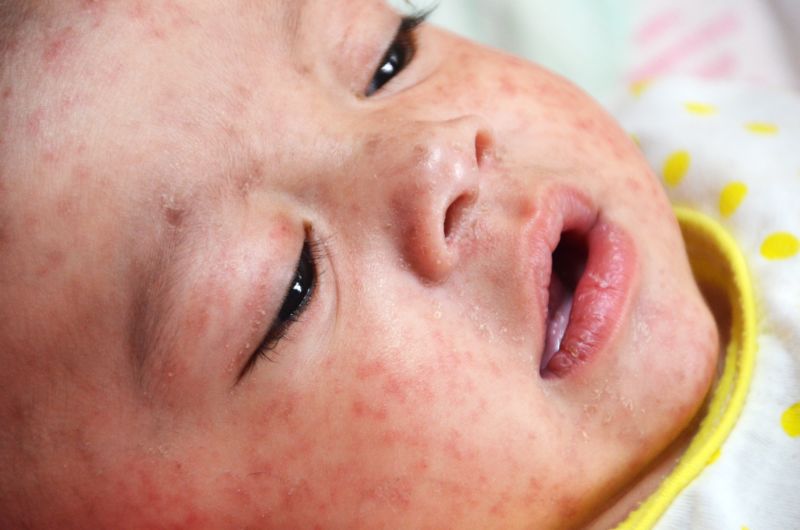
Enlarge / A baby with measles. CDC The Centers for Disease Control and Prevention is putting clinicians on alert about the growing r...

Popular Posts