Rechercher dans ce blog

Wednesday, March 2, 2022

Pfizer-BioNTech vaccine effectiveness wanes for children 5 to 11, but still protects against serious outcomes, CDC data show - The Washington Post

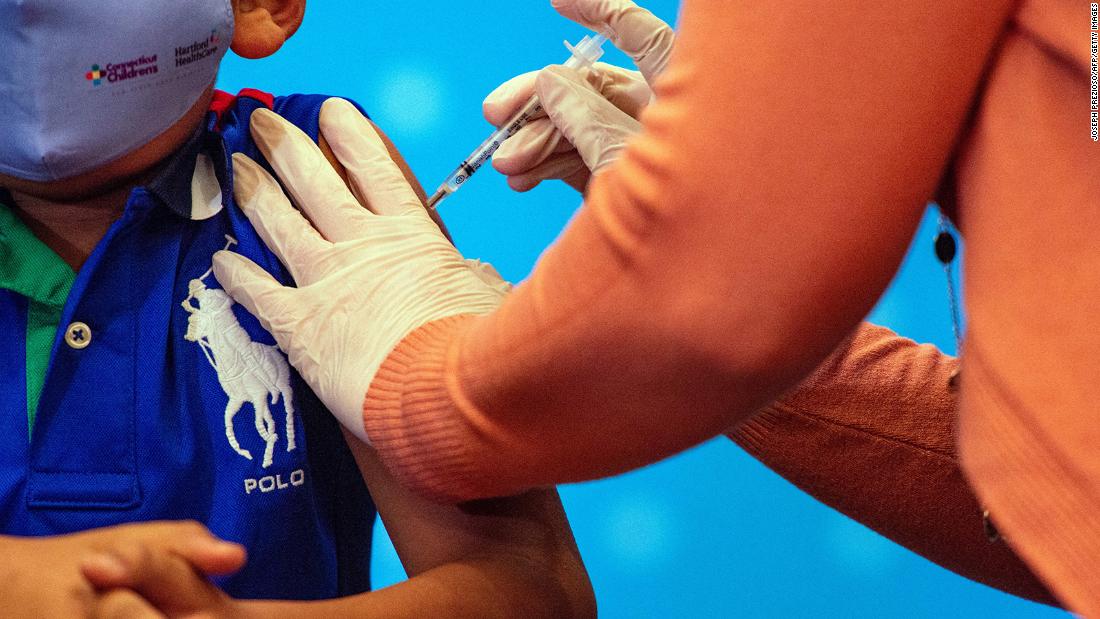
The Pfizer-BioNTech vaccine’s ability to prevent coronavirus infections in children 5 to 11 years old waned over time although the shot continued to protect against the most serious outcomes, including hospitalization and death, even as omicron surged, newly released data shows.

Data released Tuesday by the Centers for Disease Control and Prevention and separate findings from the New York State Health Department a day earlier, in a study not yet peer-reviewed, provide some of the first real-world evidence of how the vaccine is working in U.S. children and adolescents.

The data are broadly consistent with real-world effectiveness data for adults showing that protection from two doses diminishes over time, but that in people eligible for a booster, a third dose revs the immune system back up to robust levels. In children, as with adults, vaccine effectiveness faded during omicron and generally decreases relative to the time since vaccination.

The research provides an evolving picture of the vaccine’s performance in children, and some experts said it suggested a need to consider increasing the size of the dose 5-to-11-year-olds receive.

Pediatric infections and hospitalizations reached their highest rate in January, when omicron swept the country. Its higher transmissibility meant more people — including the vaccinated — were likely to be infected. Despite this increase in infections and hospitalization, data show coronavirus vaccines continued to protect 5-to-17-year-olds against severe illness, hospitalization and death.

The Pfizer-BioNTech vaccine is the only shot authorized for children 5 to 11 in the United States. That group receives a 10-microgram dose while those 12 and older get 30 micrograms.

“We knew from the adult data that’s been published previously that the vaccine provides less protection versus omicron than it did against delta, and I think we’re continuing to see that pattern in children,” said Ruth Link-Gelles, who leads CDC’s team on effectiveness of coronavirus vaccines.

“We also know from the adult data again that vaccine provides much better protection against severe disease. And we are seeing, I think, that same pattern in children,” Link-Gelles said.

Experts said the message for parents is that even if vaccine efficacy declines over time, “it is still better than being unvaccinated, and it is better for you to vaccinate your children,” said John P. Moore, a professor of microbiology and immunology at Weill Cornell Medicine.

Link-Gelles, who has a daughter not yet eligible for vaccination, said she found the data reassuring.

“Every time there’s a new variant, we worry that the vaccine will provide no protection at all,” Link-Gelles said. “And that is certainly not the case here. … The infection cases are less concerning to me as a parent. What I want to avoid are midnight emergency room visits, hospitalizations and, obviously, death. And I think that these data do show that we’re continuing to see protection against those outcomes.”

Jesse Hackell, a pediatrician in Rockland County, N.Y., said his advice to parents will remain the same.

“The vaccine is extraordinarily safe, and it protects against the rare but serious illnesses,” Hackell said in an email. “There is no downside to giving it, even if the efficacy is less than hoped — one is STILL better off having had the vaccine than not, even if the benefit is smaller.”

The latest data on efficacy in 5-to-11-year-olds come after developments involving shots for children younger than 5. The Food and Drug Administration in January said it would review data for a two-dose regimen in hopes of swift authorization and then add a third dose after data on a booster became available.

But the agency reversed course in mid-February, after receiving disappointing data on two doses. It announced it would not make a decision on whether to authorize a coronavirus vaccine for children younger than 5 until data on a third dose becomes available. That means the vaccine is unlikely to be available until at least mid-April.

Some experts said the recent findings raise additional questions about the dose needed for younger children. Data from New York state “strongly suggest that the lower vaccine dose given to 5-to-11-year-olds is not inducing the strong protective immune responses we see in older children and adults,” said Albert Ko, an infectious-diseases physician and epidemiologist at the Yale University School of Public Health.

The data “doesn’t feel settled,” said Natalie E. Dean, an Emory University biostatistician. “This may well be a three-dose vaccine. … We’re still piecing this together. It’s going to take a few more studies.”

The CDC released two analyses Tuesday. One report evaluated the protection afforded by the Pfizer-BioNTech vaccine against emergency department and urgent care visits in 10 states from April 2021 through January. It showed the vaccine was protective against hospitalization and death in 5-to-17-year-olds, even after omicron emerged.

Among the findings:

— After two doses, the vaccine initially was 92 percent to 94 percent effective for 12-to-17-year-olds against hospitalization during the delta and omicron waves. But protection against hospitalization faded more than five months after getting the second shot, with effectiveness falling to a range of 73 percent to 88 percent.

— Children 5 to 11 years old were not eligible for vaccine until early November 2021 so did not become fully vaccinated until mid-December, as omicron surged. Twenty-three vaccinated children were hospitalized with covid-like symptoms during the study period, but only two were infected. By comparison, 262 unvaccinated children were hospitalized, and 59 were infected.

— Two doses of the vaccine were about 51 percent effective in preventing 5-to-11-year-olds from going to emergency departments and urgent care centers as omicron spread, the CDC study found. For fully vaccinated 12-to-17-year-olds, protection ranged between 34 percent for older teens and 45 percent for younger adolescents for the same period. For older teens who received boosters, protection rose to 81 percent.

In a separate CDC analysis of surveillance data from 29 jurisdictions, vaccinated children and adolescents were less likely to be infected than those who were unvaccinated, despite a decline in protection against infection during the omicron surge. Unvaccinated 5-to-11-year-olds were 1.3 times more likely to get infected during January, compared with those who were vaccinated; unvaccinated 12-to-17-year-olds were 1.5 times more likely to get infected.

That analysis identified nine covid deaths in vaccinated children 5 to 17 years old between April 4, 2021, and Jan. 1, compared with 121 deaths among unvaccinated children.

New York state data released Monday, which is about one-tenth the size of the population analyzed in the CDC surveillance data, showed a rapid and steep drop in vaccines preventing infection in 5-to-11-year-olds compared with adolescents.

The New York study analyzed health records for covid cases in children and teens from Dec. 13, 2021, to Jan. 30. During that period, protection against infection from a two-dose regimen for 5-to-11-year-olds fell from 68 percent to 12 percent. Protection against hospitalization fell from 100 percent to 48 percent.

In the New York study, protection against infection for 11-year-olds was much lower compared with children a year or two older, possibly because the 11-year-olds received the 10-microgram-dose, while the older children received 30 micrograms.

If the findings are replicated in other settings, the researchers wrote, “review of the dosing schedule for children 5-11 years appears prudent.”

New York State Health Commissioner Mary T. Bassett said in a statement the data are not surprising because the vaccine was developed in response to an earlier version of covid and “reduced effectiveness of 2 doses against the omicron variant has been seen to some degree with all vaccines and ages.”

Bassett said it was critical to stress that vaccination is still recommended for everyone 5 and older.

Adblock test (Why?)


Health - Latest - Google News
March 02, 2022 at 06:51AM
https://ift.tt/ndDvf8F

Pfizer-BioNTech vaccine effectiveness wanes for children 5 to 11, but still protects against serious outcomes, CDC data show - The Washington Post
Health - Latest - Google News
https://ift.tt/tgAk7f2

Covid-19 Live Updates and Latest News - The New York Times

Video player loading
In his State of the Union address, President Biden outlined a program that would allow Americans to be tested for the coronavirus at pharmacies and given free antiviral treatments on the spot if they test positive.Sarahbeth Maney/The New York Times

The White House issued a new coronavirus strategy on Wednesday, a 96-page plan aimed at ushering the United States into what some are calling a “new normal” with four main goals: protecting against and treating Covid-19; preparing for new variants; avoiding shutdowns and fighting the virus abroad.

“Make no mistake, President Biden will not accept just ‘living with Covid’ any more than we accept ‘living with’ cancer, Alzheimer’s, or AIDS,” the plan declares. “We will continue our work to stop the spread of the virus, blunt its impact on those who get infected, and deploy new treatments to dramatically reduce the occurrence of severe Covid-19 disease and deaths.”

The plan comes on the heels of the president’s State of the Union address Tuesday night, which Mr. Biden used to sketch out the next phase of his pandemic response, including a “test to treat” initiative aimed at providing patients with antiviral medications as soon as they learn they are infected.

While that initiative is new, much of the strategy draws on actions the administration is already taking. And much of it will require funding from Congress.

For instance, the strategy also includes a plan, unveiled by the White House in November, that will require Congressional funding to expand manufacturing capacity, with the goal of producing at least one billion additional doses a year — three times the U.S. population — and to accelerate research on a universal Covid-19 vaccine that would protect against all variants.

The administration also pledged in the plan to work with Congress to “give schools and businesses guidance, tests and supplies to stay open, including tools to improve ventilation and air filtration.”

Mr. Biden came into office more than a year ago with a 200-page plan to combat the coronavirus, which was the most pressing challenge in his nascent presidency. Since then, more than 200 million Americans have been vaccinated. Two new waves — one fueled by the Delta variant, the other by Omicron — have driven up deaths to nearly 1 million.

The idea behind the new strategy is to get the nation out of crisis mode and to a place, Mr. Biden has said, where the virus will no longer disrupt everyday life. The president spoke in broad strokes about the way forward in his State of the Union address; the new plan fleshes out the speech with details.

“I know you’re tired, frustrated and exhausted,” he said Tuesday, adding: “But I also know this: Because of the progress we’ve made, because of your resilience and the tools that we have been provided by this Congress, tonight I can say we are moving forward safely, back to more normal routines.”

Under the “test to treat” program, Mr. Biden said, Americans could get tested at a pharmacy and, if they are positive, “receive antiviral pills on the spot at no cost.”

Although the pills, made by Pfizer, have been relatively scarce since they were authorized late last year, he said in his speech that “Pfizer is working overtime to get us one million pills this month and more than double that next month.”

A White House official, speaking on the condition of anonymity to provide additional details, said people could receive pills through the program starting this month, including at places like CVS, Walgreens and Kroger.

The initiative will also involve educating the public about the availability of new antiviral treatments, the official said, and the importance of starting them soon after symptoms begin. And it will distribute them directly to long-term care facilities.

Mr. Biden also vowed in his Tuesday night address to prepare for new variants, saying that if necessary, his administration could deploy new vaccines within 100 days of a variant’s arrival. He called on Congress to provide new funding for the administration to stockpile more tests, masks and pills. He also said that Americans who ordered free at-home tests from a government website, covidtests.gov, would be able to order more beginning next week.

“I cannot promise a new variant won’t come,” he said. “But I can promise you we’ll do everything within our power to be ready if it does.”

There are an average of about 60,000 new U.S. cases a day, according to a New York Times database. That is far less than the 800,000 daily average in January, at the peak of the winter surge fueled by the highly transmissible Omicron variant. But it is still much higher than the daily caseload last June, before Delta drove a summer surge.

Even as Mr. Biden proclaims that things are getting better, large groups of Americans remain at risk. Children under 5 are not yet eligible to be vaccinated. On Monday, New York State health officials released data showing that the Pfizer-BioNTech vaccine is much less effective in preventing infection in children 5 to 11 years than in adolescents or adults.

And an estimated seven million Americans have weak immune systems, illnesses or other disabilities that make them more vulnerable to severe Covid. The White House announced last week that it was taking several steps to make masks and coronavirus tests more accessible to people with disabilities.

Adblock test (Why?)


COVID-19 - Latest - Google News
March 02, 2022 at 10:01PM
https://ift.tt/Obcnx8T

Covid-19 Live Updates and Latest News - The New York Times
COVID-19 - Latest - Google News
https://ift.tt/qoQDlRx

Tuesday, March 1, 2022

Covid Invades Cells in the Penis and Testicles of Monkeys, Study Says - The New York Times

The coronavirus may infect tissue within the male genital tract, new research on rhesus macaques shows. The finding suggests that symptoms like erectile dysfunction reported by some Covid patients may be caused directly by the virus, not by inflammation or fever that often accompany the disease.

The research demonstrated that the coronavirus infected the prostate, penis, testicles and surrounding blood vessels in three male rhesus macaques. The monkeys were examined with whole body scans specially designed to detect sites of infection.

Scientists — who expected to find the coronavirus in spots like the lungs but did not know where else they would find it — were somewhat surprised by the discovery.

“The signal that jumped out at us was the complete spread through the male genital tract,” said Thomas Hope, the paper’s senior author and a professor of cell and developmental biology at Northwestern University Feinberg School of Medicine in Chicago. “We had no idea we would find it there.”

When his team initially reviewed a scanned image from the first animal, one of the scientists asked, “What sex was the animal again?” Dr. Hope recalled.

“I said, ‘I think female.’ She said, ‘I don’t think it’s a female.’ I went down to the bottom of the image, which was almost cut off, and the testes were brightly lit up. And the signal in the penis was off the radar,” Dr. Hope said.

The paper was based on findings in just three monkeys, but the findings were consistent, Dr. Hope said. The study has not yet been peer reviewed for publication in a journal, and was posted Monday on the site bioRxiv.

The work was carried out at the Tulane National Primate Research Center in Louisiana. The researchers do not know whether the monkeys had symptoms corresponding to the viral infection of the male genital tract, such as low testosterone levels, low sperm counts, pain or sexual dysfunction, Dr. Hope said.

About 10 to 20 percent of men infected with the coronavirus have symptoms linked to male genital tract dysfunction, studies have reported.

Men infected with the virus are three to six times as likely as others to develop erectile dysfunction, believed to be an indicator of so-called long Covid.

Patients have also reported symptoms such as testicular pain, reduced sperm counts and reduced sperm quality, decreased fertility and hypogonadism, a condition in which the testes produce insufficient amounts of testosterone, leading to low sex drive, sexual dysfunction and reduced fertility.

Other viruses are known to take a toll on fertility, Dr. Hope noted. “Mumps is most famous historically, for causing sterility,” he said. “The Zika virus goes to the testes and infects the testes, and Ebola can also do that.”

Even if just a small fraction of men experience such complications after a coronavirus infection, millions may suffer from impaired sexual and reproductive health in the aftermath of the pandemic, simply because the virus has infected so many people around the world, Dr. Hope warned.

He urged men to get vaccinated, and to seek a medical evaluation if they are concerned about their sexual or reproductive health.

The positron emission tomography technology that was used in the new study was designed to identify the sites of coronavirus infection in a living animal. The technology makes it possible to do repeated, sequential scanning of an animal, tracking how the virus works its way through the body and how it is cleared.

Dr. Hope next plans to determine whether the testicles are a reservoir for the coronavirus, as has been hypothesized by some scientists. He will also look at whether the virus infects tissue in the female reproductive system.

The hope is to use the information to develop treatments that will mitigate the pandemic’s impact on fertility. The scans could also potentially detect the location of the virus in patients and help tailor treatments appropriately.

Adblock test (Why?)


COVID-19 - Latest - Google News
March 02, 2022 at 09:40AM
https://ift.tt/VJg4xA9

Covid Invades Cells in the Penis and Testicles of Monkeys, Study Says - The New York Times
COVID-19 - Latest - Google News
https://ift.tt/gpIMSBE

No more COVID tests, vaccine proof or quarantines: Hawaii is ditching its strict entry requirements - USA TODAY

Vaccine protection against Covid-19 fell substantially for children during Omicron surge - CNN

(CNN)Many vaccinated kids experienced breakthrough infections during the Omicron surge, though protection against hospitalization remained stronger, a large new government-funded study found.

The study compared the vaccination status of children ages 5 to 17 who were treated for Covid-19 symptoms in emergency departments, urgent care centers and hospitals across 10 states between April 2021 and February 2022. Researchers reviewed records on nearly 40,000 clinic visits and 1,700 hospitalizations. The study was funded by the US Centers for Disease Control and published Tuesday in its Morbidity and Mortality Weekly Report.
The CDC study found vaccinated children ages 5 to 11 -- the youngest and most recently vaccinated group -- were about 46% less likely to have Covid-19 that resulted in care at an urgent care clinic or emergency room, compared with children who were unvaccinated.
However, the new study found vaccinated grade schoolers continued to be less likely to be hospitalized for their infections than children who were unvaccinated. Out of nearly 1,700 hospital admissions, there were 59 unvaccinated kids ages 5 to 11 admitted to the hospital after testing positive for Covid-19, and just two who were vaccinated. The study didn't have enough cases to accurately estimate vaccine effectiveness against hospitalization in this age group.
The new study comes just a day after new data from the New York State Department of Health also found vaccine protection against Covid-19 dropped substantially for kids during the Omicron wave.
The Pfizer vaccine is the only Covid-19 vaccine authorized for people younger than 18.
Dr. Nicola Klein, an author of the study published Tuesday, thinks the dropoff in vaccine effectiveness in the younger age group wasn't because the dose was too low or there was a big difference in response to the vaccines by age; she says this is just the rapid evolution of the virus.
"It is a little bit disheartening, but I think we also have to keep in mind that one of the complexities here is that because children started being vaccinated late last year, that coincides with when the Omicron variant began circulating," said Klein, who is director of the Kaiser Permanente Vaccine Study Center.
The studies also come just as school districts around the country have started lifting mask mandates for students, and some parents and experts are left to wonder if it's the right time to ease up on protections for kids.
"I don't think it's time to go free for all yet, but that, you know, if you know that everybody around you is vaccinated then I think you can relax a bit more," said Dr. Robert Frenck, director of the vaccine research center at Cincinnati Children's Hospital in Ohio. Frenck was not involved in the new research.
"So they don't end up in the hospital themselves, but they come home to grandma and grandpa that maybe is immunocompromised and their immune system isn't working that well and they give it to them. That would be my worry, too. As far as that people just kind of saying, oh, everything's over, we can go back to normal. We're not quite there yet."
About 26% of kids ages 5 through 11 and 58% of those ages 12 through 17 have been fully vaccinated against Covid-19, according to the CDC.

Protection for adolescents and teens

Adolescents ages 12 through 17 -- who get a dose of the Pfizer vaccine that's three times higher than the shots for younger kids -- had better protection against most circulating variants, the new study found, but that protection dropped off steeply with time and the arrival of the Omicron variant.
Five months or more after a second dose, kids in this age group had no significant protection against Omicron infections warranting a trip to the urgent care or ER. About a week after a booster shot, however, most of their protection appeared to be restored.
Boosted teens ages 16 to 18, were about 81% less likely to need to see a doctor for Covid-19.
Over the entire 11 months of the study, fully vaccinated adolescents -- those ages 12 through 15 -- were 83% less likely to be seen for Covid-19 at the emergency room or urgent care clinic and 92% less likely to be hospitalized until about 5 months after their second dose. After 5 months, vaccine protection dropped to just 38% for ER or clinic visits and 73% for hospitalizations in this age group.
Older teens, ages 16 through 17, were 76% less likely to be seen for Covid-19 in an ER or urgent care if the first five months after their second dose and 94% less likely to be hospitalized. After 5 months, their protection dropped to 46% for clinic visits and 88% for hospitalizations.

Boosters in the future?

The study was observational, meaning that the authors can't prove cause and effect. Though the data was adjusted to try to account for meaningful differences between kids who were vaccinated and those who were not, the researchers say there could have been differences between these groups -- such as the likelihood of masking or physical distancing -- that might have influenced their results.
Still, the researchers note that it's strong real-world data on how well the vaccines are protecting children. They say kids should stay up to date on their Covid-19 vaccines, including boosters for all children who are eligible. Currently, that group is adolescents ages 12 to 18 years of age.
Klein said she thinks it's reasonable that boosters may soon be recommended for younger kids, too.
"We have pretty good evidence that the booster really increased the protection for 16- to 17-year-olds, and I think that's shown pretty nicely in the paper, and I think it's not unreasonable to expect that might be down the road for 5 to 11 year olds," Klein said. "That's certainly something that's worth considering."
Other experts who were not involved in the study agree.
"We know from the adults that the third dose did a lot. The third dose increased the effectiveness of the vaccine against Omicron it boosted all antibodies, including those key antibodies that still had some cross ability to neutralize Omicron," said Dr. Jennifer Nayak, a pediatric infectious disease specialist at the University of Rochester Medical Center.
"So yes, for the kids as well, I think the third dose may be really important as the virus moves away from the protective immune response that was established by the vaccine," Nayak said.
A booster dose for grade-school aged children is still likely to be months away. Pfizer is currently testing a booster dose for this age group, according to a spokesperson.
Experts who reviewed the studies but did not participate in the research said they shouldn't cause parents to lose faith in the vaccines.
Get CNN Health's weekly newsletter

Sign up here to get The Results Are In with Dr. Sanjay Gupta every Tuesday from the CNN Health team.

"This is what you would expect in terms of mild illness," said Dr. Paul Offit, director of the vaccine education center at the Children's Hospital of Philadelphia. He pointed out that kids may catch Covid-19 even if they're vaccinated, but the vaccines will keep them from the worst harms of the virus.
"The goal of this vaccine is to prevent severe illness," said Offit, who says both studies show that the vaccines continue to keep kids out of the hospital.
What's more, Offit says, these studies compare vaccinated kids to those who are unvaccinated, but they don't account for children who may have already been infected by the virus and have some antibodies against future infection.
"So people who are considered unvaccinated may still at some level be protected, which means that your efficacy rate isn't going to look as good," he said. "None of these things are considered when they do these kinds of studies, so I think they tend to be falsely damning of the vaccine."

Adblock test (Why?)


COVID-19 - Latest - Google News
March 02, 2022 at 04:33AM
https://ift.tt/ihUwKAV

Vaccine protection against Covid-19 fell substantially for children during Omicron surge - CNN
COVID-19 - Latest - Google News
https://ift.tt/gpIMSBE

Vaccine protection against Covid-19 fell substantially for children during Omicron surge - CNN

(CNN)Many vaccinated kids experienced breakthrough infections during the Omicron surge, though protection against hospitalization remained stronger, a large new government-funded study found.

The study compared the vaccination of status of children ages 5 to 17 who were treated for Covid-19 symptoms emergency departments, urgent care centers and hospitals across 10 states between April 2021 and February 2022. Researchers reviewed records on nearly 40,000 clinic visits and 1,700 hospitalizations. The study was funded by the US Centers for Disease Control and published Tuesday in its Morbidity and Mortality Weekly Report.
The new study comes just a day after new data from the New York State Department of Health also found vaccine protection against Covid-19 dropped substantially for kids during the Omicron wave.
The Pfizer vaccine is the only vaccine authorized for people younger than 18.
Children ages 5 to 11 -- the youngest and most recently vaccinated group -- were about 46% less likely to seek treatment for Covid-19 at an urgent care clinic or emergency room, compared to children who were unvaccinated.
That's about half as much protection as they were expected to get after clinical trials showed the vaccines to be about 91% effective at preventing disease in this age group.
Study author Dr. Nicola Klein thinks the dropoff in vaccine effectiveness in this age group wasn't because the dose was too low or there was a big difference in response to the vaccines by age; she says this is just the rapid evolution of the virus.
"It is a little bit disheartening, but I think we also have to keep in mind that one of the complexities here is that because children started being vaccinated late last year that coincides with when the Omicron variant began circulating," said Klein, who is director of the Kaiser Permanente Vaccine Study Center.
Vaccinated grade schoolers continued to be less likely to be hospitalized for their infections than children who were unvaccinated, however.
Out of nearly 1,700 hospital admissions, there were 59 unvaccinated kids ages 5 to 11 admitted to the hospital after testing positive for Covid-19, and just two who were vaccinated. The study didn't have enough cases to accurately estimate vaccine effectiveness against hospitalization in this age group.
Adolescents ages 12 through 17 -- who get a dose of the Pfizer vaccine that's three times higher than the shots for younger kids -- had better protection against most circulating variants, but that protection dropped off steeply with time and the arrival of the Omicron variant.
Five months or more after a second dose, kids in this age group had no significant protection against Omicron infections warranting a trip to the urgent care or ER.
About a week after a booster shot, however, most of their protection appeared to be restored. Boosted teens ages 16 to 18, were about 81% less likely to need to see a doctor for Covid-19.
Over the entire 11 months of the study, fully vaccinated adolescents -- those ages 12 through 15 -- were 83% less likely to be seen for Covid-19 at the emergency room or urgent care clinic and 92% less likely to be hospitalized until about 5 months after their second dose. After 5 months, vaccine protection dropped to just 38% for ER or clinic visits and 73% for hospitalizations in this age group.
Older teens, ages 16 through 17, were 76% less likely to be seen for Covid-19 in an ER or urgent care if the first five months after their second dose and 94% less likely to be hospitalized. After 5 months, their protection dropped to 46% for clinic visits and 88% for hospitalizations.
The study was observational, meaning that the authors can't prove cause and effect. Though the data was adjusted to try to account for meaningful differences between kids who were vaccinated and those who were not, the researchers say there could have been differences between these groups -- such as the likelihood of masking or physical distancing -- that might have influenced their results.
Still, the researchers note that it's strong real-world data on how well the vaccines are protecting children. They say kids should stay up to date on their Covid-19 vaccines, including boosters for all children who are eligible. Currently, that group is adolescents ages 12 to 18 years of age.
Klein said she thinks it's reasonable that boosters may soon be recommended for younger kids, too.
"We have pretty good evidence that the booster really increased the protection for 16- to 17-year-olds, and I think that's shown pretty nicely in the paper, and I think it's not unreasonable to expect that might be down the road for 5 to 11 year olds," Klein said. "That's certainly something that's worth considering."
The detailed findings come just a day after new data from the New York State Department of Health showed that vaccine effectiveness against Covid-19 infection dropped considerably for kids during the Omicron surge, falling from 68% to 12% in children ages 5 through 11, and from 66% to 51% for those ages 12 through 17. Protection against hospitalizations, even during Omicron, remained stronger. The study found younger children had a 48% lower risk of being hospitalized with Omicron, while adolescents had a 73% lower risk.
Experts who reviewed the studies but did not participate in the research said they shouldn't cause parents to lose faith in the vaccines.
Get CNN Health's weekly newsletter

Sign up here to get The Results Are In with Dr. Sanjay Gupta every Tuesday from the CNN Health team.

"This is what you would expect in terms of mild illness," said Dr. Paul Offit, director of the vaccine education center at the Children's Hospital of Philadelphia. He pointed out that kids may catch Covid-19 even if they're vaccinated, but the vaccines will keep them from the worst harms of the virus.
"The goal of this vaccine is to prevent severe illness," said Offit, who says both studies show that the vaccines continue to keep kids out of the hospital.
What's more, Offit says, these studies compare vaccinated kids to those who are unvaccinated, but they don't account for children who may have already been infected by the virus and have some antibodies against future infection.
"So people who are considered unvaccinated may still at some level be protected, which means that your efficacy rate isn't going to look as good," he said. "None of these things are considered when they do these kinds of studies, so I think they tend to be falsely damning of the vaccine."

Adblock test (Why?)


Health - Latest - Google News
March 02, 2022 at 01:06AM
https://ift.tt/ihUwKAV

Vaccine protection against Covid-19 fell substantially for children during Omicron surge - CNN
Health - Latest - Google News
https://ift.tt/5UCbjSL

New Coronavirus Lineage Discovered in Ontario Deer - The New York Times

Scientists also found signs of possible deer-to-human transmission, but there is no evidence that the new lineage poses an elevated risk to people.

Scientists have identified a new, highly mutated version of the coronavirus in white-tailed deer in southwestern Ontario, one that may have been evolving in animals since late 2020.

They also found a very similar viral sequence in one person in the area who had close contact with deer, the first evidence of possible deer-to-human transmission of the virus.

“The virus is evolving in deer and diverging in deer away from what we are clearly seeing evolving in humans,” said Samira Mubareka, a virologist at Sunnybrook Research Institute and the University of Toronto and an author of the new paper.

The report has not yet been published in a peer-reviewed journal, and there is no evidence that the deer lineage is spreading among, or poses any elevated risk to, people. Preliminary laboratory experiments suggest that the lineage is unlikely to evade human antibodies.

But the paper was posted online just days after another team reported that the Alpha variant may have continued to spread and evolve in Pennsylvania deer even after it disappeared from human populations.

Together, the two studies suggest that the virus may be circulating among deer for extended periods of time, raising the risk that the animals could become a long-term reservoir of the virus and a source of future variants.

“There’s certainly no need to panic,” said Arinjay Banerjee, a virologist at the University of Saskatchewan who was not involved in either study.

But, he added, “The more hosts you have, the more opportunities the virus has to evolve.”

Previous studies have found that the virus is widespread in white-tailed deer. Research suggests that humans have repeatedly introduced the virus to deer, which then transmit it to one another. How humans are spreading the virus to deer remains a mystery, and until now, there has been no evidence that the animals are passing it back to humans.

The Canada study was a collaboration involving more than two dozen researchers at institutions across Ontario. The scientists collected nasal swabs and samples of lymph node tissue from 300 white-tailed deer killed by hunters in Ontario between Nov. 1 and Dec. 31, 2021. Six percent of the animals, all from southwestern Ontario, tested positive for the virus, suggesting that they were actively infected when they died.

The researchers sequenced the full viral genomes from five infected deer and found a unique constellation of mutations that had not been previously documented. Overall, 76 mutations — some of which had previously been found in deer, mink and other infected animals — set the lineage apart from the original version of the virus.

The deer samples were most closely related to viral samples taken from human patients in Michigan, not far from southwestern Ontario, in November and December 2020. They were also similar to samples taken from humans and mink in Michigan earlier that fall.

Those findings, as well as the rate at which the virus accumulates mutations, suggest that the new lineage may have diverged from known versions of the virus, and been evolving undetected, since late 2020.

Sergio Flores for The New York Times

But its precise path is unclear. One possibility is that humans might have passed the virus directly to deer, and the virus then accumulated mutations as it spread among the cervids. Alternately, the lineage may have evolved at least partly in another, intermediate species — perhaps farmed or wild mink — which then somehow transmitted it to deer.

“We don’t have all the pieces in the puzzle,” Dr. Suresh Kuchipudi, a veterinary microbiologist at Penn State, who was not involved in the research, said in an email. “We cannot rule out the involvement of an intermediate host.”

A viral sample collected from one human patient in southwestern Ontario in the fall of 2021 closely matched the deer samples. That person is known to have had “close contact” with deer, the researchers said.

(They could not disclose more details about the nature of this contact for privacy reasons, although Dr. Mubareka noted that people should not worry about incidental, indirect encounters, like simply having a deer wander through their backyard.)

The sample size is tiny, scientists cautioned, and there is no conclusive proof that the person caught the virus from deer. “We don’t have enough information yet to confirm that transmission back to humans,” said Roderick Gagne, a wildlife disease ecologist at the University of Pennsylvania School of Veterinary Medicine.

But at the time the human sample was collected, Ontario was sequencing samples of the virus from everyone in the region who tested positive on a P.C.R. test. The researchers did not find any other people who had been infected by similar versions of the virus, making it less likely that it evolved independently in humans.

“Had it been circulating widely in humans, even narrowly in humans, I think we would have picked it up,” Dr. Mubareka said.

There is also no evidence that the person infected with the lineage passed the virus on to anyone else.

And early data suggest that existing vaccines should still be able to protect against the lineage. Antibodies from vaccinated people were able to neutralize pseudoviruses — harmless, nonreplicating viruses — that had been engineered to resemble the deer lineage, the scientists found.

In the second study, scientists from the University of Pennsylvania’s veterinary and medical schools analyzed nasal swabs from 93 deer that died in Pennsylvania in the fall and winter of 2021. Nineteen percent were actively infected with the virus. When the researchers sequenced seven of the samples, they found that five of the deer were infected with the Delta variant, while two were infected with Alpha.

At the time the samples were collected, Delta was widespread among the human residents of the United States, but the Alpha wave that hit Americans in the spring of 2021 had long since faded.

“Alpha seems to be persisting in the white-tailed deer even during the time when it’s not circulating in humans,” said Eman Anis, a microbiologist at the University of Pennsylvania School of Veterinary Medicine and an author of the study.

Indeed, the Delta samples in deer were genetically similar to those from humans, suggesting that it had crossed species lines relatively recently. But the two Alpha sequences had diverged more significantly from human lineages. (They were also substantially different from each other, suggesting that the variant had been introduced to the deer population at least twice.)

“The main implication would be that the deer sustain transmission and infections within their populations,” Dr. Gagne, an author of the Pennsylvania study, said. “So that is not just, you know, a spillover event from humans, deer get infected and then it fizzles out.”

Whether these lineages will continue to circulate and evolve in deer is unknown, as is the risk they may pose to humans and other animals.

“Based on current information, I’d say that the risk of wildlife, including deer, spreading the virus to people is low,” said Jeff Bowman, a research scientist at the Ontario Ministry of Northern Development, Mines, Natural Resources and Forestry and an author of the Canada paper.

But ongoing surveillance is critical, scientists said. Dr. Mubareka suggested that officials should enhance wastewater screening in Ontario and other nearby regions to look specifically for the deer lineage — and to ensure that it is not becoming more prevalent.

Experts also urged people to continue to follow guidelines put out by public health agencies, including not feeding deer or other wildlife and wearing gloves while butchering game.

“We should also be reducing the biggest reservoir for this virus, which is us,” Dr. Mubareka said, “to make sure we’re not continuously spilling into deer and creating these new lineages.”

Adblock test (Why?)


Health - Latest - Google News
March 01, 2022 at 10:26PM
https://ift.tt/AXKshig

New Coronavirus Lineage Discovered in Ontario Deer - The New York Times
Health - Latest - Google News
https://ift.tt/5UCbjSL

Featured Post

Measles is “growing global threat,” CDC tells doctors in alert message - Ars Technica

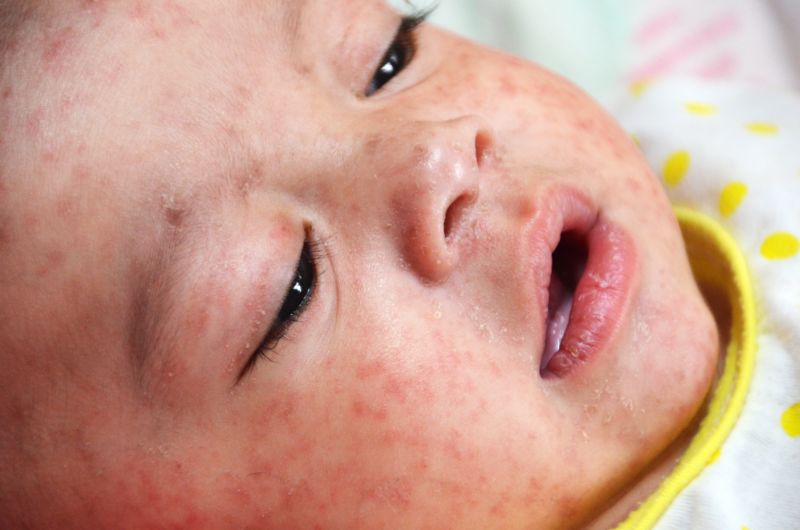
Enlarge / A baby with measles. CDC The Centers for Disease Control and Prevention is putting clinicians on alert about the growing r...

Popular Posts