Rechercher dans ce blog

Thursday, March 31, 2022

What an expert says you should consider before getting a 2nd Covid-19 booster - CNN

(CNN)On Tuesday, the US Food and Drug Administration expanded its authorization of the Pfizer/BioNTech and Moderna Covid-19 vaccines. Now, adults ages 50 and older are able to get a second booster if at least four months have passed since their first one.

Within hours, the US Centers for Disease Control and Prevention came out with a statement that says it will also allow second boosters as well as guidance for people who initially received the Johnson & Johnson vaccine. These individuals who subsequently got a booster are now eligible for a second booster shot, too.
All these developments come in the wake of the CDC's updated analysis showing that the highly transmissible BA.2 subvariant is the dominant strain in the United States.
Now that more people can receive an additional vaccine dose, should they get it? What are factors they might want to consider? Is there any downside to getting more shots? And does it make sense to wait until a big event such as international travel or a large wedding to get that booster?
To help us with these questions, I spoke with CNN Medical Analyst Dr. Leana Wen, an emergency physician and professor of health policy and management at the George Washington University Milken Institute School of Public Health. She is also author of "Lifelines: A Doctor's Journey in the Fight for Public Health."
CNN: Who is now eligible to receive an additional booster dose?
Dr. Leana Wen: Prior to the announcements this week by the FDA and CDC, people with moderate or severe immunocompromise were already eligible for an additional booster dose. Now, a much larger group is eligible.
This includes two subsets of people. First, people 50 and over who received three prior doses of either Pfizer or Moderna, and who are at least four months out from their last vaccine dose, are eligible for another mRNA booster -- either Pfizer or Moderna.
Second, all adults -- regardless of age -- who received an initial Johnson & Johnson vaccine and then a booster at least four months ago are now able to receive a second booster dose with an mRNA vaccine, again either Pfizer or Moderna.
CNN: Now that a lot more people can get a second booster, should they?
Wen: First, I want to emphasize the importance of getting the first booster dose. According to the CDC, about half of Americans eligible for that first booster have not yet received it. That includes an astonishing 1 in 3 people 65 and older.
There is ample data that shows how important the initial booster is, especially against the Omicron subvariants, including the now-dominant BA.2 strain. During a time when BA.1 was the main variant, the effectiveness of two doses of the vaccine against severe disease dropped to 79%, according to a CDC study. The effectiveness of three doses remained high, at 94%.
The data around the second booster is less clear. Much of the research comes from Israel, where fourth doses have been widely available since the end of January. One study there of adults over 60 found that those who had a fourth Covid-19 vaccine had 78% lower risk of death during the Omicron surge compared with those who had a third shot at least four months earlier. However, the number of deaths was low in both groups.
Another Israeli study, published in the New England Journal of Medicine, found that while a fourth shot increased antibodies, it didn't boost protection much, and those who became infected were mildly symptomatic regardless of whether they had three or four shots. Complicating it all is that it's unclear how long the enhanced protection from the fourth dose will last.
All this says to me that the question of whether people should receive a fourth dose is not straightforward to answer. This cannot be a blanket recommendation to everyone, but rather nuanced guidance that's tailored to each person's individual medical circumstance.
CNN: What are factors people should consider in deciding whether to get the second booster shot?
Wen: First, consider your medical risk factors. If you are elderly and have multiple medical conditions, you are more likely to become severely ill due to Covid-19. Certainly, if you are moderately or severely immunocompromised, that should tip the scales in favor of getting the additional booster dose now.
On the other hand, if you are generally healthy, you are still very well-protected from severe illness due to the protection from the vaccine and the initial booster dose. It's not as urgent to get the booster, and there may also be an advantage to waiting.
CNN: Why might someone decide to wait on the booster?
Wen: Right now, the level of Covid-19 in the US is pretty low. Experts have been keeping a close eye on BA.2 in case it causes another surge, but the current transmission rate in most parts of the country is the lowest it has been in months. Because the enhanced protective effect of the second booster may not last long, it might be better to wait until there are clear signs of a surge before getting it.
In addition, there are studies underway to develop an Omicron-specific booster. If you haven't received any booster at all, I wouldn't recommend waiting for that variant-specific booster, but if you already received one, and especially if you are not particularly vulnerable, it may be reasonable to hold off for now.
Another group of people who are probably better off waiting is those who were recently infected with Omicron. It's unlikely that those individuals who were vaccinated and infected will be reinfected so soon. Especially if they are generally healthy individuals, I'd also advise them to wait a little longer before getting the additional booster.
CNN: Is there any known downside to getting the fourth dose?
Wen: Analyses of extensive Israeli data have not identified new safety concerns from the fourth dose. Hypothetically, there is the concern that if someone gets constant boosters, their immune system may not fire up as well if they got exposed to Covid-19, but this is not proven. The main downside would be the issue of timing -- is now the best time to get the fourth dose, or is it better to hold off? That will depend on each person's medical risk factors as well as their tolerance of risk, and specifically how important it is to them to keep avoiding the coronavirus.
CNN: Some people might want to wait until a big event like international travel or a large wedding to get that extra shot. Is that a good plan?
Wen: Not really. If you have not yet had your initial booster, get it now, because that first booster is important to maintain strong protection against severe disease. Don't wait on that first booster. I think it's hard to time a second booster around an event, and it would make more sense to time it around an expected surge.
Get CNN Health's weekly newsletter

Sign up here to get The Results Are In with Dr. Sanjay Gupta every Tuesday from the CNN Health team.

That said, I can understand why people would want to be better protected for big events. Remember that there are other tools at our disposal to do so. If you want to be extra cautious, requiring vaccines and then testing all guests prior to getting together indoors will substantially reduce risk.
Know where you could access treatment in case you do get infected. And let's not forget masks -- a high-quality mask (N95 or equivalent) protects you even if others around you are not masking. Boosters are one very important tool that can complement these other tools to help us reduce our individual risk.

Adblock test (Why?)


COVID-19 - Latest - Google News
April 01, 2022 at 12:20AM
https://ift.tt/a9b0GSr

What an expert says you should consider before getting a 2nd Covid-19 booster - CNN
COVID-19 - Latest - Google News
https://ift.tt/6sYeuOV

Covid-19: Latest News and Live Updates - The New York Times

Kenny Holston for The New York Times

Senate Democrats and Republicans neared agreement on Thursday to slash an emergency coronavirus response package to $10 billion from $15.6 billion, as they worked to break a logjam over a stalled package of federal money urgently requested by President Biden for vaccines, therapeutics and preparation against future variants.

The day after Mr. Biden pleaded with Congress to approve the money, senators were discussing removing as much as $5 billion in aid for the global vaccination effort as they scrambled to resolve disputes over how to finance the package. Republicans have refused to devote any new funding to the federal pandemic response effort, arguing that unspent money that has already been approved should be used, but the two parties have been unable to agree on which programs should be tapped.

Without consensus on that question, it was not clear that they would have the votes to move forward in the evenly divided Senate, where 60 votes — including at least 10 Republicans — would be needed.

The package now under consideration would be less than half the White House’s original $22.5 billion request.

Senator Mitt Romney, Republican of Utah, said that any votes would likely be delayed until next week before Congress leaves for a two-week April recess, as lawmakers toiled to hammer out a deal, write the bill and get a cost assessment from the nonpartisan Congressional Budget Office. He and Senator Chuck Schumer of New York, the majority leader, have been leading talks, along with other senior senators.

Under the emerging deal, Mr. Romney, said, most of the $10 billion would be repurposed from the $1.9 trillion pandemic law Democrats muscled through without Republican support last March. But direct funds for state and local governments would likely not be touched, after Democrats balked at this money at being clawed back. Mr. Romney said negotiators had discussed taking back some funding from a program that allowed states to give grants to local businesses.

Other potential funding sources, multiple senators said, included transportation money, agricultural programs and some money for live venues, like theaters, that had to close during the pandemic.

“I generally tried to not let perfect be the enemy of better,” said Senator Kevin Cramer, Republican of North Dakota. “But again, we don’t have enough specific flesh on the bone.”

Efforts to tuck the emergency pandemic aid into a $1.5 trillion spending package President Biden signed into law earlier this month collapsed when rank-and-file Democrats and governors objected to claiming $7 billion that was supposed to go to state governments to help finance the package. Mr. Biden has warned that without another round of aid from Congress, his administration would be forced to scale back the nation’s pandemic response, jeopardizing its ability to be prepared for another variant or wave of infections.

Senator Mitch McConnell, Republican of Kentucky and the minority leader, said it was still unclear whether an agreement would be possible.

“It’s kind of a work in progress,” Mr. McConnell said at an event with Punchbowl News, saying the package would likely be have been “skinnied down” to $10 billion.

“That has the potential to take out the international vaccine part, which I think is terribly unfortunate,” he added. “But that’s where we are at the moment — whether that’s going to completely come together is not clear.”

Mr. Romney said it was unclear whether some of the global aid would remain in the package. Senator Chris Coons, Democrat of Delaware and one of the negotiators, told reporters “my hope is that we will find a path toward adding more for the international side.”

But leaders in both parties signaled optimism that a final agreement could be reached.

“The gap has been narrowed greatly, and we’re intent on working with Republicans to cross the finish line, because this is vital for our country,” said Senator Chuck Schumer of New York, the majority leader.

But it also remained unclear whether progressives in the House would agree to a deal that was a fraction of what Mr. Biden had initially said was necessary and lacked the global vaccination funds.

“This is shameful — we have to get the money,” Speaker Nancy Pelosi of California said at her weekly news conference. She added, “Everyone knows that none of us are safe until all of us are safe.”

Multiple House Democrats, including Representative Tom Malinowski of New Jersey, suggested they would not support a package that did not have the international aid. Vaccination rates continue to lag in low-income countries while they are vastly higher in high- and upper-middle-income countries.

“I’d rather stop the next Covid variant in Africa or Asia than have to fight it again in New Jersey,” Mr. Malinowski wrote on Twitter, adding that he “would not be able to support a bill that effectively ends our global pandemic prevention efforts.”

With lawmakers set to leave Washington next Friday for a recess, senators were facing a time crunch for action. Democrats are also planning to hold a vote next week to confirm Judge Ketanji Brown Jackson to the Supreme Court

Catie Edmondson contributed reporting.

Adblock test (Why?)


COVID-19 - Latest - Google News
April 01, 2022 at 12:10AM
https://ift.tt/hkls6Y7

Covid-19: Latest News and Live Updates - The New York Times
COVID-19 - Latest - Google News
https://ift.tt/6sYeuOV
Wednesday, March 30, 2022

CDC Recommends Additional Boosters for Certain Individuals | CDC Online Newsroom - cdc.gov

Data continue to show the importance of vaccination and booster doses to protect individuals both from infection and severe outcomes of COVID-19. For adults and adolescents eligible for a first booster dose, these shots are safe and provide substantial benefit. During the recent Omicron surge, those who were boosted were 21-times less likely to die from COVID-19 compared to those who were unvaccinated, and 7-times less likely to be hospitalized. CDC continues to recommend that all eligible adults, adolescents, and children 5 and older be up to date on their COVID-19 vaccines, which includes getting an initial booster when eligible.

Following FDA’s regulatory actionexternal icon today, CDC is updating its recommendations to allow certain immunocompromised individuals and people over the age of 50 who received an initial booster dose at least 4 months ago to be eligible for another mRNA booster to increase their protection against severe disease from COVID-19. Separately and in addition, based on newly published data, adults who received a primary vaccine and booster dose of Johnson & Johnson’s Janssen COVID-19 vaccine at least 4 months ago may now receive a second booster dose using an mRNA COVID-19 vaccine.

These updated recommendations acknowledge the increased risk of severe disease in certain populations including those who are elderly or over the age of 50 with multiple underlying conditions, along with the currently available data on vaccine and booster effectiveness.

The following is attributable to Dr. Rochelle P. Walensky:

“Today, CDC expanded eligibility for an additional booster dose for certain individuals who may be at higher risk of severe outcomes from COVID-19. Boosters are safe, and people over the age of 50 can now get an additional booster 4 months after their prior dose to increase their protection further. This is especially important for those 65 and older and those 50 and older with underlying medical conditions that increase their risk for severe disease from COVID-19 as they are the most likely to benefit from receiving an additional booster dose at this time. CDC, in collaboration with FDA and our public health partners, will continue to evaluate the need for additional booster doses for all Americans.”

Adblock test (Why?)


COVID-19 - Latest - Google News
March 30, 2022 at 02:50AM
https://ift.tt/7J5NdSe

CDC Recommends Additional Boosters for Certain Individuals | CDC Online Newsroom - cdc.gov
COVID-19 - Latest - Google News
https://ift.tt/5vMAVcb

Covid creeps closer to Biden as restrictions fall - The Washington Post

Over the last two weeks, the coronavirus has crept ever closer to Biden, disrupting White House operations just as the country and the administration have been relaxing strict safeguards against covid-19. The cluster of cases highlights the continued threat posed by the virus, complicating White House efforts to signal that the country has turned the corner on the pandemic.

After years of modeling strict precautions, including campaigning for months from his basement in Wilmington, Del., before vaccines were available, Biden is now at a higher risk of being infected, experts say, with all the personal and political consequences that would entail — though as with other vaccinated people, an infection could be less severe.

The BA.2 “stealth” omicron variant is expected to soon become the dominant strain. Here is what you need to know about a possible new wave of infections. (Video: Brian Monroe, John Farrell/The Washington Post, Photo: The Washington Post)

“There’s very little doubt that the president could contract covid-19,” said Lawrence Gostin, faculty director of the O’Neill Institute for National & Global Health Law at Georgetown Law, who is in regular touch with Biden’s covid-prevention team.

The 79-year-old Biden’s vaccination status could help the president avoid serious infection, he said. “But even that is in doubt, given his age and obvious frailty,” Gostin added. “I would be far more worried about the president’s health than it appears from recent White House protocols.”

The White House dropped its mask mandate in the beginning of the month, following relaxed guidance from the Centers for Disease Control and Protection and the end of Washington’s mandatory indoor mask requirement.

Biden does at times persist in wearing a mask behind closed doors, according to one White House aide who spoke on the condition of anonymity to reveal presidential habits. During Biden’s meetings, aides still stand far away from him, and anyone meeting with any of the four principals are tested for the virus ahead of time, according to a different White House official who was not authorized to speak publicly.

In disclosing their diagnoses, both Psaki and Jean-Pierre said they had “socially distanced” meetings with Biden the previous day. Employees who test positive must test negative before returning to the White House, the official said.

When he met with union leaders at the Hotel Du Pont in Wilmington this month, the president was not wearing a mask, according to a person who was there and photographs of the event. Delaware dropped its mask mandate in February, and the union officials all had coronavirus tests before meeting with Biden, attendees said.

In upcoming weeks Biden is expected to amp up his domestic travel, a priority he outlined in January that has been delayed several times largely due to world events. Those plans will by design put him in contact with more people.

“There’s no question the risk has increased,” said Celine Gounder, an infectious-disease specialist at New York University who served on Biden’s covid advisory board during the presidential transition.

She said that if Biden takes precautions, including wearing a mask in the West Wing and interacting with people who are tested frequently, he should remain fairly safe. “It is still very unlikely he would have serious issues,” Gounder said. “He’s very healthy.”

Biden’s age puts him at risk for a more difficult case of covid, should he get it. But he does not have Type 2 diabetes, nor is he immunocompromised, two big risk factors.

The complex mix of factors facing Biden in some ways matches the pressures confronting his administration more broadly — the political need to signal that the United States is moving beyond the pandemic for good, offset by the undeniable persistence of at least some risk.

That balancing act could come to a head for Biden when the country observes its 1 millionth death from covid, a grim milestone that is expected within weeks. The president will need to balance an observance of tragedy, a message of victory and a plea for caution.

The White House, reflecting the diminished sense of emergency, has pared back the previously daily covid calls among top officials and has reduced the frequency of public briefings on the topic.

For now, the administration’s top priority on coronavirus is pushing for congressional approval of a $22 billion package that includes additional vaccine doses and preparations for another potential surge.

During his State of the Union address at the beginning of the month — delivered to a crowded and mostly unmasked House chamber — Biden hit a newly upbeat tone on the virus.

“Because of the progress we’ve made, because of your resilience and the tools we have, tonight I can say we are moving forward safely, back to more normal routines,” Biden said.

A distinctive element of the pandemic’s current phase is infections that are more frequent but less severe, at least for those who’ve been vaccinated and boosted, as Biden has. Outside the White House, several top Democrats have announced recently they’ve been hit by covid, using the occasion to tout the benefits of the vaccine.

Former president Barack Obama came down with a case March 13. “I’ve had a scratchy throat for a couple days, but am feeling fine otherwise,” he wrote in a social media post, adding that it could have been far worse if he were not vaccinated.

Former Democratic presidential candidate Hillary Clinton announced her case a week later, describing “some mild cold symptoms.” She, too, credited the vaccines for preventing more dire symptoms.

Those cases contrast sharply with President Donald Trump’s coronavirus infection in fall 2020, which he contracted after openly flouting health precautions and mocking people who took them. Trump became ill before vaccines were available and had to be hospitalized.

For Democrats, high-profile cases contracted by leaders of the party that made covid prevention central to its brand can feel discordant, even if they capture the reality that the disease is becoming more common and less lethal for those who are vaccinated and boosted.

As it eases into the next phase, the White House has restarted some of the typical events and traditions that were suspended for much of Biden’s first year in office.

In February, when several hundred supporters crowded into the East Room of the White House for a Black History Month event that Biden attended, most wore masks in keeping with the White House rules at the time.

But this month, Biden appeared at a gala for the Ireland Funds in Washington, an indoor event that included a meal and unmasked crowds. That’s where the president spoke with Martin, the Irish leader, who had to abruptly leave the dinner after learning about his positive result.

The White House noted that the interaction with Martin was shorter than 15 minutes, which is part of the CDC’s definition of a “close contact.” At the same gala, the Irish leader sat next to House Speaker Nancy Pelosi (D-Calif.), who is 82. Both she and Biden later tested negative for the coronavirus.

The White House pledged last July to publicly disclose any instances of coronavirus-positive individuals who come in “close contact” with Biden, Vice President Harris or their spouses.

Emhoff, who tested positive for March 15, remains the only one of the four principals in the Biden White House to contract the virus. That evening, Harris skipped a White House event celebrating Women’s History Month out what a Harris spokeswoman called “an abundance of caution.”

Meanwhile, Americans who travel to Poland are advised to wear a “well fitting mask” in public indoor settings, according to the CDC website. But Biden was photographed maskless at an indoor venue in Poland as he shared a slice of pizza to boost the morale of U.S. troops who surrounded him — and also didn’t wear face coverings.

“Avoid travel to Poland,” the CDC’s website advises. “Even if you are up to date with your COVID-19 vaccines, you may still be at risk for getting and spreading COVID-19.”

During this trip to Europe, Biden’s principal press secretary, Jean-Pierre, contracted the virus. She did not appear at Monday’s press briefing, which she had been scheduled to handle in Psaki’s absence.

Gounder, who is also a senior fellow and editor at large for public health at Kaiser Health News, said that boosting Biden every three to four months, even if that’s not recommended for the general population, might be advisable. “Presidential medicine is its own category,” she said. “It’s not what we do for VIPs or the public.”

Tyler Pager contributed to this report.

Adblock test (Why?)


COVID-19 - Latest - Google News
March 30, 2022 at 12:32AM
https://ift.tt/S6DPdpi

Covid creeps closer to Biden as restrictions fall - The Washington Post
COVID-19 - Latest - Google News
https://ift.tt/5vMAVcb

Into the wild: Animals the latest frontier in COVID fight - The Associated Press - en Español

By LAURA UNGAR

March 30, 2022 GMT

GRAND PORTAGE, Minn. (AP) — To administer this COVID test, Todd Kautz had to lie on his belly in the snow and worm his upper body into the narrow den of a hibernating black bear. Training a light on its snout, Kautz carefully slipped a long cotton swab into the bear’s nostrils five times.

For postdoctoral researcher Kautz and a team of other wildlife experts, tracking the coronavirus means freezing temperatures, icy roads, trudging through deep snow and getting uncomfortably close to potentially dangerous wildlife.

They’re testing bears, moose, deer and wolves on a Native American reservation in the remote north woods about 5 miles from Canada. Like researchers around the world, they are trying to figure out how, how much and where wildlife is spreading the virus.

Scientists are concerned that the virus could evolve within animal populations – potentially spawning dangerous viral mutants that could jump back to people, spread among us and reignite what for now seems to some people like a waning crisis.

The coronavirus pandemic has served as a stark and tragic example of how closely animal health and human health are linked. While the origins of the virus have not been proven, many scientists say it likely jumped from bats to humans, either directly or through another species that was being sold live in Wuhan, China.

ADVERTISEMENT

And now the virus has been confirmed in wildlife in at least 24 U.S. states, including Minnesota. Recently, an early Canadian study showed someone in nearby Ontario likely contracted a highly mutated strain from a deer.

“If the virus can establish itself in a wild animal reservoir, it will always be out there with the threat to spill back into the human population,” said University of Minnesota researcher Matthew Aliota, who is working with the Grand Portage Reservation team.

E.J. Isaac, a fish and wildlife biologist for the reservation that’s home to the Grand Portage Ojibwe, said he expects the stakes to get even higher with the start of spring, as bears wake from hibernation and deer and wolves roam to different regions.

“If we consider that there are many species and they’re all intermingling to some extent, their patterns and their movements can exponentially increase the amount of transmission that could occur,” he said.

ADVERTISEMENT

INTO THE WILD

Their research is meant to ward off such unwelcome surprises. But it carries its own set of risks.

Seth Moore, who directs the reservation biology and environment department, recently almost got bitten by a wolf.

And they sometimes team with a crew from the Texas-based company Heliwild to capture animals from the air. One chilly late-winter afternoon, the men climbed into a small helicopter with no side doors that lifted above the treetops. Flying low, they quickly spotted a deer in a forest clearing. They targeted the animal from the air with a net gun and dropped Moore off.

Wind whipped at his face as he worked in deep snow to quickly swab the deer’s nose for COVID, put on a tracking collar and collect blood and other biological samples for different research.

The men capture moose in much the same way, using tranquilizer darts instead of nets. They trap wolves and deer either from the air or on the ground, and trap bears on the ground.

They knew of the young male bear they recently tested because they had already been tracking it. To get to the den, they had to take snowmobiles to the bottom of a hill then hike a narrow, winding path in snow shoes.

When Kautz crawled part-way into the den, a colleague held his feet to pull him out quickly if necessary. The team also gave the animal a drug to keep it sleeping and another later to counteract the effects of the first.

To minimize the risk of exposing animals to COVID, the men are fully vaccinated and boosted and get tested frequently.

The day after testing the bear, Isaac packed their samples to send to Aliota’s lab in Saint Paul. The veterinary and biomedical researcher hopes to learn not just which animals are getting infected but also whether certain animals are acting as “bridge species” to bring it to others. Testing may later be expanded to red foxes and racoons.

ADVERTISEMENT

It’s also possible the virus hasn’t reached this remote location – yet. Since it’s already circulating in the wilderness of Minnesota and nearby states, Aliota said it’s only a matter of time.

LOOKING FOR MUTANTS

Close contact between humans and animals has allowed the virus to overcome built-in barriers to spread between species.

To infect any living thing, the virus must get into its cells, which isn’t always easy. Virology expert David O’Connor likens the process to opening a “lock” with the virus’ spike protein “key.”

ADVERTISEMENT

“Different species have different-looking locks, and some of those locks are not going to be pickable by the key,” the University of Wisconsin-Madison scientist said.

But other locks are similar enough for the virus to enter an animal’s cells and make copies of itself. As it does, it can randomly mutate and still have a key that fits in the human lock. That allows it to leap back to humans through close contact with live animals, scientists believe.

Although spillback is rare, it only takes one person to bring a mutated virus into the realm of humans.

Some think the highly mutated omicron variant emerged from an animal rather than an immune-compromised human, as many believe. Virologist Marc Johnson of the University of Missouri is one of them, and now sees animals as “a potential source of pi,” the Greek letter that may be used to designate the next dangerous coronavirus variant.

Johnson and his colleagues found strange coronavirus lineages in New York City sewage with mutations rarely seen elsewhere, which he believes came from animals, perhaps rodents.

What scientists are most concerned about is that current or future variants could establish themselves and multiply widely within a reservoir species.

ADVERTISEMENT

One possibility: white-tailed deer. Scientists found the coronavirus in a third of deer sampled in Iowa between September 2020 and January 2021. Others found COVID-19 antibodies in a third of deer tested in Illinois, Michigan, New York and Pennsylvania. Infected deer generally have no symptoms. Testing in many other wild species has been limited or absent.

“It’s possible that the virus is already perhaps circulating in multiple animals,” said virology expert Suresh Kuchipudi of Pennsylvania State University, an author of the Iowa deer study. If unmonitored, the virus could leave people “completely blindsided,” he said.

CAN IT BE STOPPED?

Ultimately, experts say the only way to stop viruses from jumping back and forth between animals and humans — extending this pandemic or sparking a new one — is to tackle big problems like habitat destruction and illegal wildlife sales.

“We are encroaching on animal habitats like we have never before in history,” Aliota said. “Spillover events from wild animals into humans are, unfortunately I think, going to increase in both frequency and scope.”

To combat that threat, three international organizations — the United Nations Food and Agriculture Organization, the World Organization for Animal Health and the World Health Organization — are urging countries to make COVID surveillance in animals a priority.

In Grand Portage, Aliota’s collaborators continue to do their part by testing as many animals as they can catch.

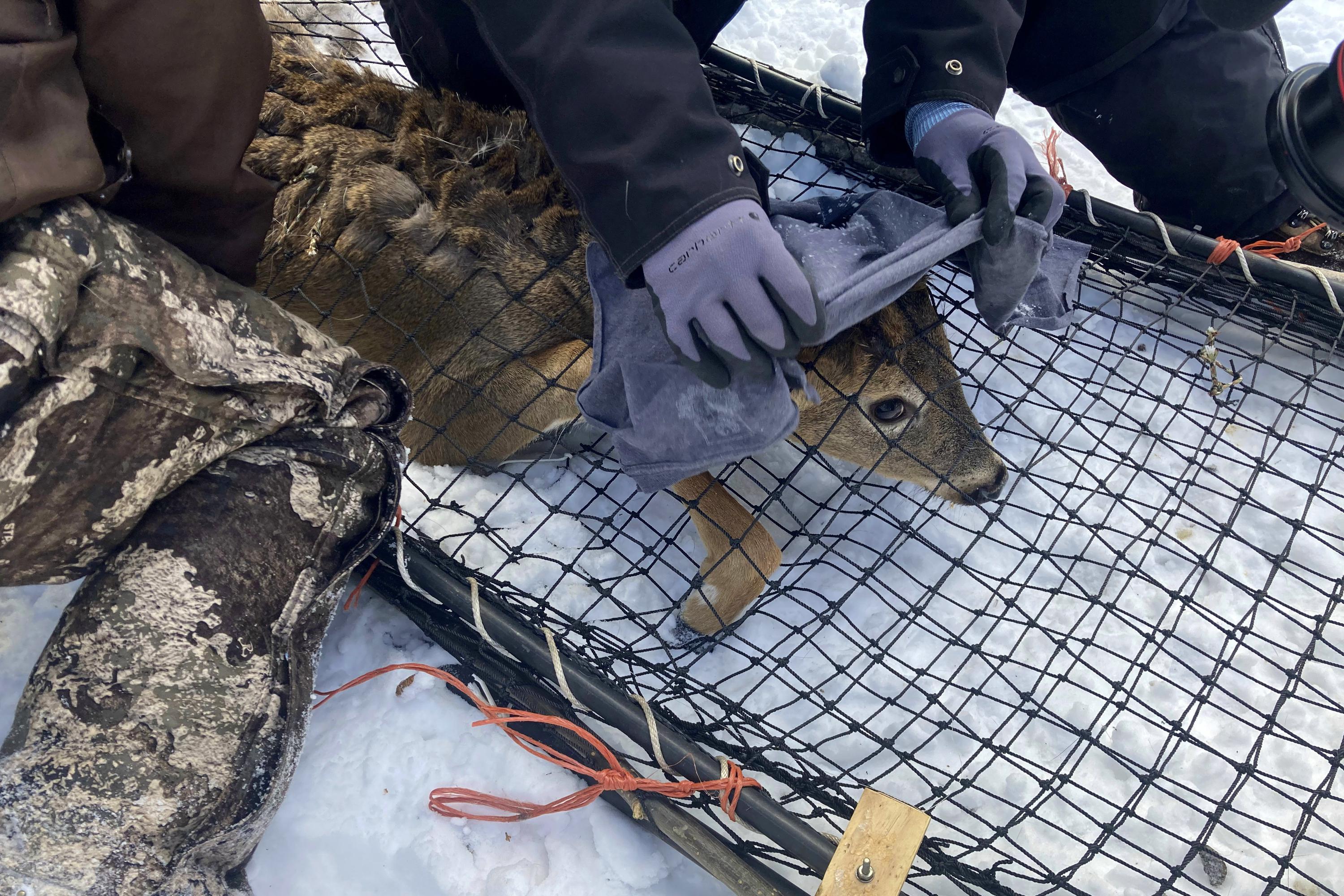
With icy Lake Superior sparkling through the evergreens, Isaac slipped his hand beneath the netting of a deer trap. A colleague straddling the animal lifted its head off the snowy ground so that Isaac could swab its nostrils.

The young buck briefly lurched its head forward, but kept still long enough for Isaac to get what he needed.

“Nicely done,” his colleague said as Isaac put the sample into a vial.

When they were finished, they gently lifted the trap to let the deer go. It bounded into the vast forest without looking back, disappearing into the snowy shadows.

___

The Associated Press Health and Science Department receives support from the Howard Hughes Medical Institute’s Department of Science Education. The AP is solely responsible for all content.

Adblock test (Why?)


COVID-19 - Latest - Google News
March 30, 2022 at 07:50PM
https://ift.tt/aYufX1U

Into the wild: Animals the latest frontier in COVID fight - The Associated Press - en Español
COVID-19 - Latest - Google News
https://ift.tt/5vMAVcb

Tuesday, March 29, 2022

Covid Live Updates: News on Omicron, Boosters, and Cases - The New York Times

Shannon Stapleton/Reuters

It has long been clear that Black Americans have experienced high rates of coronavirus infection, hospitalization and death throughout the pandemic.

But those factors are now leading experts to sound the alarm about what will may come next: a prevalence of long Covid in the Black community and a lack of access to treatment.

Long Covid — with chronic symptoms like fatigue, cognitive problems and others that linger for months after an acute Covid-19 infection has cleared up — has perplexed researchers, and many are working hard to find a treatment for people experiencing it. But health experts warn that crucial data is missing: Black Americans have not been sufficiently included in long-Covid trials, treatment programs and registries, according to the authors of a new report released on Tuesday.

“We expect there are going to be greater barriers to access the resources and services available for long Covid,” said one of the authors, Dr. Marcella Nunez-Smith, who is the director of Yale University’s health equity office and a former chair of President Biden’s health equity task force.

“The pandemic isn’t over, it isn’t over for anyone,” Dr. Nunez-Smith said. “But the reality is, it’s certainly not over in Black America.”

The report, called the State of Black America and Covid-19, outlines how disinvestment in health care in Black communities contributed to Black people contracting Covid at higher rates than white people. Black people were then more likely to face serious illness or death as a result.

The Black Coalition Against Covid, the Yale School of Medicine and the Morehouse School of Medicine were authors of the report, which also offers recommendations to policy leaders.

In the first three months of the pandemic, the average weekly case rate per 100,000 Black Americans was 36.2, compared with 12.5 for white Americans, the authors write. The Black hospitalization rate was 12.6 per 100,000 people, compared with 4 per 100,000 for white people, and the death rate was also higher: 3.6 per 100,000 compared with 1.8 per 100,000.

“The severity of Covid-19 among Black Americans was the predictable result of structural and societal realities, not differences in genetic predisposition,” the report says.

Black Americans were overrepresented in essential-worker positions, which increased the risk of exposure to the virus, the authors write. And they were also more likely than white Americans to live in multigenerational homes or crowded spaces, be incarcerated, or live in densely populated areas.

Many Black Americans who contracted the coronavirus experienced serious illness because of pre-existing conditions like obesity, hypertension and chronic kidney disease, which themselves were often the result of “differential access to high-quality care and health promoting resources,” the report says.

The authorization of the first coronavirus vaccines was seen by many experts as a light at the end of the tunnel, but new disparities emerged, driven by both vaccine hesitancy and limited access to the shots.

Though the gap in vaccinations has since narrowed — 80 percent of Black Americans were fully vaccinated as of January, compared with 83 percent of white Americans, the report says — disparities persist.

“We understand that there remains unfinished work yet to do to save and protect our communities from the Covid-19 pandemic,” wrote Dr. Reed Tuckson, who in April 2020 co-founded the Black Coalition Against Covid.

And when it comes to unfinished work, long Covid is top of mind.

“So much of even getting a long Covid diagnosis is tied to having had a positive test right at the beginning,” said Dr. Nunez-Smith, adding that early on in the pandemic, many Black Americans “weren’t able to secure a test and in some cases, were denied testing.”

She emphasized the importance of investing adequate resources into studying long Covid. “Like everything else, without intentionality, we’re not going to get to equity there,” she said.

Correction: 

March 29, 2022

An earlier version of this item described incorrectly the average rate of weekly cases, hospitalizations and deaths from Covid among Black Americans in the first three months of the pandemic. They were rates per 100,000 people, not percentages. An earlier version also included outdated figures provided by the Black Coalition Against Covid that the organization revised after publication.

Adblock test (Why?)


Health - Latest - Google News
March 30, 2022 at 07:41AM
https://ift.tt/Mu2ZSHm

Covid Live Updates: News on Omicron, Boosters, and Cases - The New York Times
Health - Latest - Google News
https://ift.tt/b2U56S9

Omicron BA.2 Variant Now Dominant In U.S.; New Cases Of More Transmissible Covid Hitting Northeast Hard - Deadline

The more transmissible strain of Omicron, BA.2, is now the dominant Covid variant in the United States. In just the last week, it has risen from 35% of all new cases genetically sequenced to 55%, per CDC data. That’s a remarkable 80% jump in just seven days.

In the swath of the Northeast that includes Pennsylvania, New York, New Jersey, Vermont, New Hampshire, Connecticut, Massachusetts, Rhode Island and Maine and has a population of about 55 million people, BA.2 now accounts for more than 70% of all new cases. That’s up from just over 50% the week before and 38% the week before that.

BA.2 omicron

A late January report from the Statens Serum Institut, which operates under the auspices of the Danish Ministry of Health, found that “BA.2 may be approx. 30% more transmissible than BA.1 (the original Omicron).” Some analyses since then have claimed the variant’s transmissibility advantage is even higher.

The good news is that the Omicron strains are much less virulent than Delta, but as the U.S. saw in early February of this year, Omicron’s increased transmissibility can still create a wave of deaths equal to or surpassing that of Delta by the sheer number of infections alone.

So far, that is not happening, with only minor jumps in the number of cases reported in parts of the Northeast and no significant jumps in hospitalizations.

One state where cases have risen alongside BA.2 is Florida. Covid numbers from data hub Helix.com indicate that, by mid-March, Omicron BA.2 accounted for 66% of all new cases in the state. The 7-day average of new cases in the state have risen from about 2300 on March 23 to about 4200 on March 28, per CDC data. But hospitalizations have actually dropped, so whether or not BA.2 will have a substantial impact on the local healthcare system remains to be seen, as hospitalizations generally lag cases by 2 weeks.

Adblock test (Why?)


Health - Latest - Google News
March 30, 2022 at 12:25AM
https://ift.tt/oJ7MOHa

Omicron BA.2 Variant Now Dominant In U.S.; New Cases Of More Transmissible Covid Hitting Northeast Hard - Deadline
Health - Latest - Google News
https://ift.tt/b2U56S9

Featured Post

Measles is “growing global threat,” CDC tells doctors in alert message - Ars Technica

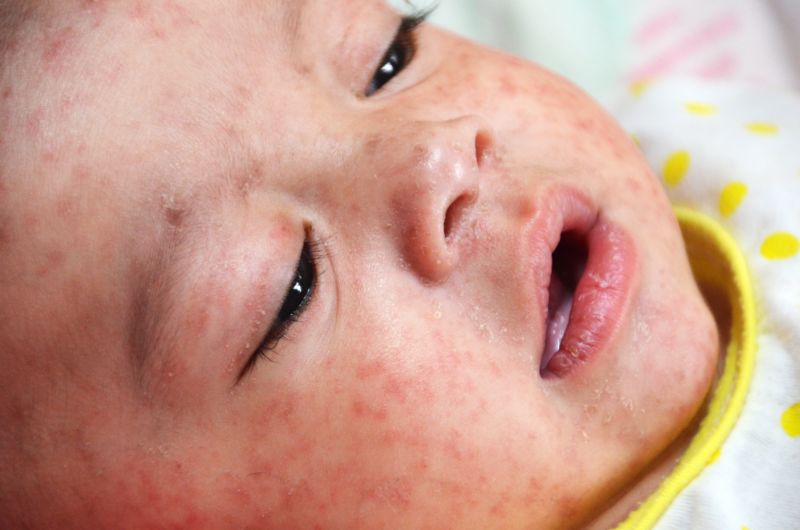
Enlarge / A baby with measles. CDC The Centers for Disease Control and Prevention is putting clinicians on alert about the growing r...

Popular Posts