Rechercher dans ce blog

Saturday, April 2, 2022

Covid-19 Live Updates: Global Cases and Vaccine News - The New York Times

The British government on Friday shut down or scaled back a number of its Covid surveillance programs, curtailing the collection of data that the United States and many other countries had come to rely on to understand the threat posed by emerging variants and the effectiveness of vaccines. Denmark, too, renowned for insights from its comprehensive tests, has drastically cut back on its virus tracking efforts in recent months.

As more countries loosen their policies toward living with Covid rather than snuffing it out, health experts worry that monitoring systems will become weaker, making it more difficult to predict new surges and to make sense of emerging variants.

“Things are going to get harder now,” Samuel Scarpino, a managing director at the Rockefeller Foundation’s Pandemic Prevention Institute, said. “And right as things get hard, we’re dialing back the data systems.”

Since the Alpha variant emerged in the fall of 2020, Britain has served as a bellwether, tracking that variant as well as Delta and Omicron before they arrived in the United States. After a slow start, American genomic surveillance efforts have steadily improved with a modest increase in funding.

“This might actually put the U.S. in more of a leadership position,” said Kristian Andersen, a virologist at Scripps Research Institute in La Jolla, Calif.

At the start of the pandemic, Britain was especially well prepared to set up a world-class virus tracking program. The country was already home to many experts on virus evolution, it had large labs ready to sequence viral genes, and it could link that sequencing to electronic records from its National Health Service.

In March 2020, British researchers created a consortium to sequence as many viral genomes as they could lay hands on. Some samples came from tests that people took when they felt ill, others came from hospitals, and still others came from national surveys.

That last category was especially important, experts said. By testing hundreds of thousands of people at random each month, the researchers could detect new variants and outbreaks among people who didn’t even know they were sick, rather than waiting for tests to come from clinics or hospitals.

“The community testing has been the most rapid indicator of changes to the epidemic, and it’s also been the most rapid indicator of the appearance of new variants,” said Christophe Fraser, an epidemiologist at the University of Oxford. “It’s really the key tool.”

Chris Eades/Getty Images

By late 2020, Britain was performing genomic sequencing on thousands of virus samples a week from surveys and tests, supplying online databases with more than half of the world’s coronavirus genomes. That December, this data allowed researchers to identify Alpha, the first coronavirus variant, in an outbreak in southeastern England.

A few other countries stood out for their efforts to track the virus’s evolution. Denmark set up an ambitious system for sequencing most of its positive coronavirus tests. Israel combined viral tracking with aggressive vaccination, quickly producing evidence last summer that the vaccines were becoming less effective — data that other countries leaned on in their decision to approve boosters.

But Britain remained the exemplar in not only sequencing viral genomes, but combining that information with medical records and epidemiology to make sense of the variants.

“The U.K. really set itself up to give information to the whole world,” said Jeffrey Barrett, the former director of the Covid-19 Genomics Initiative at the Wellcome Sanger Institute in Britain.

Even in the past few weeks, Britain’s surveillance systems were giving the world crucial information about the BA.2 subvariant of Omicron. British researchers established that the variant does not pose a greater risk of hospitalization than other forms of Omicron but is more transmissible.

On Friday, two of the country’s routine virus surveys were shut down and a third was scaled back, baffling Dr. Fraser and many other researchers, particularly when those surveys now show that Britain’s Covid infection rates are estimated to have reached a record high: one in 13 people. The government also stopped paying for free tests, and either canceled or paused contact-tracing apps and sewage sampling programs.

“I don’t understand what the strategy is, to put together these very large instruments and then dismantle them,” Dr. Fraser said.

The cuts have come as Prime Minister Boris Johnson has called for Britain to “learn to live with this virus.” When the government released its plans in February, it pointed to the success of the country’s vaccination program and the high costs of various virus programs. Although it would be scaling back surveillance, it said, “the government will continue to monitor cases, in hospital settings in particular, including using genomic sequencing, which will allow some insights into the evolution of the virus.”

It’s true that life with Covid is different now than it was back in the spring of 2020. Vaccines drastically reduce the risk of hospitalization and death — at least in countries that have vaccinated enough people. Antiviral pills and other treatments can further blunt Covid’s devastation, although they’re still in short supply in much of the world.

Supplying free tests and running large-scale surveys is expensive, Dr. Barrett acknowledged, and after two years, it made sense that countries would look for ways to curb spending. “I do understand it’s a tricky position for governments,” he said.

Frank Augstein/Associated Press

But he expressed worry that cutting back too far on genomic surveillance would leave Britain unprepared for a new variant. “You don’t want to be blind on that,” he said

With a reduction in testing, Steven Paterson, a geneticist at the University of Liverpool, pointed out that Britain will have fewer viruses to sequence. He estimated the sequencing output could drop by 80 percent.

“Whichever way you look at it, it’s going to lead very much to a degradation of the insight that we can have, either into the numbers of infections, or our ability to spot new variants as they come through,” Dr. Paterson said.

Experts warned that it will be difficult to restart surveillance programs of the coronavirus, known formally as SARS-CoV-2, when a new variant emerges.

“If there’s one thing we know about SARS-CoV-2, it’s that it always surprises us,” said Paul Elliott, an epidemiologist at Imperial College London and a lead investigator on one of the community surveys being cut. “Things can change really, really quickly.”

Other countries are also applying a live-with-Covid philosophy to their surveillance. Denmark’s testing rate has dropped nearly 90 percent from its January peak. The Danish government announced on March 10 that tests would be required only for certain medical reasons, such as pregnancy.

Astrid Iversen, an Oxford virologist who has consulted for the Danish government, expressed worry that the country was trying to convince itself the pandemic was over. “The virus hasn’t gotten the email,” she said.

With the drop in testing, she said, the daily case count in Denmark doesn’t reflect the true state of the pandemic as well as before. But the country is ramping up widespread testing of wastewater, which might work well enough to monitor new variants. If the wastewater revealed an alarming spike, the country could start its testing again.

“I feel confident that Denmark will be able to scale up,” she said.

Israel has also seen a drastic drop in testing, but Ran Balicer, the director of the Clalit Research Institute, said the country’s health care systems will continue to track variants and monitor the effectiveness of vaccines. “For us, living with Covid does not mean ignoring Covid,” he said.

Matt Dunham/Associated Press

While Britain and Denmark have been cutting back on surveillance, one country offers a model of robust-yet-affordable virus monitoring: South Africa.

South Africa rose to prominence in November, when researchers there first discovered Omicron. The feat was all the more impressive given that the country sequences only a few hundred virus genomes a week.

Tulio de Oliveira, the director of South Africa’s Centre for Epidemic Response & Innovation, credited the design of the survey for its success. He and his colleagues randomly pick out test results from every province across the country to sequence. That method ensures that a bias in their survey doesn’t lead them to miss something important.

It also means that they run much leaner operations than those of richer countries. Since its start in early 2020, the survey has cost just $2.1 million. “It’s much more sustainable,” Dr. de Oliveira said.

In contrast, many countries in Africa and Asia have yet to start any substantial sequencing. “We are blind to many parts of the world,” said Elodie Ghedin, a viral genomics expert at the U.S. National Institute of Allergy and Infectious Diseases.

The United States has traveled a course of its own. In early 2021, when the Alpha variant swept across the country, American researchers were sequencing only a tiny fraction of positive Covid tests. “We were far behind Britain,” Dr. Ghedin said.

Since then, the Centers for Disease Control and Prevention has helped state and local public health departments start doing their own sequencing of virus genomes. While countries like Britain and Denmark pull back on surveillance, the United States is still ramping up its efforts. Last month, the C.D.C. announced a $185 million initiative to support sequencing centers at universities.

Still, budget fights in Washington are bringing uncertainty to the country’s long-term surveillance. And the United States faces obstacles that other wealthy countries don’t.

Without a national health care system, the country cannot link each virus sample with a person’s medical records. And the United States has not set up a regularly updated national survey of the sort that has served the United Kingdom and South Africa so well.

“All scientists would love it if we had something like that,” Dr. Ghedin said. “But we have to work with the confines of our system.”

Adblock test (Why?)


COVID-19 - Latest - Google News
April 03, 2022 at 02:18AM
https://ift.tt/zRkN4l1

Covid-19 Live Updates: Global Cases and Vaccine News - The New York Times
COVID-19 - Latest - Google News
https://ift.tt/8nsbBO1


Iowa’s bird flu death toll tops 13 million - Raw Story

Cruz shouted, asked inane questions, seemed to search Twitter for himself, and even went after his fellow senators. It was such a grotesque performance that it was hard not to want to comment on the spectacle. But after we finish being distracted by the confirmation hearing car wreck, Cruz's behavior opens up a door to a far more significant takeaway — one that offers Democrats a strong strategy for midterm victory, if they pay attention.

To fully appreciate the gift Cruz handed his opposition, consider that the same week that Cruz was using his time to question Judge Jackson by ranting about children's books, we also received a pivotal opinion from Federal Judge David Carter. Carter had been asked to rule on whether or not the House committee investigating the insurrection at the Capitol on Jan. 6, 2021, could obtain emails from Donald Trump's lawyer and political advisor John Eastman. In his opinion, Carter remarked that Trump and Eastman "launched a campaign to overturn a democratic election, an action unprecedented in American history."

The anti-democratic nature and civics stupidity of the GOP has been gaining momentum.

The evidence has been in plain sight for some time. From Mitch McConnell blocking Barack Obama's Supreme Court nominee in 2016 to GOP efforts to suppress votes to a party base that hates Democrats more than they love their country, the anti-democratic nature and civics stupidity of the GOP has been gaining momentum.

Thus far, Democrats have not capitalized on that fact and have instead tended to focus on the GOP's racism, misogyny, xenophobia and extremism. Think of it this way: As debates have raged over the question of critical race theory (CRT) in K-12 education, Democrats have alternately pointed out that the GOP doesn't understand CRT, that it isn't taught in K-12 schools and that those critical of CRT are racist.

RELATED: The critics were right: "Critical race theory" panic is just a cover for silencing educators

All true. But it's the wrong approach.

What Democrats should be doing is saying that it is a national embarrassment that our citizens have such low civics knowledge, with the latest poll from Annenberg Public Policy showing that only 56 percent of U.S. adults can correctly name all three branches of government—made more astonishing by the fact that that number is the highest the poll has recorded since 2006. Even worse, 61 percent of Americans incorrectly said that Facebook "is required to permit all Americans to express themselves freely on Facebook under the First Amendment." We have a country that can't tell the difference between freedom from government censorship and the operating policies of a private business.

"It is a sad commentary on the public's civic literacy that half of the public considers an effort to disrupt the certification of an election an exercise of a First Amendment right."

This lack of knowledge becomes even more acute when Americans are asked about the Capitol riot. Half of those polled confused rioting with a constitutionally protected right to petition the government. According to Kathleen Hall Jamieson, director of the Annenberg Public Policy Center, "It is a sad commentary on the public's civic literacy that half of the public considers an effort to disrupt the certification of an election an exercise of a First Amendment right."

For years it's been clear that we are terrible at teaching our kids how our democracy works and that we have been reluctant to invest in a robust and effective civics education program, despite efforts to pass legislation to support it. Those kids grow up and vote. Yet, as we can see, they still don't understand even the most basic civics concepts.

The problem isn't just that average citizens don't understand our democracy; it is that our elected officials and their advisors don't either. Or, perhaps worse, they do understand it, but refuse to uphold it.

In this way Cruz, aided and abetted by the release of Eastman's emails, handed Democrats the key strategy they need to win the 2022 midterms: Hammer home, again and again, that Republicans don't understand democracy, won't defend democracy and are woefully in need of a basic civics lesson.

When Cruz chose to barrage Judge Jackson with questions about a children's book called "Antiracist Baby," he offered the public a dress rehearsal for the sorts of arguments we can expect GOP candidates to make in the upcoming election. But Judge Jackson's response also offered a clear counter-platform.

RELATED: Racist babies: Republicans reduced to white wailing at first Black woman nominated to Supreme Court

Recall that she consistently prefaced any reply to Cruz, by referring to him as "Senator" as if to remind him of his actual reason for being there. She then went on "I have not reviewed any of those books. They don't come up in my work as a judge, which I'm, respectfully, here to address." In one graceful line Judge Jackson schooled Cruz on how he was not fulfilling his duty as a senator and pointed out that he seemed to be confused about what a Supreme Court justice actually does.

She was graceful and poised as befitted the moment.

Want a daily wrap-up of all the news and commentary Salon has to offer? Subscribe to our morning newsletter, Crash Course.

To win in November, though, Democrats need to come after the democratic failures and civics blind spots of the GOP relentlessly. Rather than deal with the GOP painting Democrats as the party of CRT, they need to turn the tables and paint the GOP as the party that doesn't even understand the government they want to lead. Democrats need to portray GOP candidates as entirely unqualified to work in our government and whenever they get the chance they need to grill their opponents on basic facts related to the constitution, the branches of government and the core principles of a democracy.

For too long it has been expected that the GOP will offer media spectacle in the form of a civics dumpster fire.

For too long Democrats have let the GOP set the terms of debate and have let them frame the political narrative, leaving Democrats in the unappealing position of always running political defense. For too long it has been expected that the GOP will offer media spectacle in the form of a civics dumpster fire. Yet, rather than focus on their horrendous failure to earn their paychecks, we have become too accustomed to covering the show.

But what would it look like if, rather than express outrage at the antics of the GOP, we just kept asking them to explain how our democracy works? That plan offers a positive counter-offense and would allow Democrats to set the terms of debate. Even better, rather than offer an endless platform for the GOP circus, the media would be forced to point out that these jokers have no idea what they are doing.

When Senators ask stupid questions like, "What is a woman?" or "Can I be Asian?" imagine what would happen if they were swiftly countered with, "What is a Supreme Court justice?" and "Can you be a senator?"

Adblock test (Why?)


Health - Latest - Google News
April 02, 2022 at 05:05PM
https://ift.tt/dX7VgHF

Iowa’s bird flu death toll tops 13 million - Raw Story
Health - Latest - Google News
https://ift.tt/RIFjwMr

UK hits record COVID-19 levels; nearly 5 million infected - The Associated Press - en Español

LONDON (AP) — The prevalence of COVID-19 in the U.K. has reached record levels, with about 1 in 13 people estimated to be infected with the virus in the past week, according to the latest figures from Britain’s official statistics agency.

Some 4.9 million people were estimated to have the coronavirus in the week ending March 26, up from 4.3 million recorded in the previous week, the Office for National Statistics said Friday. The latest surge is driven by the more transmissible omicron variant BA.2, which is the dominant variant across the U.K.

Hospitalizations and death rates are again rising, although the number of people dying with COVID-19 is still relatively low compared with earlier this year. Nonetheless, the latest estimates suggest that the steep climb in new infections since late February, when British Prime Minister Boris Johnson scrapped all remaining coronavirus restrictions in England, has continued well into March.

The figures came on the same day the government ended free rapid COVID-19 tests for most people in England, under Johnson’s “living with COVID” plan. People who do not have health conditions that make them more vulnerable to the virus now need to pay for tests to find out if they are infected.

“The government’s ‘living with COVID’ strategy of removing any mitigations, isolation, free testing and a considerable slice of our surveillance amounts to nothing more than ignoring this virus going forwards,” said Stephen Griffin, associate professor at the University of Leeds’ medical school.

“Such unchecked prevalence endangers the protection afforded by our vaccines,” he said. “Our vaccines are excellent, but they are not silver bullets and ought not to be left to bear the brunt of COVID in isolation.”

More than 67% of people 12 years old and above in the U.K. have been vaccinated and had their booster or a third dose of the coronavirus vaccine. Beginning Saturday, parents can also book a low-dose vaccine for children between 5 to 12 years old in England.

James Naismith, a biology professor at the University of Oxford, said he believed that except for those who are completely shielded or not susceptible to the virus, most people in the country would likely be infected with the BA.2 variant by the summer.

“This is literally living with the virus by being infected with it,” he said.

___

Follow all AP stories on the coronavirus pandemic at https://apnews.com/hub/coronavirus-pandemic.

Adblock test (Why?)


COVID-19 - Latest - Google News
April 02, 2022 at 06:35PM
https://ift.tt/fBKbTIP

UK hits record COVID-19 levels; nearly 5 million infected - The Associated Press - en Español
COVID-19 - Latest - Google News
https://ift.tt/8nsbBO1

How COVID reshaped cancer care - Axios

The pandemic disrupted cancer treatments for millions of Americans, but it led health care providers to speed up efforts to shift care from hospitals and clinics to patients' homes.

Why it matters: Cancer patients at higher risk for infections and other complications could benefit from therapy and testing at home — and the care delivered in less intensive settings could also be cheaper.

Adblock test (Why?)


COVID-19 - Latest - Google News
April 03, 2022 at 01:09AM
https://ift.tt/0Y9LMtl

How COVID reshaped cancer care - Axios
COVID-19 - Latest - Google News
https://ift.tt/8nsbBO1

Friday, April 1, 2022

Myocarditis risk higher after Covid infection than Pfizer or Moderna vaccination, CDC finds - CNBC

A healthcare worker administers a Covid-19 test in San Francisco, California, on Monday, Jan. 10, 2022.
David Paul Morris | Bloomberg | Getty Images

People infected with Covid-19 face a higher risk of myocarditis and other inflammatory heart conditions than those vaccinated against the disease, according a large study published by the Centers for Disease Control and Prevention on Friday.

The CDC found the risk of myocarditis, pericarditis and multisystem inflammatory syndrome was higher after Covid infection than after Pfizer or Moderna vaccination in males and females ages 5 and older. However, these cardiac conditions are rare after infection and vaccination alike, according to the CDC.

Myocarditis is an inflammation of the heart muscle and pericarditis is an inflammation of the outer heart lining. Multisystem inflammatory is a condition associated with Covid infection that affects multiple organ systems.

Pfizer and Moderna's vaccines have been associated with an elevated risk of myocarditis and pericarditis after the second dose, particularly among boys ages 12- to 17-years-old. However, even in this group the risk of myocarditis and pericarditis was higher after Covid infection than after vaccination, according to the CDC.

Among teenage boys, the rate of myocarditis or pericarditis after infection was at least 50 cases per 100,000 people, compared to at least 22 cases per 100,000 after the second vaccine dose. The overall risk of heart conditions after Covid infection was up to 5.6 times higher compared to the second vaccine dose. The risk was up to 69 times higher after infection compared to the first shot.

The CDC examined the electronic health records of more than 15 million people ages 5 and older across 40 health-care systems from Jan. 2021 through Jan. 2022. Scientists studied the risk of developing a cardiac condition after a Covid infection compared to the first and second doses of Pfizer and Moderna's vaccines. The study excluded booster doses from the comparison.

Overall, the risk of a heart issue after Covid infection was anywhere from 2 to 115 times higher compared to vaccination depending on age, gender and the dose administered.

In February, the CDC said males age 12- to 39-years-old should consider waiting eight weeks between the first and second dose of the Pfizer or Moderna vaccines to reduce the risk of myocarditis. Canadian public health authorities had found that the rate of myocarditis after Pfizer or Moderna vaccination was higher when the time between the first and second dose was fewer than 30 days.

Moderna's second dose appears associated with a higher risk of myocarditis than Pfizer's, according to data presented to the CDC's committee of vaccine experts in February. Public health authorities in Ontario, Canada have found that the rate of myocarditis was 5 times higher for males ages 18-24 following a second dose of Moderna compared to Pfizer.

However, the overwhelming majority of people who developed myocarditis after vaccination recovered fully and most of them did not report any effect on their quality of life, according to a CDC survey of health-care providers presented at the February meeting.

Adblock test (Why?)


COVID-19 - Latest - Google News
April 02, 2022 at 03:46AM
https://ift.tt/W52gikB

Myocarditis risk higher after Covid infection than Pfizer or Moderna vaccination, CDC finds - CNBC
COVID-19 - Latest - Google News
https://ift.tt/8nsbBO1

New heart failure guidelines add another type of meds to treatment recommendations - CNN

(CNN)The American College of Cardiology, the American Heart Association and the Heart Failure Society of America released new guidelines Friday that add a fourth class of medication to the recommended treatment plan for people who have a condition called heart failure with reduced ejection fraction.

Heart failure is caused by weakened muscles that lower the heart's ability to properly squeeze and pump blood. Nearly 6.2 million Americans have it, according to the US Centers for Disease Control and Prevention. Heart disease is the leading cause of death for both men and women in the US, accounting for almost 400,000 deaths a year as of 2018, and heart failure accounts for 8.5% of those deaths.
Ejection fraction is a measurement of how well the left ventricular compartment of the heart can squeeze. An ejection fraction higher than 50% is considered normal; one at or below 40% is considered reduced.
Previously, people who had heart failure with reduced ejection fraction were treated with three classes of medications to reduce the amount of work that the heart has to do. One class includes ACE inhibitors, angiotensin receptor blockers and ARN inhibitors. Beta blockers are the second class, and the third is antimineralocorticoids.
The new guidelines advise prescribers to add SGLT2 inhibitors as the fourth type of medication for people who have heart failure with reduced ejection fraction.
SGLT2, or sodium-glucose cotransporter-2, inhibitors lower blood sugar by causing the kidneys to remove sugar from the body through urine. This class of drugs, previously used only in people with diabetes, has been found to lower the risk of death in heart failure patients, as well.
The new recommendations were based off two clinical trials that found that people with heart failure with reduced ejection fraction who took the SGLT2 inhibitors dapagliflozin and empagliflozin lived longer. Both trials demonstrated that this benefit was significant even in people who did not have diabetes.
"When I discuss it with my patients, I explain that the evidence behind these recommendations is very solid. If you took 100 clinicians who were experienced and they looked at the evidence base, pretty much all 100 should come to the same conclusion that these are really recommended therapy," said Dr. Mark Drazner, president of the Heart Failure Society of America and clinical chief of cardiology at UT Southwestern.
For the first time, the guidelines also provide treatment recommendations for people who have heart failure with ejection fractions between 41% and 49%, considered "mildly reduced ejection fractions," and people who have ejection fractions of 50% and above, called preserved ejection fraction. These groups would also benefit from an SGLT2 inhibitor, the recommendations say.
This recommendation is a "moderately strong" one that people should definitely discuss with their doctors, said Dr. Paul Heidenreich, chair of the committee that wrote the new guidelines and professor and vice chair for quality in the Department of Medicine at Stanford University School of Medicine. The level of recommendation is dependent on the strength of studies and the magnitude of benefit the drug provides.
Although people may be hesitant to add another medication to their regimen, Heidenreich said it's important to emphasize that "feeling better ... staying out of the hospital and living longer are the reasons to be taking the medication."
SGLT2 inhibitors carry a higher risk of urinary tract infections. People who have type 1 diabetes or mild to moderately reduced kidney function should not take them.
Though the guidelines establish a new standard for treatment of heart failure based on strong clinical evidence, there are often delays in their real-world implementation.
"There's a gap between the guideline recommendations and what the people in the country are actually getting treated with," Drazner said. "Unfortunately, many patients don't get on the highest level recommended therapy."
Even utilization rates for the previously recommended three classes of medication therapy for heart failure were "shockingly low," he said.
Things like drug pricing and clinicians who are slow to prescribe the medications contribute to these low rates, he said.
Get CNN Health's weekly newsletter

Sign up here to get The Results Are In with Dr. Sanjay Gupta every Tuesday from the CNN Health team.

The guidelines also introduced new classification terminology for heart failure.
People who have risk factors like hypertension, diabetes or atherosclerosis but no evidence of heart failure are considered at-risk.
"Pre-heart failure" is now used to describe people who have no symptoms of heart failure but show evidence of structural heart disease or higher levels of cardiac disease biomarkers, such as brain natriuretic peptide (BNP), a protein that is released into the bloodstream when the heart can't pump enough blood.
It is also now formally recommended that anyone with advanced-stage heart failure should seek care at a specialized advanced heart failure center. These centers have clinicians who specialize in the late stages of heart disease and can provide treatments such as heart transplants, left ventricular assist devices or palliative care, depending on patients' goals.

Adblock test (Why?)


Health - Latest - Google News
April 02, 2022 at 01:53AM
https://ift.tt/D3nuS5d

New heart failure guidelines add another type of meds to treatment recommendations - CNN
Health - Latest - Google News
https://ift.tt/5RQONIx

Federal government investigating COVID testing by Nomi Health - Deseret News

Federal authorities notified Orem-based Nomi Health in mid-March that not only was its COVID-19 testing for the state of Utah not in compliance with government standards, “the deficient practices” identified with the help of the Utah Department of Health “pose immediate jeopardy to patient health and safety.”

A Centers for for Medicare and Medicaid Services spokesman who provided a copy of the March 16 letter notifying Nomi Health of the agency’s findings as well as a 16-page report detailing the deficiencies, confirmed Friday that “CMS is investigating Nomi Health Lab (CLIA #46D2199811) and its temporary testing sites.”

It is not clear whether sanctions have been proposed. According to the spokesman, generally when noncompliance is found, the facility is given an opportunity to respond and correct the cited deficiencies, but if it fails to do so, sanctions are proposed but can be challenged.

“CMS makes the ultimate enforcement decision about imposing sanctions,” the spokesman said.

The letter sent to Nomi Health spells out that the company had until March 26 to fix the issues identified and could face the suspension and revocation of its federal certificate, cancellations of Medicare and Medicaid payments, and civil penalties of more than $21,600 per day of violation.

Nomi Health said in a statement the federal regulatory program, known as Clinical Laboratory Improvement Amendments, or CLIA, “engaged us with specific improvements. Our clinical and quality team responded quickly and with rigor. It’s a federal process that is still underway, and we look forward to working together in this process.”

A spokesman for Nomi Health, which said earlier this week it would begin offering for-profit COVID-19 testing following the end of the state’s free testing for most Utahns on Thursday, said the company was “limited to speak about all that’s going on with the federal government” but would discuss issues with the state health department.

Nomi Health’s contract with the state requires the company to “ensure that all collections are conducted in accordance with CLIA,” according to a statement by the Utah Department of Health. “UDOH regularly monitors performance and when concerns are raised, we inform Nomi of the concerns and implement a resolution process.”

The statement, issued Thursday amid reports of the federal investigation, said the state health department has “not seen the CMS report” but has requested a copy. A spokeswoman said Friday there was no update to that statement.

Nomi Health remains under contract to provide COVID-19 testing for the state should that be needed, as part of Gov. Spencer Cox’s “steady state” plan to treat COVID-19 like the flu or other diseases with limited outbreaks that shifted testing and treatment for the virus to private providers as of Friday.

“Since state-sponsored testing is paused for all vendors,” the state health department statement said, “we will use the time during this pause to review the issues raised in the CLIA report and Nomi’s response once we receive them and determine appropriate actions.”

Testing sites operated by Nomi Health in Bountiful, Millcreek, West Jordan, Park City, West Valley City and West Jordan were inspected and findings included test supplies meant to be kept at room temperature piled on top of duct tape and hand warmers, opened next to “yogurt; a bag of Cheez-Its; and rice cakes,” or left out in the cold.

Other issues focused on how the tests were being administered, including not properly timing when to check for results. The tests being used were the GenBody brand of rapid antigen tests that the state stopped using in early February because of a much higher rate of false negatives than expected.

Nomi Health’s statement, also issued Thursday, said the company rejects “any implication or insinuation by certain people inside the Utah Department of Health that the lack of efficacy of certain antigen tests is somehow unique to Nomi Health. It is not. Our national findings on antigen test efficacy were consistent with the State of Utah’s findings for certain tests, leading the state to halt antigen testing.”

But the investigation, conducted by state health department and the CMS Kansas City branch personnel, said based on observation of testing at all the sites inspected “and interviews with supervisors, management, and testing personnel, the laboratory failed to follow the manufacturer” instructions.

Adblock test (Why?)


COVID-19 - Latest - Google News
April 02, 2022 at 03:25AM
https://ift.tt/D3MZLOS

Federal government investigating COVID testing by Nomi Health - Deseret News
COVID-19 - Latest - Google News
https://ift.tt/8nsbBO1

Featured Post

Measles is “growing global threat,” CDC tells doctors in alert message - Ars Technica

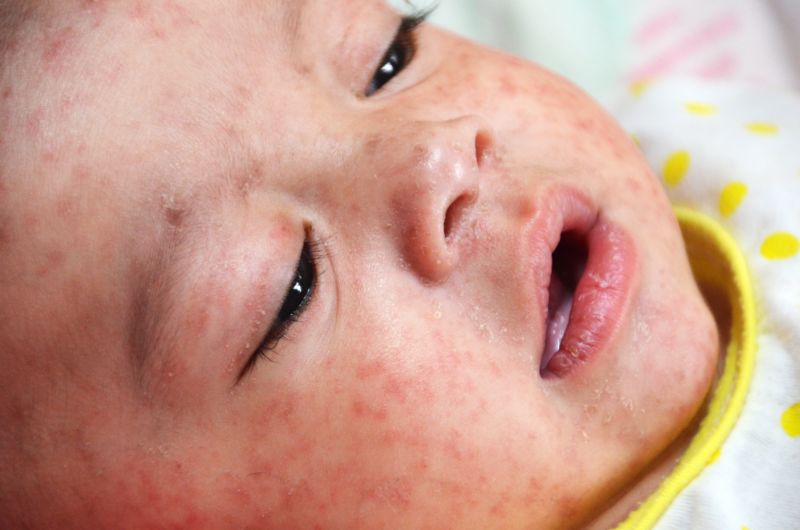
Enlarge / A baby with measles. CDC The Centers for Disease Control and Prevention is putting clinicians on alert about the growing r...

Popular Posts