Rechercher dans ce blog

Monday, September 26, 2022

Frozen embryos tied to higher risk of pregnancy complications related to high blood pressure, study suggests - CNN

CNN  — 

Pregnancies from in vitro fertilization using frozen embryos appear to be linked to an increased risk of complications related to high blood pressure, or hypertensive disorders, compared with when fresh embryos are used or when a pregnancy is conceived naturally.

That’s according to a study published Monday in the American Heart Association journal Hypertension, which included data on more than 4.5 million pregnancies, spanning almost three decades, across three European nations: Denmark, Norway and Sweden.

The risk of pregnancy complications related to high blood pressure was higher after the transfer of frozen embryos compared with naturally conceived pregnancies, and the risk following fresh embryo transfers was similar to that of naturally conceived pregnancies, the data shows.

More research is needed to determine whether similar findings would emerge in the United States.

The researchers – from the Norwegian University of Science and Technology and other institutions in Europe – analyzed medical birth registries from Denmark that were dated between 1994 and 2014, from Norway dated 1984 to 2015, and from Sweden dated 1985 to 2015. The registries included about 4.4 million pregnancies naturally conceived, 78,300 pregnancies that used fresh embryo transfer and 18,037 pregnancies from frozen embryo transfer.

The researchers compared odds of hypertensive disorders during pregnancy across the groups and found that the unadjusted risk of such disorders was 7.4% after frozen embryo transfer, 5.9% after fresh embryo transfer and 4.3% after natural conception. The data also showed that pregnancies from frozen and fresh embryo transfer were more frequently preterm – 6.6% of the frozen and 8.1% of the fresh, respectively – compared with naturally conceived pregnancies, at 5%.
“Frozen embryo transfers are now increasingly common all over the world, and in the last few years, some doctors have begun skipping fresh embryo transfer to routinely freeze all embryos in their clinical practice, the so-called ‘freeze-all’ approach,” lead study author Dr. Sindre H. Petersen, a Ph.D. fellow at the Norwegian University of Science and Technology in Trondheim, Norway, said in a news release Monday.

“In summary, although most IVF pregnancies are healthy and uncomplicated,” he said, “this analysis found that the risk of high blood pressure in pregnancy was substantially higher after frozen embryo transfer compared to pregnancies from fresh embryo transfer or natural conception.”

Petersen added, “Our results highlight that careful consideration of all benefits and potential risks is needed before freezing all embryos as a routine in clinical practice.”

The findings are “in agreement with earlier population-level studies” showing a higher risk of hypertensive disorders during pregnancy after frozen embryo transfer, the researchers wrote in their study.

Last year, a large study out of France presented at the online annual meeting of the European Society of Human Reproduction and Embryology also found a higher risk of pre-eclampsia and hypertension in pregnancies derived from frozen-thawed embryos – and the risk was found to be greater when the uterus was prepared for implantation with hormone replacement therapies.

“The association between frozen embryo cycles and hypertensive disease in pregnancy has been known for a while, and there is still currently an active debate around the pros and cons of ‘Freeze all for all?’ amongst fertility doctors,” Dr. Ying Cheong, professor of reproductive medicine at the University of Southampton, said in a statement distributed by the UK-based Science Media Centre in July. She was not involved in either study.

“There are two important points to take home here, firstly, whilst frozen embryo transfer technology has transformed reproductive medicine, FET must only be performed where clinically appropriate and secondly, clinicians and scientists need to start joining the dots between what happens at early development and later at birth and beyond, a research area, in my opinion, that is still poorly supported and studied,” Cheong said.

The new study did not evaluate what could be driving this association between frozen embryo transfers and high blood pressure risks, but some IVF doctors question whether it is really fresh vs. frozen.

“There is one thing that is not clear: is it from the actual procedure of freezing the embryo or is it from the protocol used? Most IVF doctors believe from recent studies and evidence that it’s actually the medication protocol, not the IVF procedure,” Dr. Aimee Eyvazzadeh, a San Francisco-based reproductive endocrinologist, who was not involved in the new study, wrote in an email to CNN on Monday.

Get CNN Health's weekly newsletter

Sign up here to get The Results Are In with Dr. Sanjay Gupta every Tuesday from the CNN Health team.

    “There are different ways to prepare a uterus for transfer,” she said. One protocol involves a corpus luteum cyst, a fluid-filled mass that forms in the ovaries and plays an important role during pregnancy, as the corpus luteum produces the hormone progesterone that is needed during pregnancy. Another protocol relies on medications to mimic ovulation.

    “Studies show that it’s the lack of corpus luteum that increases the risk and this is potentially why a frozen transfer may have a higher risk of pre-eclampsia,” Eyvazzadeh wrote.

    Overall, the new study is “very important” for “anyone taking care of pregnant people after IVF,” she wrote. “Everyone taking care of pregnant people after IVF should pay extremely close attention to this study. More and more studies are showing what IVF doctors already know and that is that IVF after frozen embryo transfer can increase risk of pre-eclampsia.”

    Adblock test (Why?)


    Health - Latest - Google News
    September 27, 2022 at 05:00AM
    https://ift.tt/OnHGhg1

    Frozen embryos tied to higher risk of pregnancy complications related to high blood pressure, study suggests - CNN
    Health - Latest - Google News
    https://ift.tt/iGAC7he

    Viruses May Be “Watching” You – Lying in Wait Before Multiplying and Killing - SciTechDaily

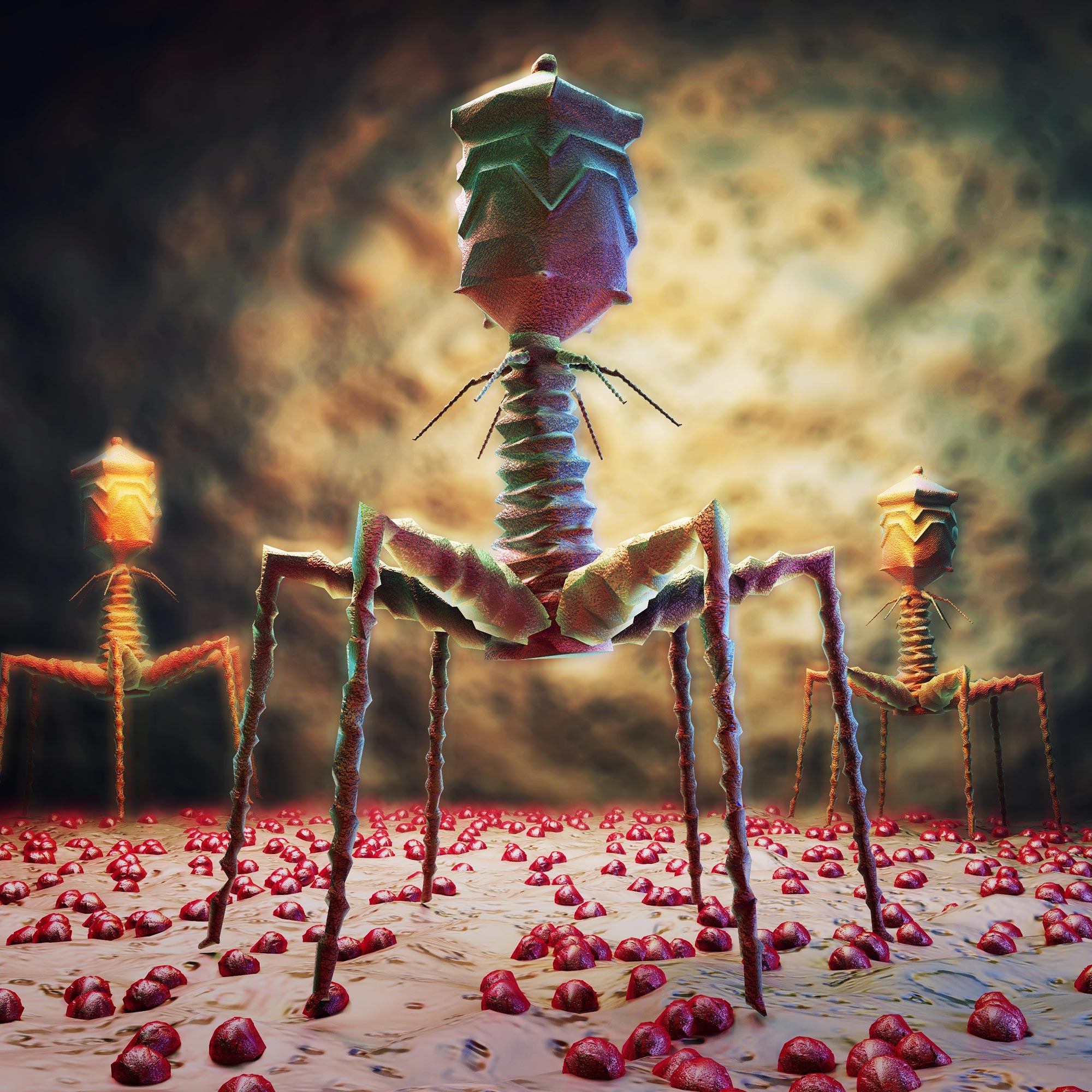
    Illustration of Bacteriophages

    Phages can sense bacterial DNA damage, which triggers them to replicate and jump ship.

    Viruses may be ‘watching’ you – some microbes lie in wait until their hosts unintentionally give them the signal to start multiplying and kill them.

    Especially after more than two years of the COVID-19 pandemic, many people picture a virus as a nasty spiked ball – essentially a mindless killer that gets into a cell and hijacks its machinery to create a gazillion copies of itself before bursting out. For many viruses, including the coronavirus that causes COVID-19, the “mindless killer” moniker is essentially true.

    However, there’s more to virus biology than meets the eye.

    A suitable illustration is HIV, the virus that causes AIDS. HIV is a retrovirus that does not immediately go on a killing spree when it enters a cell. Instead, it integrates itself into your chromosomes and chills, waiting for the proper opportunity to command the cell to make copies of it and burst out to infect other immune cells and eventually cause AIDS.

    Bacteriophages, or simply phages, are naturally occurring viruses that attack and kill bacteria. They cannot infect human cells. Phages are extremely diverse and exist everywhere in the environment, including in our bodies. In fact, humans contain more phages than human cells.

    A phage has three main parts: a head, a sheath, and a tail. The phage uses its tail to attach to a bacterial cell. They use the bacteria to replicate themselves. After finding a “matching” bacterial cell, the phage injects its genetic material, hijacking the system normally used for bacterial reproduction. Instead the system will make thousands more phages, which ultimately burst the bacterial cell, releasing it into the environment.

    Exactly what moment HIV is waiting for is not clear, as it’s still an area of active study. However, research on other viruses has long indicated that these pathogens can be quite “thoughtful” about killing. Of course, viruses cannot think the way you and I do. But, as it turns out, evolution has bestowed them with some pretty elaborate decision-making mechanisms. For example, some viruses will choose to leave the cell they have been residing in if they detect DNA damage. Not even viruses, it appears, like to stay on a sinking ship.

    For over two decades, my laboratory has been studying the molecular biology of bacteriophages, or phages for short, the viruses that infect bacteria. Recently, my colleagues and I demonstrated that phages can listen for key cellular signals to help them in their decision-making. Even worse, they can use the cell’s own “ears” to do the listening for them.

    Escaping DNA damage

    If the enemy of your enemy is your friend, phages are certainly your friends. Phages control bacterial populations in nature, and clinicians are increasingly using them to treat bacterial infections that do not respond to antibiotics.

    The best-studied phage, lambda, works a bit like HIV. Upon entering the bacterial cell, lambda decides whether to replicate and kill the cell outright, like most viruses do, or to integrate itself into the cell’s chromosome, as HIV does. If the latter, lambda harmlessly replicates with its host each time the bacteria divides.


    This video shows a lambda phage infecting E. coli.

    However, like HIV, lambda is not just sitting idle. It uses a special protein called CI like a stethoscope to listen for signs of DNA damage within the bacterial cell. If the bacterium’s DNA gets compromised, that’s bad news for the lambda phage nested within it. Damaged DNA leads straight to evolution’s landfill because it’s useless for the phage that needs it to reproduce. So lambda turns on its replication genes, makes copies of itself, and bursts out of the cell to look for other undamaged cells to infect.

    Tapping the cell’s communication system

    Instead of gathering intel with their own proteins, some phages tap the infected cell’s very own DNA damage sensor: LexA.

    Proteins like CI and LexA are transcription factors that turn genes on and off by binding to specific genetic patterns within the DNA instruction book that is the chromosome. Some phages like Coliphage 186 have figured out that they don’t need their own viral CI protein if they have a short DNA sequence in their chromosomes that bacterial LexA can bind to. Upon detecting DNA damage, LexA will activate the phage’s replicate-and-kill genes, essentially double-crossing the cell into committing suicide while allowing the phage to escape.

    Researchers first reported CI’s role in phage decision-making in the 1980s and Coliphage 186’s counterintelligence trick in the late 1990s. Since then, there have been a few other reports of phages tapping bacterial communication systems. One example is phage phi29, which exploits its host’s transcription factor to detect when the bacterium is getting ready to generate a spore, or a kind of bacterial egg capable of surviving extreme environments. Phi29 instructs the cell to package its DNA into the spore, killing the budding bacteria once the spore germinates.


    Transcription factors turn genes on and off.

    In recently published research, my colleagues and I show that several groups of phages have independently evolved the ability to tap into yet another bacterial communication system: the CtrA protein. CtrA integrates multiple internal and external signals to set in motion different developmental processes in bacteria. Key among these is the production of bacterial appendages called flagella and pili. As it turns out, these phages attach themselves to the pili and flagella of bacteria in order to infect them.

    Our leading hypothesis is that phages use CtrA to guesstimate when there will be enough bacteria nearby sporting pili and flagella that they can readily infect. A pretty smart trick for a “mindless killer.”

    These aren’tt the only phages that make elaborate decisions – all without the benefit of even having a brain. Some phages that infect Bacillus bacteria produce a small molecule each time they infect a cell. The phages can sense this molecule and use it to count the number of phage infections taking place around them. Like alien invaders, this count helps decide when they should switch on their replicate-and-kill genes, killing only when hosts are relatively abundant. This way, the phages make sure that they never run out of hosts to infect and guarantee their own long-term survival.

    Countering viral counterintelligence

    A good question is why you should care about the counterintelligence ops run by bacterial viruses. While bacteria are very different from people, the viruses that infect them are not that different from the viruses that infect humans. Pretty much every single trick played by phages has later been shown to be used by viruses that infect humans. If a phage can tap bacterial communication lines, why wouldn’t a human virus tap yours?

    So far, scientists don’t know what human viruses could be listening for if they hijack these lines, but there are plenty of conceivable options. I believe that, like phages, human viruses could potentially be able to count their numbers to strategize, detect cell growth and tissue formation, and even monitor immune responses. For now, these possibilities are only speculation, but scientific investigation is underway to investigate.

    Having viruses listening to your cells’ private conversations is not the rosiest of pictures, but it’s not without a silver lining. As intelligence agencies all around the world know quite well, counterintelligence only works when it’s covert. Once detected, the system can very easily be exploited to feed misinformation to your enemy. Similarly, I believe that future antiviral therapies may be able to combine conventional artillery, like antivirals that prevent viral replication, with information warfare trickery, such as making the virus believe the cell it is in belongs to a different tissue.

    But, hush, don’t tell anybody. Viruses could be listening!

    Written by Ivan Erill, Associate Professor of Biological Sciences, University of Maryland, Baltimore County.

    This article was first published in The Conversation.The Conversation

    Adblock test (Why?)


    Health - Latest - Google News
    September 26, 2022 at 04:14PM
    https://ift.tt/uZeXLS1

    Viruses May Be “Watching” You – Lying in Wait Before Multiplying and Killing - SciTechDaily
    Health - Latest - Google News
    https://ift.tt/YWyhAkC

    Sunday, September 25, 2022

    New diabetes study shows two drugs outperforming others - NewsNation Now

    [unable to retrieve full-text content]

    New diabetes study shows two drugs outperforming others  NewsNation NowView Full Coverage on Google News

    Health - Latest - Google News
    September 24, 2022 at 05:24AM
    https://ift.tt/6rAeMXH

    New diabetes study shows two drugs outperforming others - NewsNation Now
    Health - Latest - Google News
    https://ift.tt/YWyhAkC

    Can I Get a Second Flu Shot to Boost My Immunity? - Bloomberg

    [unable to retrieve full-text content]

    1. Can I Get a Second Flu Shot to Boost My Immunity?  Bloomberg
    2. A couple of shots worth taking  The Republic
    3. UCSF doctor on upcoming flu season, COVID-19 boosters  KPIX CBS SF Bay Area
    4. What to know about new COVID-19 booster and flu shots  WHO TV 13 Des Moines News & Weather
    5. View Full Coverage on Google News


    Health - Latest - Google News
    September 25, 2022 at 05:00PM
    https://ift.tt/NSCVvs5

    Can I Get a Second Flu Shot to Boost My Immunity? - Bloomberg
    Health - Latest - Google News
    https://ift.tt/a3J8pCq

    Saturday, September 24, 2022

    UCSF doctor on upcoming flu season, COVID-19 boosters - KPIX CBS SF Bay Area

    Adblock test (Why?)


    Health - Latest - Google News
    September 24, 2022 at 08:23AM
    https://ift.tt/VNKePXZ

    UCSF doctor on upcoming flu season, COVID-19 boosters - KPIX CBS SF Bay Area
    Health - Latest - Google News
    https://ift.tt/a3J8pCq

    Friday, September 23, 2022

    Moderna asks FDA to authorize omicron Covid boosters for children as young as 6 years old - CNBC

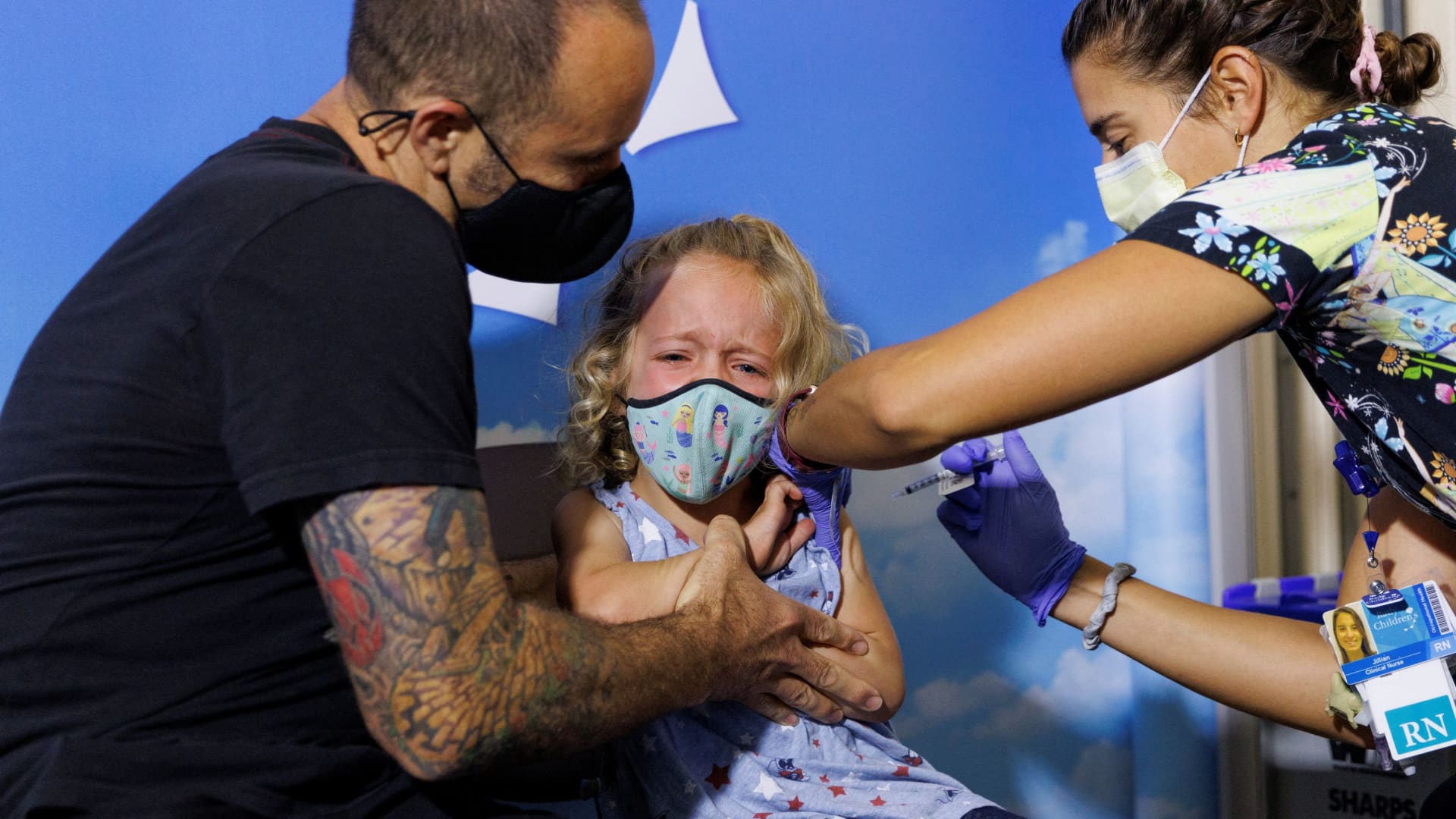
    Following CDC approval for vaccination of children aged 6 months to 5 years, 4 year-old Eleanor Kahn sits with her father Alex, as nurse Jillian Mercer administers the Moderna vaccine for the coronavirus disease (COVID-19) at Rady Children’s Hospital in San Diego, California, U.S., June 21, 2022.
    Mike Blake | Reuters

    Moderna has asked the Food and Drug Administration to authorize its omicron booster shots for children, the company announced on Friday.

    Moderna filed two separate FDA authorization requests, one for adolescents ages 12 to 17 and another for kids ages 6 to 11. The Boston biotech company said it will also ask the FDA to clear the shots for the youngest children, 6 months through 5-years-old, later this year.

    The Centers for Disease Control and Prevention, in a document published Tuesday, said it expects children to become eligible for the omicron boosters by mid-October pending authorization by the FDA. The CDC's vaccine advisory committee has meetings scheduled for October 19 and 20.

    Pfizer told the CDC advisory committee earlier this month that it expects to ask the FDA to authorize omicron boosters for children ages 5 to 11 in early October.

    U.S. health regulators cleared Moderna's omicron boosters for adults earlier this month. Pfizer's boosters were authorized for people ages 12 and older.

    The new shots target the omicron BA.5 subvariant as well as the original strain of Covid that first emerged in China in late 2019. The FDA and CDC expect the new boosters to provide superior protection against infection and disease because they target the most common omicron subvariant.

    The old vaccines, which were designed to fight the original Covid strain, are no longer providing meaningful protection against infection and mild illness because the virus has mutated so much. There is also concern that the original shots' effectiveness at preventing hospitalization and severe illness is starting to decline.

    Public health officials are confident in the new omicron BA.5 boosters, though it's unclear just how effective they will be in the real world. The shots were authorized without data from human clinical trials

    Adblock test (Why?)


    Health - Latest - Google News
    September 23, 2022 at 11:06PM
    https://ift.tt/nfdsiEb

    Moderna asks FDA to authorize omicron Covid boosters for children as young as 6 years old - CNBC
    Health - Latest - Google News
    https://ift.tt/TVUgJHG

    COVID raises risk of long-term brain injury, large U.S. study finds - KSL.com

    Nurses react as they treat a COVID-19 patient in the intensive care unit at Milton Keynes University Hospital in Britain amid the spread of the coronavirus pandemic, Jan. 20, 2021. People who had COVID-19 are at higher risk for a host of brain injuries a year later compared with people who were never infected by the coronavirus. (Toby Melville, Reuters)

    Estimated read time: 2-3 minutes

    CHICAGO — People who had COVID-19 are at higher risk for a host of brain injuries a year later compared with people who were never infected by the coronavirus, a finding that could affect millions of Americans, U.S. researchers reported on Thursday.

    The yearlong study, published in Nature Medicine, assessed brain health across 44 different disorders using medical records without patient identifiers from millions of U.S. veterans.

    Brain and other neurological disorders occurred in 7% more of those who had been infected with COVID compared with a similar group of veterans who had never been infected. That translates into roughly 6.6 million Americans who had brain impairments linked with their COVID infections, the team said.

    "The results show the devastating long-term effects of COVID-19," senior author Dr. Ziyad Al-Aly of Washington University School of Medicine said in a statement.

    Al-Aly and colleagues at Washington University School of Medicine and the Veterans Affairs St. Louis Health Care System studied medical records from 154,000 U.S. veterans who had tested positive for COVID from March 1, 2020, to Jan. 15, 2021.

    They compared these with records from 5.6 million patients who did not have COVID during the same time frame, and another group of 5.8 million people from the period just before the coronavirus arrived in the United States.

    Al-Aly said prior studies looked at a narrower group of disorders, and were focused largely on hospitalized patients, whereas his study included both hospitalized and non-hospitalized patients.

    Memory impairments, commonly referred to as brain fog, were the most common symptom. Compared with the control groups, people infected with COVID had a 77% higher risk of developing memory problems.

    People infected with the virus also were 50% more likely to have an ischemic stroke, which is caused by blood clots, compared with the never-infected group.

    Those who had COVID were 80% more likely to have seizures, 43% more likely to have mental health issues, such as anxiety or depression, 35% more likely to have headaches and 42% more likely to suffer movement disorders, such as tremors, compared with the control groups.

    Researchers said governments and health systems must devise plans for a post-COVID world.

    "Given the colossal scale of the pandemic, meeting these challenges requires urgent and coordinated — but, so far, absent — global, national and regional response strategies," Al-Aly said.

    Photos

    Related stories

    Most recent Coronavirus stories

    Julie Steenhuysen

    More stories you may be interested in

    Adblock test (Why?)


    Health - Latest - Google News
    September 23, 2022 at 10:32PM
    https://ift.tt/d58gLPX

    COVID raises risk of long-term brain injury, large U.S. study finds - KSL.com
    Health - Latest - Google News
    https://ift.tt/TVUgJHG

    Featured Post

    Measles is “growing global threat,” CDC tells doctors in alert message - Ars Technica

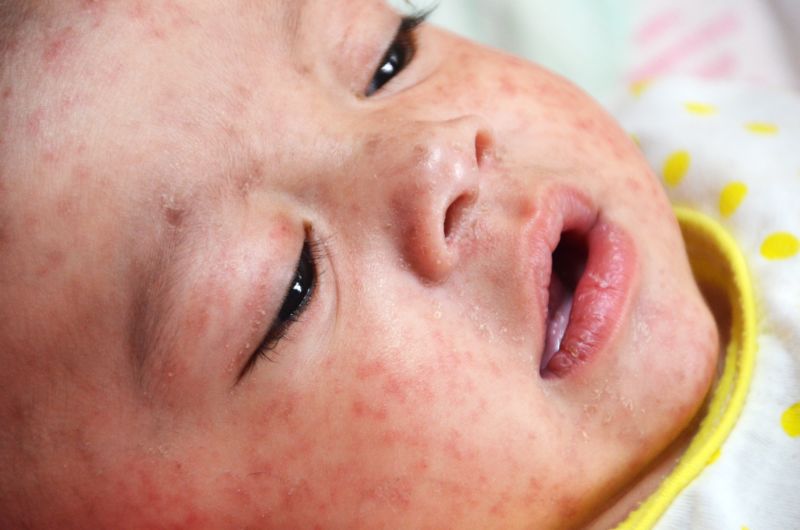
    Enlarge / A baby with measles. CDC The Centers for Disease Control and Prevention is putting clinicians on alert about the growing r...

    Popular Posts