Thursday, October 6, 2022

New York Woman Receives $80,000 Medical Bill After Treatment for Ectopic Pregnancy - Yahoo Entertainment
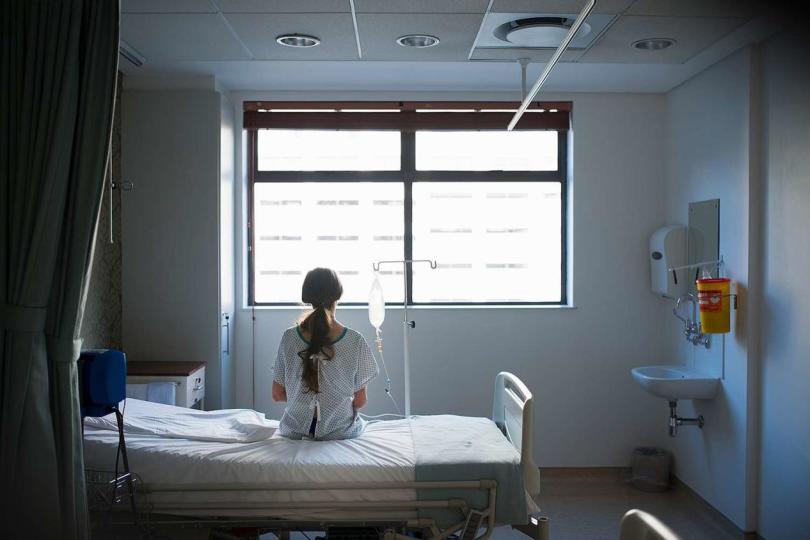
Getty Woman in hospital
A New York City woman was sent a huge medical bill after receiving care for her ectopic pregnancy, an instance that shows that cost could be a barrier to care for some women, even in states where abortion is protected.
Sara Laub told Kaiser Health News [KHN] that she did not expect her treatment to be so expensive and time-consuming, or include several trips to the emergency room.
An ectopic pregnancy is rare; it occurs when a fertilized egg implants outside of the uterus, sometimes in a fallopian tube. The Mayo Clinic says these pregnancies "can't proceed normally" because "the fertilized egg can't survive, and the growing tissue may cause life-threatening bleeding, if left untreated."
Mayo Clinic adds that if a "fertilized egg continues to grow in the fallopian tube, it can cause the tube to rupture," adding, "Heavy bleeding inside the abdomen is likely."
About 1 in every 30,000 pregnancies are ectopic, Mayo Clinic states. However, extrauterine pregnancies occur more frequently in women receiving fertility treatments, at about every 1 in 100 pregnancies.
Laub told KHN that she visited Lenox Hill Hospital's emergency department in New York City where she could either have surgery to remove her fallopian tube or be given an injection of methotrexate, a cancer drug used to end an ectopic pregnancy.
After opting for the injection, she had five follow-up visits to the ER for more injections and blood work before ultimately requiring the surgery. Laub's total charges for her medical treatment over 12 days reached $80,000, with her out-of-pocket costs being more than $4,000 due to her health care plan.
"As scary as my ordeal felt at the time, I was acutely aware that I was fortunate to have easy access to treatment, and elsewhere women with my condition face much worse experiences," Laub told KHN, referring to states where treatment for ectopic pregnancies are delayed or banned due to laws enacted after the overturn of Roe v. Wade.
Never miss a story — sign up for PEOPLE's free daily newsletter to stay up-to-date on the best of what PEOPLE has to offer, from juicy celebrity news to compelling human interest stories.
"On the one hand, I feel grateful that I was able to get treated when I was not in an acute state," Laub added. "But it's an awful feeling to know that the decision I made as to the best path forward for care comes at such a high cost."
Despite New York's laws that protect abortion, health experts say the charges for the care Laub received don't align with the actual costs.
RELATED: Celebrities Who Have Shared Their Abortion Stories to Help Women Feel Less Alone
WellRithms, a company that analyzes medical bills for self-funded companies, noted that the hospital Laub visited typically charges $12,541 for the surgery but she was charged $45,020 for it, the outlet reports. The cost to the hospital to perform the laparoscopic procedure is about $3,750, the company estimates.
"Hospitals will charge whatever they can," Jordan Weintraub, vice president of claims at the company, told KHN. "They put it on the payer to deny items rather than billing appropriately."
Lenox Hill hospital ultimately defended its charges to KHN, as well as the choice to treat Laub in the emergency room, which is more expensive. "Ectopic pregnancies, which can be life-threatening conditions, require close surveillance and management to ensure a successful resolution," the hospital said. "The emergency setting allows for immediate availability of critical surgical services, as was ultimately necessary in this patient's case."
The hospital did not immediately return PEOPLE's request for comment.
Treatment costs for ectopic pregnancies vary from state to state, and states like New York and California, although they protect abortion rights, currently have some of the most expensive average costs for abortion care.
Health - Latest - Google News
October 06, 2022 at 04:10AM
https://ift.tt/5HBCG3A
New York Woman Receives $80,000 Medical Bill After Treatment for Ectopic Pregnancy - Yahoo Entertainment
Health - Latest - Google News
https://ift.tt/fu2d8PC
Wednesday, October 5, 2022
When you eat may dictate how hungry you are, study says - KSL.com
A new study comparing people who ate the same foods — but at different times in the day. (Superstar, Shutterstock)
Estimated read time: 4-5 minutes
ATLANTA — We all know that eating later in the day isn't good for our waistlines, but why? A new study weighed in on that question by comparing people who ate the same foods — but at different times in the day.
"Does the time that we eat matter when everything else is kept consistent?" said first author Nina Vujović, a researcher in the division of sleep and circadian disorders at Boston's Brigham and Women's Hospital.
The answer was yes. Eating later in the day will double your odds of being hungrier, according to the study published Tuesday in the journal Cell Metabolism.
"We found that eating four hours later makes a significant difference for our hunger levels, the way we burn calories after we eat, and the way we store fat," Vujović said. "Together, these changes may explain why late eating is associated with increased obesity risk reported by other studies and provide new biological insight into the underlying mechanisms."
The study provides support for the concept that circadian rhythm, which influences key physiologic functions such as body temperature and heart rate, affects how our bodies absorb fuel, researchers said.
The study does show eating later results in "an increase in hunger, impacts hormones and also changes gene expression, especially in terms of fat metabolism with a tendency towards less fat breakdown and more fat deposition," said Dr. Bhanu Prakash Kolla, a professor of psychiatry and psychology at the Mayo Clinic College of Medicine and a consultant to Mayo's Center for Sleep Medicine and Division of Addiction Medicine.
While prior studies have linked later eating to weight gain, this study did not measure weight loss and cannot show a causal link, said Kolla, who was not involved in the study. In addition, research has shown that skipping breakfast is linked to obesity, he said.
"So could these results be a result of skipping breakfast rather than eating late? That's an effect to consider for this study," Kolla said.
Tightly controlled
The study was small — only 16 overweight or obese people — but carefully planned to eliminate other potential causes of weight gain, the authors said.
"While there have been other studies investigating why late eating associates with an increased risk for obesity, this may be the most well controlled, including strictly controlling the amount, composition and timing of meals, physical activity, sleep, room temperature and light exposure," said senior author Frank Scheer, director of the Medical Chronobiology Program in the Brigham's Division of Sleep and Circadian Disorders.
All participants were in good health, with no history of diabetes or shift work, which can affect circadian rhythm, and had regular physical activity. Each person in the study kept to a strict healthy sleep/wake schedule for about three weeks and were provided with prepared meals at fixed times for three days before the lab experiment began.
Participants were then randomized into two groups. One group ate calorie-controlled meals at 8 a.m., noon and 4 p.m., while the other ate the same meals four hours later, at noon, 4 p.m. and 8 p.m. for the six days reported in the study. Measures of hunger and appetite were gathered 18 times each while tests for body fat, temperature and energy expenditures were gathered on three separate days.
After a break of a few weeks, the same participants reversed the procedure — those who had eaten earlier moved to the late eating group and vice versa, thus using each person as their own control.
More hunger, less fat burned
Results showed that hunger pangs doubled for those on a night-eating regime. People who ate later in the day also reported a desire for starchy and salty foods, meat and, to a lesser extent, a desire for dairy foods and vegetables.
By looking at the results of blood tests, researchers were able to see why: Levels of leptin, a hormone that tells us when we feel full, were decreased for late eaters versus early eaters. In comparison, levels of the hormone ghrelin, which spikes our appetite, rose.
"What is new is that our results show that late eating causes an increase in the ratio of ghrelin and leptin averaged across the full 24-hour sleep/wake cycle," Scheer said. In fact, the study found that the ratio of ghrelin to leptin rose by 34% when meals were eaten later in the day.
"These changes in appetite-regulating hormones fits well with the increase in hunger and appetite with late eating," Scheer said.
When participants ate later in the day they also burned calories at a slower rate than when they ate at earlier times. Tests of their body fat found changes in genes that would impact how fat is burned or stored, the study found.
"These changes in gene expression would support the growth of fat tissue by formation of more fat cells, as well as by increased fat storage," Scheer said.
It's not known if these effects would continue over time, or on people who currently take medications for chronic disease, which were excluded from this study. Further study is needed, the authors said.
Most recent U.S. stories
More stories you may be interested in
Health - Latest - Google News
October 06, 2022 at 07:41AM
https://ift.tt/93WMROF
When you eat may dictate how hungry you are, study says - KSL.com
Health - Latest - Google News
https://ift.tt/fu2d8PC
Monday, October 3, 2022
Flu shot this fall: Here's why doctors are urging we all get it - Fox News
Today's vaccine-weary Americans will be on the receiving end of an important message from their doctors this fall (if they haven't heard it already).
The message is this: Don’t skip your flu shot this year — and seniors, please ask for a special extra-strength kind.
After flu hit historically low levels during the COVID-19 pandemic, it may be poised for a comeback, The Associated Press is reporting.
The main clue: A nasty flu season just ended in Australia.
SHOULD YOU GET THE FLU SHOT THIS YEAR? DOCTORS REVEAL THEIR DECISION
While there’s no way to predict if the U.S. will be as hard-hit or not, "last year we were going into flu season not knowing if flu was around or not. This year we know flu is back," influenza specialist Richard Webby of St. Jude Children’s Research Hospital in Memphis, Tenn., told the AP.
Annual flu shots are recommended starting with 6-month-old babies.

Doctors and other health professionals are advising that people don’t skip the flu shot this year — and seniors are encouraged to ask for the flu shot with special protection, the AP reported. (iStock)
Flu is most dangerous for people 65 and older, young children, pregnant women and people with certain health problems, including heart and lung diseases.
"It is a perfectly good time for [people] to get the shot, right now," Dr. Aaron Glatt, M.D., chair of the Department of Medicine and chief of Infectious Diseases at Mount Sinai South Nassau in New York, told Fox News Digital last week.
He is also a hospital epidemiologist.
Here’s what other health and medical professionals are saying that you need to know this flu season.
Extra protection for those 65 and up
As people get older, their immune system doesn’t respond as strongly to standard flu vaccination.
THESE ARE THE BEST IMMUNE-BOOSTING FOODS, ACCORDING TO NUTRITION EXPERTS
This year, people 65 or older are urged to get a special kind for extra protection.
If a location is out of senior-targeted doses, it’s better to get a standard flu shot than to skip vaccination altogether, according to the CDC.
There are three choices. Fluzone High-Dose and Flublok each contain higher doses of the main anti-flu ingredient.
The other option is Fluad Adjuvanted, which has a regular dosage but contains a special ingredient that helps boost people’s immune response, the AP reported.
Seniors can and should ask what kind of flu shot their doctor is carrying.

All flu vaccines in the U.S. — including the types for people younger than 65 — are "quadrivalent," meaning they guard against four different flu strains. (iStock)
But most flu vaccinations are given in pharmacies — and some drugstore websites, such as CVS, automatically direct people to locations offering senior doses if their birthdate indicates that they qualify.
Webby of Memphis advised making sure older relatives and friends know about the senior shots, in case they’re not told when they seek vaccination.
"They should at least ask, ‘Do you have the shots that are better for me?’" Webby said, as the AP reported. "The bottom line is they do work better" for this age group, he said.
TWO-THIRDS OF US ADULTS DO NOT PLAN ON GETTING COVID BOOSTERS
If a location is out of senior-targeted doses, it’s better to get a standard flu shot than to skip vaccination altogether, according to the Centers for Disease Control and Prevention (CDC).
All flu vaccines in the U.S. — including types for people younger than 65 — are "quadrivalent," meaning they guard against four different flu strains, the AP is reporting.
Younger people have choices, too, including shots for those with egg allergies and a nasal spray version called FluMist.
Many people have abandoned masking
Australia just experienced its worst flu season in five years — and what happens during the Southern Hemisphere winters often foreshadows what Northern Hemisphere countries can expect, said Dr. Andrew Pekosz of the Johns Hopkins Bloomberg School of Public Health, the AP noted.
Also, many people have abandoned masking and distancing precautions that earlier in the COVID-19 pandemic also helped prevent the spread of other respiratory bugs such as the flu.
KIDS' MASK USE SHOULD NOT BE FORCED, STUDY AUTHORS ARGUE
"This poses a risk especially to young children who may not have had much if any previous exposure to influenza viruses prior to this season," Pekosz added.

Children’s hospitals already are seeing an unusual early spike in other respiratory infections including RSV, or respiratory syncytial virus, according to health professionals. (iStock)
"This year we will have a true influenza season like we saw before the pandemic," said Dr. Jason Newland, a pediatric infectious disease specialist at Washington University in St. Louis, according to the AP.
Children’s hospitals already are seeing an unusual early spike in other respiratory infections including RSV, or respiratory syncytial virus — and there are worries flu likewise will strike earlier than usual as in Australia.
SEVERE COMMON COLD CASES INCREASING AMONG YOUNG CHILDREN MAY BE PEGGED TO COVID-19 LOCKDOWNS
The CDC advises a flu vaccine by the end of October.
However, the flu shot can be given at any time during flu season. It takes about two weeks for protection to set in.
The U.S. expects 173 million to 183 million doses this year.
And yes, you can get a flu shot and an updated COVID-19 booster at the same time — one in each arm to lessen soreness, say experts.
CLICK HERE TO GET THE FOX NEWS APP
Dr. Fred Davis, the associate chair of Emergency Medicine at Northwell Health in Long Island, New York, told Fox News Digital that he sees a number of flu cases present to the emergency department each year.
Davis also recommends that people get a flu vaccine ideally before the end of October — before flu cases start to rise.
Davis also said, "It is important that those individuals six months and older and [those] who have not had previous severe allergic reactions get their flu shot every year."
The Associated Press, as well as Amy McGorry, contributed reporting to this article.
Health - Latest - Google News
October 03, 2022 at 07:14PM
https://ift.tt/rQ5SRWX
Flu shot this fall: Here's why doctors are urging we all get it - Fox News
Health - Latest - Google News
https://ift.tt/R8PQXrn
Saturday, October 1, 2022
Monkeypox eradication unlikely in the U.S. as virus could spread indefinitely, CDC says - CNBC
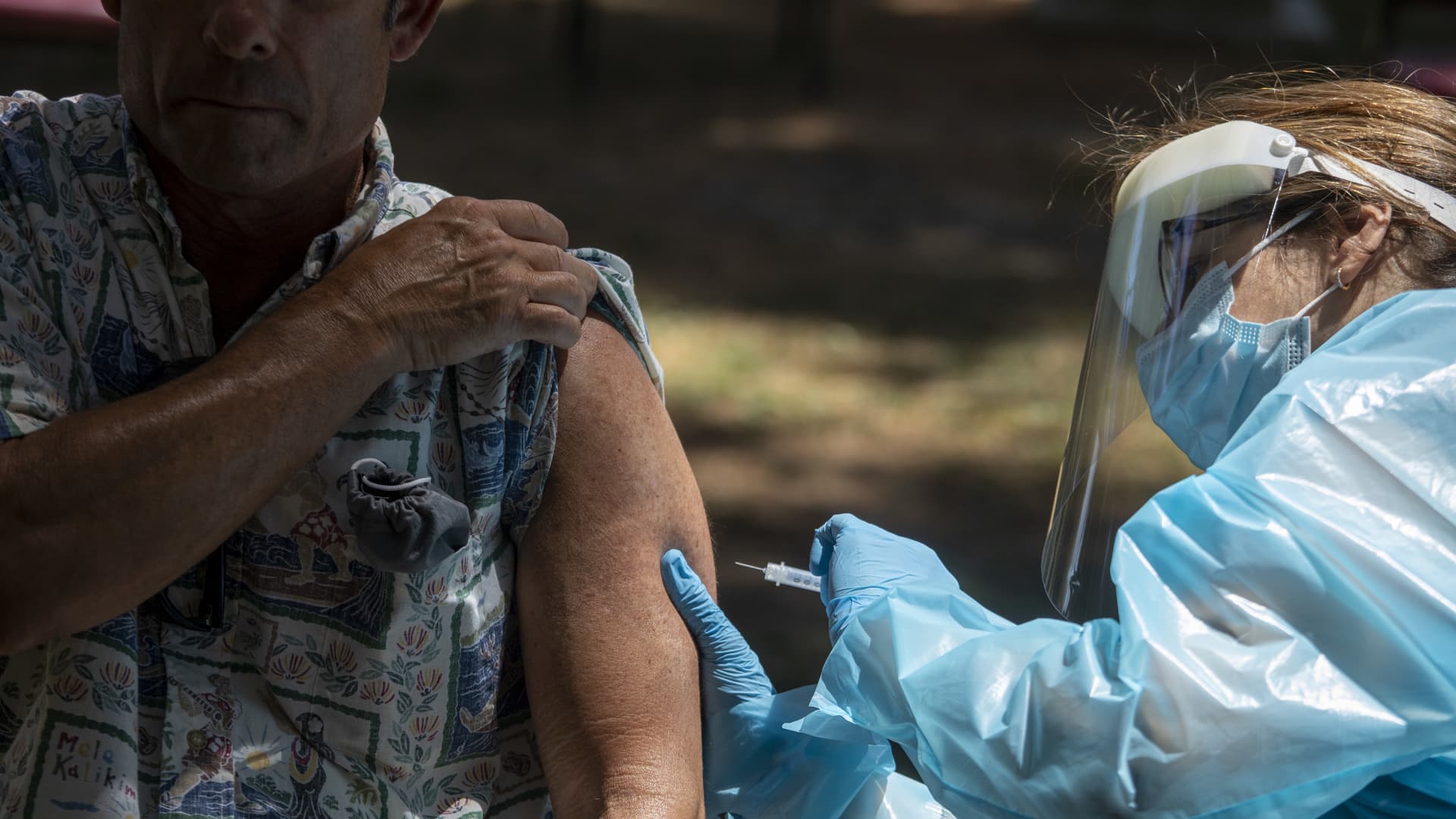
The monkeypox virus is unlikely to be eliminated from the U.S. in the near future, according to a report published by the Centers for Disease Control and Prevention this week.
The CDC, in a technical brief, said the outbreak is slowing as the availability of vaccines has increased, people have become more aware of how to avoid infection, and immunity has likely increased among gay and bisexual men, the group most impacted by the virus.
But low-level transmission of the virus could continue indefinitely among men who have sex with other men, according to the report. The CDC said it does not have a projection of how many total people might get infected by the virus.
The Biden administration declared a public health emergency in August in an effort to ramp up vaccines, testing, treatment and community outreach in an effort to eradicate the virus from the U.S.
The U.S. is trying to contain the largest monkeypox outbreak in the world, with nearly 26,000 cases reported across all 50 states, Washington D.C., and Puerto Rico, according to CDC data. At least two people have died from the disease in the U.S., according to the data.
The global monkeypox outbreak, the largest in history, is highly unusual because the virus is circulating widely in countries where it is not normally found. Historically, monkeypox has circulated in remote parts of West and Central Africa. In that context, people normally caught the virus from animals. There was little spread between people.
Monkeypox is now spreading widely between people, mostly through close contact during sex among gay and bisexual men. The disease is rarely fatal, but patients develop lesions resembling blisters in sensitive areas that are extremely painful. In some cases, the pain is so great people require hospitalization and in rare instances people with weak immune systems have died.
The CDC, in its report, said the virus is still spreading primarily among men who have sex with men. But anyone can catch the virus through close contact with someone who is infected or with contaminated materials. Health authorities have confirmed 29 cases of children catching the virus to date, and 78 total pediatric cases are under investigation as of late September.
Though 96% of patients are men, 408 women have caught the virus to date in the U.S. Four pregnant women and one who was breastfeeding have caught monkeypox.
The CDC said the percentage of patients who identify as gay or bisexual men has declined over time, with 75% of people who provided recent sexual history reporting male-to-male contact.
But a large number of cases are missing data on sexual history and more than 90% of infections are among males, according to CDC. The decline in the percentage of cases reporting male-to-male sexual contact is likely due to missing data rather than a change in how the virus is spreading, according to the public health agency.
The CDC said the outbreak will likely remain concentrated among men who have sex with men over the long term, with infections continuing to decline over the coming weeks and dropping significantly over the next several months.
More than 684,000 people have received the Jynneos monkeypox vaccine so far. Earlier this week, the CDC reported preliminary data indicating that the vaccine is providing at least some protection against infection. The vaccination campaign is primarily focused on gay and bisexual men.
The outbreak could start accelerating again if the virus starts spreading widely among the U.S. population through heterosexual networks or contact that doesn't involve sex, according to CDC. But there is no country in the current global outbreak that has found clear evidence of sustained spread of the virus outside sexual networks of gay and bisexual men, according to the CDC.
The public health agency also warned that the virus could start spreading faster again among people if it becomes established in an animal population in the U.S. The CDC said it is unknown which animals in North America are most susceptible to infection.
In Africa, the virus mostly spread from animals to people. If monkeypox becomes established in animals in the U.S., it would be very difficult to eradicate.
Health - Latest - Google News
October 02, 2022 at 12:09AM
https://ift.tt/RtueG2a
Monkeypox eradication unlikely in the U.S. as virus could spread indefinitely, CDC says - CNBC
Health - Latest - Google News
https://ift.tt/dyQ2eCZ
Doctors say now is a good time to think about scheduling a flu shot - WSB Atlanta
[unable to retrieve full-text content]
- Doctors say now is a good time to think about scheduling a flu shot WSB Atlanta
- When should I get my flu shot? Livescience.com
- When to get the flu shot: Vaccine expert getting his in October Insider
- Why Flu Shots Are Especially Important This Year TODAY
- View Full Coverage on Google News
Health - Latest - Google News
September 30, 2022 at 10:55PM
https://ift.tt/yjftcK3
Doctors say now is a good time to think about scheduling a flu shot - WSB Atlanta
Health - Latest - Google News
https://ift.tt/dyQ2eCZ
Some officials now say monkeypox elimination unlikely in US - The Associated Press
NEW YORK (AP) — Some U.S. health officials are conceding that monkeypox is probably not going away anytime soon.
The disease’s spread is slowing but the virus is so widespread that elimination is unlikely, the Centers for Disease Control and Prevention said. That conclusion was in a recent CDC report, and echoed Friday by Marc Lipsitch, director of science in the agency’s disease-forecasting center.
Lipsitch hesitated to say monkeypox is permanently here to stay, but he said it stands to be a continuing threat for the next few years.
“It’s in many geographic locations within the country” as well as in other countries, Lipsitch told The Associated Press. “There’s no clear path in our mind to complete elimination domestically.”
The virus has mainly spread among gay and bisexual men, though health officials continue to stress that anyone can be infected. It’s important that people at risk take steps to prevent spread and that vaccination efforts continue, Lipsitch said.
The CDC report contained some good news: The U.S. outbreak seems to have peaked in early August. The average number of daily cases being reported — fewer than 150 — is about a third what it was reported in the middle of the summer, and officials expect the decline will continue for at least the next several weeks.
Lipsitch attributed the good news to increasing vaccinations, cautious behavior by people at risk and infection-derived immunity in the highest risk populations.
Dr. Tom Inglesby, director of the Johns Hopkins Center for Health Security, agreed that it’s unlikely that spread of monkeypox will stop in the U.S. anytime soon, but he said it’s still possible in the long term.
If domestic transmission were stopped, infections may still continue if people catch the virus while traveling internationally, he said. But the declining cases makes it seem like “we’ve turned a real corner.”
“The efforts underway are succeeding, and should be continued, if not intensified,” he said.
With case numbers going down, this is a good time for local health departments to take a new stab at doing intensive contact tracing to try to stop chains of transmission, he said.
Monkeypox is endemic in parts of Africa, where people have been infected through bites from rodents or small animals, but it wasn’t considered a disease that spreads easily among people until May, when infections emerged in Europe and the U.S.
There have been more than 67,000 cases reported in countries that have not historically seen monkeypox. The U.S. has the most infections of any country — more than 25,600. One U.S. death has been attributed to monkeypox.
More than 97% of U.S. cases are men. The vast majority have been men who reported recent sexual contact with other men.
Though cases have been declining, the proportion of new cases that have information about recent sexual contact is also down, officials said. That’s causing a growing blind spot about how the virus may be spreading, Lipsitch noted.
___
The Associated Press Health & Science Department receives support from the Howard Hughes Medical Institute’s Department of Science Education. The AP is solely responsible for all content.
Health - Latest - Google News
October 01, 2022 at 04:01AM
https://ift.tt/1eoKW3f
Some officials now say monkeypox elimination unlikely in US - The Associated Press
Health - Latest - Google News
https://ift.tt/dyQ2eCZ
Featured Post
Measles is “growing global threat,” CDC tells doctors in alert message - Ars Technica
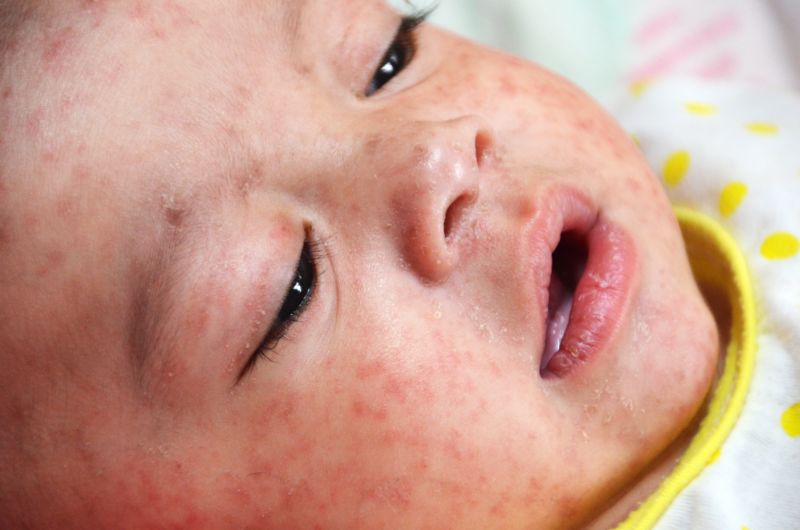
Enlarge / A baby with measles. CDC The Centers for Disease Control and Prevention is putting clinicians on alert about the growing r...
Popular Posts
-
Enlarge / A baby with measles. CDC The Centers for Disease Control and Prevention is putting clinicians on alert about the growing r...
-
[unable to retrieve full-text content] Global Pandemic Could Last 7 Years at Current Covid Vaccination Rates Bloomberg Quicktake: Now ...
-
With cases swelling in 49 states and hospitalizations on the rise, the U.S. is seeing a “pandemic of the unvaccinated” in parts of the c...

