Rechercher dans ce blog

Tuesday, October 11, 2022

As Hospitals Close Children's Units, Where Does That Leave Lachlan? - The New York Times

BROKEN ARROW, Okla. — It was Lachlan Rutledge’s sixth birthday, but as he mustered a laborious breath and blew out one candle, it was his mother who made a wish: for a pediatric hospital bed in northeast Oklahoma.

The kindergartner has a connective tissue disorder, severe allergies and asthma. Those conditions repeatedly landed him in the pediatric intensive care unit at Ascension St. John Medical Center in Tulsa, with collapsed veins and oxygen levels so low, he was unresponsive to his mother’s voice.

But in April the hospital closed its children’s floor to make room for more adult beds. So on a September morning, after coming down with Covid for the fourth time and with what looked like bilateral pneumonia, Lachlan was struggling to breathe in an overcrowded emergency room at the Children’s Hospital at Saint Francis — the only remaining inpatient pediatric option in Tulsa.

“We’re always preparing for battle. It’s just a question of where we’re going to fight,” said his mother, Aurora Rutledge, looking frightened as she twisted the blonde ringlets that poked out from under Lachlan’s Spider-Man headphones.

Hospitals around the country, from regional medical centers to smaller local facilities are closing down pediatric units. The reason is stark economics: Institutions make more money from adult patients.

In April, Henrico Doctors’ Hospital in Richmond, Va., ended its pediatric inpatient services. In July, Tufts Children’s Hospital in Boston followed suit. Shriners Children’s New England said it will close its inpatient unit by the end of the year. Pediatric units in Colorado Springs, Raleigh, N.C., and Doylestown, Pa., have closed as well.

“They’re asking: Should we take care of kids we don’t make any money off of, or use the bed for an adult who needs a bunch of expensive tests?” said Dr. Daniel Rauch, chief of pediatric hospital medicine for Tufts Medicine, who headed its general pediatric unit until it closed over the summer. “If you’re a hospital, that’s a no-brainer.”

A close-up view of Lachlan’s arms crossed over his black backpack, which has two patches attached to it in red and white and gray and black, which read “Epi meds inside” and “Allergy alert, Epipen inside.”
Lachlan’s backpack is full of EpiPens and medications — and clear labeling — to manage his allergies when he’s at school.Melissa Lukenbaugh for The New York Times

Many hospitals have converted children’s beds to adult I.C.U. beds during the pandemic and are reluctant to change them back. Now, staff shortages, inflation — drug costs have increased 37 percent per patient compared to prepandemic levels — low Medicaid reimbursement and dwindling federal subsidies granted during the pandemic have left some health centers operating on negative margins and eager to prioritize the most profitable patients.

Young patients like Lachlan, who has private insurance, occupy beds to recover from infections or asthma attacks but don’t undergo lucrative, billable procedures — like joint or heart surgeries — that are more common among aging patients.

Physician reimbursement through Medicaid, the insurance program for low-income people, is often only about 70 percent of the amount reimbursed through Medicare, the insurance program for elderly people of all incomes. More than a third of children in the United States are enrolled in Medicaid.

There have been no aggressive legislative efforts to keep hospitals from closing or shrinking their pediatric units. Democratic senators introduced a bill last year to grant funding to specialized children’s hospitals to improve their infrastructure, but it has not moved past the assigned committee.

Health policy experts say an important solution would be to encourage hospitals to care for children by increasing Medicaid reimbursement rates. But even higher Medicaid and private rates wouldn’t come close to what hospitals can charge for remunerative adult procedures, and with many state budgets already strained, experts say the regulatory move is unrealistic.

Hospitals that no longer admit children rely on transferring them to pediatric units at other hospitals. But when even the largest pediatric floors in the country are at capacity, the pileup of critically ill children in E.R.s can cause patients’ conditions to worsen.

Lachlan during a recent visit to the overcrowded emergency room at The Children’s Hospital at Saint Francis — the only remaining inpatient pediatric option in Tulsa.Emily Baumgaertner/The New York Times

“Picu kids don’t belong here,” an overwhelmed E.R. doctor in a small Boston area hospital wrote two weeks ago to his hospital’s chief medical officer in an expletive-ridden text message reviewed by The Times. (P.I.C.U. is the acronym for pediatric I.C.U. The text message was shared on the condition that the hospital not be identified.)

Every I.C.U. for children in Boston was full at the time, and the nearest open beds were in New Haven, Conn., and Vermont. The doctor who sent the text message considered intubating the child in the E.R. while he waited for a closer bed to become available.

As children return to school, waves of illnesses are overrunning many of the units that remain.

“Forget the two-week January crush. We couldn’t find beds in May or August or September,” said Dr. Melissa Mauro-Small, the chief of pediatrics at Signature Healthcare Brockton Hospital, near Boston. “There is no more respiratory season. It’s respiratory season year-round.”

A hospital in Plymouth, Mass., that had not transferred a patient to Dr. Mauro-Small’s hospital in a decade did so six times in 10 days recently, she said. The E.R. staff at Lowell General Hospital outside Boston had to ask eight hospitals across New England whether they had room for an intubated 2-year-old, according to patient charts reviewed by The Times. It transferred another patient to the closest I.C.U. bed available — in Maine.

“At some point, this was going to become a crisis,” Dr. Mauro-Small said. “And here we are.”

St. John Medical Center in Tulsa had been a community treasure for almost a century when Ascension acquired it in 2013. The closure of the pediatric unit triggered opposition from both families and referring pediatricians.

Dr. Michael Stratton, a pediatrician in Muskogee, Okla., said Ascension St. John had been “the number one place to send a child,” and its pediatric unit closure had been “such a huge disservice to all of eastern Oklahoma.”

Melissa Lukenbaugh for The New York Times

A spokeswoman for Ascension St. John, where Lachlan had been admitted to the I.C.U. three times before the closure, declined to be interviewed but said in an email that the closure was driven by a demand for more adult beds. She also pointed to past statements that said the Children’s Hospital at Saint Francis was “more than capable of picking up the slack.”

A spokeswoman for the Children’s Hospital at Saint Francis said that it had occasionally reached full capacity and that the staff transferred about 23 patients to other facilities, including in Arkansas, so far this year.

The E.R. “was busy even prior to the closure of the St. John’s pediatric unit,” she said. Still, she said the hospital had not become overburdened. “Volume is fairly consistent with what we usually see on a seasonal basis,” she said.

Some Oklahoman families with chronically ill children say they routinely drive to Memphis, St. Louis and Rochester, Minn., for care. The distances cause financial strain and, in the worst cases, cause them to forgo care, said Katy Kozhimannil, director of the University of Minnesota Rural Health Research Center.

For those in rural communities, pediatric closures have made travel to what Dr. Rauch calls “bread-and-butter pediatrics” untenable. Sixteen-year-old Johnny in Childress, Texas, had to be home-schooled so he could travel eight hours to Dallas for dialysis treatment three times a week, according to his doctor.

Jamaal Bets His Medicine, a 2-year-old with an autoimmune disease in Fort Kipp, Mont., routinely takes an 11-hour trip to Billings, Mont., to receive infusions, his mother, Patricia, said.

Lachlan and his mother, Aurora Rutledge, outside the Saint Francis Emergency Center.Melissa Lukenbaugh for The New York Times

The decline of local access to children’s inpatient care began over a decade ago and accelerated during the pandemic. Between 2008 and 2018 — the most recent national data available — pediatric inpatient units in the United States decreased almost 20 percent, and nearly a quarter of children found themselves farther from their nearest pediatric unit.

The steepest decline in pediatric inpatient beds was in rural regions, where large health systems acquired community hospitals and consolidated pediatrics to one campus.

Centering pediatric care in specialized centers can erode a local hospital’s ability to care for a critically ill child, doctors say.

“Children are not small adults,” said Dr. Meredith Volle, a pediatrician at Southern Illinois University School of Medicine in Springfield, Ill., who routinely sees patients who travel from two to three hours away. The number of pediatric beds in Illinois has declined, and 48 of its counties now have no pediatrician at all.

“When nurses and respiratory therapists become less comfortable with children’s cases, when the units don’t have child-sized equipment,” Dr. Volle said, “at a certain point, you really shouldn’t treat kids anymore because you don’t treat them often enough to be good at it.”

Critically ill children are four times as likely to die in hospitals and twice as likely to die in trauma centers that scored low on a “pediatric readiness” test, according to research. Only one-third of children in a national research survey had access to an emergency department deemed highly “pediatric-ready,” and of those, nine out of 10 lived closer to a less-prepared one.

A parent who is unaware of the wide variability, said Dr. Katherine Remick, the executive director of the National Pediatric Readiness Quality Initiative, “could make a split-second decision that changes their child’s fate.”

“We’re always preparing for battle. It’s just a question of where we’re going to fight,” said Ms. Rutledge.Melissa Lukenbaugh for The New York Times

The Rutledge family lives in Broken Arrow, a sunny Tulsa suburb with a frozen custard shop and a dentistry called Super Smiles. Their front porch is home to potted succulents, an abandoned scooter and a 140-pound Great Dane named Thor.

But their lives are far from ordinary. The last time Lachlan needed to see an allergy specialist, his mother packed the car with his nebulizer and medications for a 14-hour drive to Denver, leaving her husband, their two other sons and her mother, who was undergoing chemotherapy, for two weeks. Later, when doctors told her that Lachlan’s disorder appeared to be causing stomach ulcers — but that the sole pediatric gastroenterologist at Saint Francis wasn’t available for months — she began planning a journey to Dallas.

On the September morning that Lachlan was in St. Francis struggling to breathe, the E.R. was so busy that Ms. Rutledge hooked him up to a pulse oximeter herself, quieting the monitor’s settings so it wouldn’t frighten him every time his heart rate spiked.

Lachlan tugged at his collar bone, his chest looking retracted. Five hours later, he still hadn’t been admitted. Ms. Rutledge’s hands trembled and tears streamed down her face.

“I know you guys are exhausted at this hospital, and I get it,” she shouted, leaning over Lachlan’s bed to level her eyes with the attending physician on the other side. “But you will not send this child home so he can watch his own vitals drop.”

Lachlan was discharged from the E.R. after 10 hours with a course of steroids to fight the inflammation in his lungs. He sleeps in his parents’ bedroom so they can check his oxygen levels and administer nebulizer treatments every few hours throughout the night.

Adblock test (Why?)


Health - Latest - Google News
October 11, 2022 at 11:05PM
https://ift.tt/3thFY2R

As Hospitals Close Children's Units, Where Does That Leave Lachlan? - The New York Times
Health - Latest - Google News
https://ift.tt/dYgWhR6


Colonoscopies Made No Difference In Death Rates, European Study Finds - NBC News

Adblock test (Why?)


Health - Latest - Google News
October 11, 2022 at 08:00AM
https://ift.tt/D3eKEuh

Colonoscopies Made No Difference In Death Rates, European Study Finds - NBC News
Health - Latest - Google News
https://ift.tt/dYgWhR6

Monday, October 10, 2022

What to know about colonoscopy after study questions its effectiveness - CNN

CNN  — 

A new European study on colonoscopies – the largest of its kind – has complicated results, and it’s left some people wondering whether they should have the procedure to screen for colon cancer.

“I think the most important message is that colon cancer screening is effective, and you should get screened,” Dr. Jason Dominitz told CNN. He’s the national director of gastroenterology for the Veterans Health Administration, and he co-authored an editorial that accompanies the study in The New England Journal of Medicine.

In a colonoscopy, a doctor inserts a long, flexible tube into the rectum. A tiny video camera at the end of the tube allows the doctor to see the inside of the colon. They look for precancerous polyps and cancerous growths, as well as any other abnormalities, and they can cut out tissue that looks suspicious and have it biopsied.

Doctors do colonoscopies when someone has symptoms of colon cancer, and they do them to screen for colon cancer in someone who doesn’t have symptoms. There are other methods of screening for colon cancer, such as checking for hidden blood in the stool, but if something looks suspicious in those tests, doctors often then recommend a colonoscopy.

“Colonoscopy is ultimately the test that’s done to evaluate for colon cancer,” Dominitz said.

Dominitz helped CNN sort through the findings of this new study to see what it means for you. Spoiler alert: Colonoscopies save lives!

What did this new study show about the effectiveness of colonoscopies?

In this study, about 12,000 people in Sweden, Poland and Norway got colonoscopies. They saw a 31% reduction in their risk of colon cancer and a 50% reduction in their risk of dying from colon cancer compared with people who were not invited to get a colonoscopy.

Was that about what would be expected?

Some US studies have suggested that colonoscopies are even more effective. One study followed nearly 90,000 health care professionals for 22 years. Some of them chose to receive a screening colonoscopy, and some did not. The researchers estimated that screening colonoscopy was associated with a 40% reduction in the risk of getting colon cancer and a 68% reduction in the risk of dying of colon cancer.

Why would there be different success rates in the three European countries compared with the US?

Dominitz says one reason might be that most people in the European study didn’t have sedation when they got their colonoscopies. Only 23% of the patients in the European study received sedation, but virtually everyone having a colonoscopy in the US gets it. Colonoscopies can be uncomfortable, and doctors might, without even realizing it, be less thorough if people are in pain. Thoroughness – getting the scope into the folds and crevices of the colon – is important for finding growths called polyps. The more polyps doctors are able to find, the more they can reduce the person’s risk of being diagnosed with or dying from colon cancer.

Bottom line: Should you still get screened for colon cancer?

Yes! Generally speaking, you should start getting regular colonoscopies at age 45. For people who are at high risk because of a family history or other factors, it’s even younger; see these recommendations from the US Centers for Disease Control and Prevention and the American Cancer Society. And screening doesn’t have to involve a colonoscopy. There are other tests, too, but colonoscopy is the most common.

In the European study, people were invited to get colonoscopies. Why would they have to be invited? Isn’t colon cancer screening standard practice in those countries?

Only recently have Sweden, Poland and Norway started screening their populations for colon cancer. Their programs started about 2015, and in the study, people were invited to have a screening colonoscopy from 2009 to 2014. The patients were then followed for about 10 years to see if they developed colon cancer.

Get CNN Health's weekly newsletter

Sign up here to get The Results Are In with Dr. Sanjay Gupta every Tuesday from the CNN Health team.

    How many of the study participants said yes to the invitation to get a colonoscopy?

    In the European study, 28,000 people ages 55 to 64 were invited to get a screening colonoscopy. Only 42% said yes.

    Why so few?

    Dominitz thinks it’s in part because people in those countries were not accustomed to the idea of getting screening colonoscopies. They hadn’t had them before, and their friends and family probably hadn’t, either. Also, at the time of the study, there was no campaign to encourage colonoscopies – no Katie Couric (or Ryan Reynolds) to raise awareness about colon cancer.

    CNN’s Naomi Thomas and Justin Lape contributed to this report.

    Adblock test (Why?)


    Health - Latest - Google News
    October 11, 2022 at 06:56AM
    https://ift.tt/9QWp8ZP

    What to know about colonoscopy after study questions its effectiveness - CNN
    Health - Latest - Google News
    https://ift.tt/YuULlWa

    Sunday, October 9, 2022

    New study questions the effectiveness of colonoscopies - CNN

    CNN  — 

    Colonoscopies are a dreaded rite of passage for many middle-age adults. The promise has been that if you endure the awkwardness and invasiveness of having a camera travel the length of your large intestine once every decade after age 45, you have the best chance of catching – and perhaps preventing – colorectal cancer. It’s the second most common cause of cancer death in the United States. Some 15 million colonoscopies are performed in the US each year.

    Now, a landmark study suggests the benefits of colonoscopies for cancer screening may be overestimated.

    The study marks the first time colonoscopies have been compared head-to-head to no cancer screening in a randomized trial. The study found only meager benefits for the group of people invited to get the procedure: an 18% lower risk of getting colorectal cancer, and no significant reduction in the risk of cancer death. It was published Sunday in The New England Journal of Medicine.

    Study researcher Dr. Michael Bretthauer, a gastroenterologist who leads the clinical effectiveness group at the University of Oslo in Norway, said he found the results disappointing.

    But as a researcher, he has to follow the science, “so I think we have to embrace it,” he said. “And we may have oversold the message for the last 10 years or so, and we have to wind it back a little.”

    Other experts say that as good as this study was, it has important limitations, and these results shouldn’t deter people from getting colonoscopies.

    “I think it’s just hard to know the value of a screening test when the majority of people in the screening didn’t get it done,” said Dr. William Dahut, chief scientific officer at the American Cancer Society, who was not involved in the study.

    Less than half of people invited to get a colonoscopy in the study – just 42% – actually got one.

    When the study authors restricted the results to the people who actually received colonoscopies – about 12,000 out of the more than 28,000 who were invited to do so – the procedure was found to be more effective. It reduced the risk of colorectal cancer by 31% and cut the risk of dying of that cancer by 50%.

    Bretthauer said the true benefits of colonoscopy probably lie somewhere in the middle. He said he thinks of the results of the full study – including people who did and didn’t get colonoscopies after they were invited – as the minimum amount of benefit colonoscopies provide to a screened population. He thinks of the results from the subset of people who actually got the test as the maximum benefit people could expect from the procedure.

    Based on his results, then, he expects that screening colonoscopy probably reduces a person’s chances of colorectal cancer by 18% to 31%, and their risk of death from 0% to as much as 50%.

    But, he said, even 50% is “on the low end what what I think everybody thought it would be.”

    Other studies have estimated larger benefits for colonoscopies, reporting that these procedures could reduce the risk of dying of colorectal cancer by as much as 68%.

    The first randomized trial of colonoscopy

    The NordICC study, which stands for Northern-European Initiative on Colon Cancer, included more 84,000 men and women ages 55 to 64 from Poland, Norway and Sweden. None had gotten a colonoscopy before. The participants were randomly invited to have a screening colonoscopy between June 2009 and June 2014, or they were followed for the study without getting screened.

    In the 10 years after enrollment, the group invited to get colonoscopies had an 18% lower risk of colorectal cancers than the group that wasn’t screened. Overall, the group invited to screening also had a small reduction in their risk of death from colorectal cancer, but that difference was not statistically significant – meaning it could simply be due to chance.

    Before the NordiCC trial, the benefits of colonoscopies had been measured by observational studies that looked back in time to compare how often colorectal cancer is diagnosed in people who received colonoscopies versus those who did not.

    These studies can be subject to bias, however, so scientists look to randomized trials that blindly sort people into two groups: those who are assigned to get an intervention, and those who are not. These studies then follow both groups forward in time to see if there are differences. Those studies have been difficult to do for colon cancer, which can be slow growing and may take years to be diagnosed.

    The researchers say they’re going to continue to follow participants for another five years. It could be that because colon cancers can be slow-growing, more time will help refine their results and may show bigger benefits for colonoscopy screening.

    Results need careful interpretation

    Normally, those kinds of disappointing results from such a large, strong study would be considered definitive enough to change medical practice.

    But this study has some limitations that experts say need to be sorted out before doctors and patients give up on colonoscopies for cancer screening.

    “I don’t think anyone should be canceling their colonoscopy,” said Dr. Jason Dominitz is the national director of gastroenterology for the Veterans Health Administration.

    “We know that colon cancer screening works,” he said in an interview with CNN. Dominitiz co-authored an editorial which ran alongside the study.

    There are several options for colorectal cancer screening. Those include stool tests which check for the presence of blood or cancer cells, and a test called sigmoidoscopy, which looks only at the lower part of the colon. Both have been shown to reduce both cancer incidence and colorectal cancer deaths.

    “Those other tests work through colonoscopy,” Dominitz said. “They identify people at high risk who would benefit from colonoscopy, then the colonoscopy is done and removes polyps, for example, that prevents the individual from getting colon cancer in the first place, or it identifies colon cancer at a treatable stage.”

    Polyps are benign growths that can turn into cancers. They are typically removed when identified during a screening colonoscopy, which can lower a person’s risk of colorectal cancer in the future.

    Studies are underway in Spain and the US testing colonoscopy head-to-head against stool tests to see which is most effective.

    Dominitz said this randomized controlled trial was a test of advice as much as it was a test of the value of colonoscopy.

    The best way to screen for colorectal cancer

    “If you ask the population to do something, how much of an impact will it have?” he said.

    Overall, the study found that just inviting people to get a colonoscopy didn’t have a large beneficial impact across these countries, partly because so many people didn’t do it.

    Dominitz thinks the low participation can be partly explained by the study’s setting. Colonoscopies are not as common in the countries involved in the study as they are in the United States. In Norway, he said, official colorectal cancer screening recommendations didn’t come until this past year.

    “They don’t see the public service announcements. They don’t hear Katie Couric talking about getting screened for colon cancer. They don’t see the billboards in the airport and whatnot,” he said. “So an invitation to be screened in Europe is, I think, likely to be somewhat different than an invitation to be screened in the US.”

    In the US, according to data from the US Centers for Disease Control and Prevention, about 1 in 5 adults between the ages of 50 and 75 have never been screened for colorectal cancer.

    If you feel squeamish about getting a colonoscopy, the US Preventive Services Task Force says a variety of methods and regimens work to detect colorectal cancer. It recommends screening with tests that check for blood and/or cancer cells in stool every one to three years, a CT scan of the colon every five years, a flexible sigmoidoscopy every five years, a flexible sigmoidoscopy every 10 years paired with stool tests to check for blood annually, or a colonoscopy every 10 years.

    In 2021, the task force lowered the recommended age to start routine screening for colorectal cancer from 50 to 45 because the cancer is becoming more common in younger adults.

    When it comes to colorectal cancer, he said, tests can only be effective if people are willing to do them.

    Get CNN Health's weekly newsletter

    Sign up here to get The Results Are In with Dr. Sanjay Gupta every Tuesday from the CNN Health team.

      As proof, he points to early results from a large randomized trial from Sweden that’s testing colonoscopy, FIT testing and no screening at all.

      Results collected from more than 278,000 people enrolled between March 2014 and the end of 2020 found that 35% of the group assigned to get a colonoscopy actually got one, compared with 55% who were assigned to the stool test group.

      To date, slightly more cancers have been detected in the group assigned to stool testing than in the group assigned to get a colonoscopy – “so participation with screening really is key!” Dominitz said.

      Adblock test (Why?)


      Health - Latest - Google News
      October 10, 2022 at 09:26AM
      https://ift.tt/e31sr64

      New study questions the effectiveness of colonoscopies - CNN
      Health - Latest - Google News
      https://ift.tt/YuULlWa

      Coronavirus Los Angeles: New research sheds light on an emerging parallel COVID epidemic - KABC-TV

      LOS ANGELES (KABC) -- Because so many residents in Los Angeles County have dealt with COVID-19 infections, many now view the virus like a common cold or flu.

      New research suggests that's far from the truth.

      With concern over COVID waning, a parallel pandemic is emerging.

      "We're still learning about the long term health effects of COVID infections," said L.A. County Public Health Director Barbara Ferrer.

      Dr. Michael Ghobrial with the Cleveland Clinic said they're seeing it more commonly in younger patients.

      This comes as doctors across the country are dealing with a growing number of patients who can't shake their initial COVID symptoms or have acquired new symptoms that last for at least a month or more. Some cases have been going on for two years.

      "The most described symptoms of long COVID include fatigue, reduced exercise capacity, breathing problems, brain fog and loss of taste or smell," said Ferrer.

      Various studies find long COVID, or long haulers syndrome, can strike in all populations.

      "It's more in females compared to males. It's also more common in patients who have comorbidities," said Ghobrial.

      In a study of several thousand veterans, Ferrer said the new evidence suggests repeated COVID infections increase one's risk for long haul syndrome.

      "Many of these disorders were serious and life changing and included stroke, cognition and memory disorders, peripheral nervous system disorders," she said. "The risk of having long term health conditions was three times higher for those infected three times compared to those who were uninfected."

      Avoiding infection is the key, and while COVID vaccines and boosters don't always prevent infection, numerous studies find it can reduce the risk of long COVID.

      "Those who had two doses of vaccine before getting COVID had an approximately 75% lower chance of getting long COVID," said Ferrer. "While those who got three doses had an 84% lower chance of getting long COVID."

      While we have much to learn, Ferrer said getting vaccinated and boosted appears to be one of the simplest ways to significantly reduce your risk.

      Copyright © 2022 KABC Television, LLC. All rights reserved.

      Adblock test (Why?)


      Health - Latest - Google News
      October 08, 2022 at 12:27PM
      https://ift.tt/QtZo4EU

      Coronavirus Los Angeles: New research sheds light on an emerging parallel COVID epidemic - KABC-TV
      Health - Latest - Google News
      https://ift.tt/BLdUDAG

      Friday, October 7, 2022

      Covid wave looms in Europe as booster campaign makes slow start - CNN

      A new Covid-19 wave appears to be brewing in Europe as cooler weather arrives, with public health experts warning that vaccine fatigue and confusion over types of shots available will likely limit booster uptake.

      Omicron subvariants BA.4/5 that dominated this summer are still behind the majority of infections, but newer Omicron subvariants are gaining ground. Hundreds of new forms of Omicron are being tracked by scientists, World Health Organization (WHO) officials said this week.

      WHO data released late on Wednesday showed that cases in the European Union reached 1.5 million last week, up 8% from the prior week, despite a dramatic fall in testing. Globally, case numbers continue to decline.

      Hospitalization numbers across many countries in the 27-nation bloc, as well as Britain, have gone up in recent weeks.

      In the week ending October 4, Covid-19 hospital admissions with symptoms jumped nearly 32% in Italy, while intensive care admissions rose about 21%, compared to the week before, according to data compiled by independent scientific foundation Gimbe.

      Over the same week, Covid hospitalizations in Britain saw a 45% increase versus the week earlier.

      Omicron-adapted vaccines have launched in Europe as of September, with two types of shots addressing the BA.1 as well as the BA.4/5 subvariants made available alongside existing first-generation vaccines. In Britain, only the BA.1-tailored shots have been given the green light.

      European and British officials have endorsed the latest boosters only for a select groups of people, including the elderly and those with compromised immune systems. Complicating matters further is the “choice” of vaccine as a booster, which will likely add to confusion, public health experts said.

      But willingness to get yet another shot, which could be a fourth or fifth for some, is wearing thin.

      “For those who may be less concerned about their risk, the messaging that it is all over coupled with the lack of any major publicity campaign is likely to reduce uptake,” said Martin McKee, professor of European public health at the London School of Hygiene and Tropical Medicine. “So on balance I fear that uptake will be quite a bit lower.”

      False sense of security

      Penny Ward, visiting professor in pharmaceutical medicine at King’s College London, said: “Another confounder is that quite a high proportion of the population might have also had a Covid episode in recent months.”

      Some may erroneously feel that having had a complete primary course and then having fallen ill with Covid means they will remain immune, she added.

      Since September 5, when the roll-out of new vaccines began in the European Union, about 40 million vaccine doses produced by Pfizer-BioNTech and Moderna have been delivered to member states, according to data from the European Centre for Disease Prevention and Control (ECDC).

      However, weekly vaccine doses administered in the EU were only between 1 million and 1.4 million during September, compared with 6-10 million per week during the year-earlier period, ECDC data showed.

      Perhaps the biggest challenge to uptake is the perception that the pandemic is over, creating a false sense of security.

      “There must be some complacency in that life seems to have gone back to normal – at least with regards Covid and people now have other financial and war-related worries,” said Adam Finn, chair of ETAGE, an expert group advising the WHO on vaccine preventable diseases in Europe.

      He added that some law-makers, too, were dropping the ball.

      Italy’s Gimbe science foundation said the government, soon to be replaced after an election, was ill prepared for the autumn-winter season, and highlighted that a publication on the government’s management of the pandemic had been blocked.

      The health ministry declined to comment.

      Meanwhile, British officials last week warned that renewed circulation of flu and a resurgence in Covid-19 could pile pressure on the already stretched National Health Service.

      Adblock test (Why?)


      Health - Latest - Google News
      October 07, 2022 at 04:46PM
      https://ift.tt/pSD5AEU

      Covid wave looms in Europe as booster campaign makes slow start - CNN
      Health - Latest - Google News
      https://ift.tt/fs3c7Mo

      A Common Stomach Bug May Help Cause Crohn's Disease, Study Suggests - Gizmodo

      An illustration of norovirus particles.
      An illustration of norovirus particles.
      Illustration: Shutterstock (Shutterstock)

      A nasty but short-lasting stomach bug may have lingering consequences for an unlucky few. Researchers have found evidence in mice and human cells that norovirus infection can trigger Crohn’s disease in people already genetically predisposed to it. The findings may also help scientists one day find better treatments for the chronic gut condition.

      Crohn’s is one of two major types of inflammatory bowel disease. In Crohn’s, this inflammation occurs along the lining of the digestive tract, most commonly in the small intestine. Symptoms can vary widely in severity but often include diarrhea, weight loss, and intense stomach cramps. Sufferers also tend to experience flare-ups of illness, with symptoms reappearing or getting worse. About 3 million Americans are thought to have IBD.

      The underlying mechanism behind Crohn’s and IBD is a dysfunctional immune system that attacks the gut. But there are likely multiple, connected causes as to why this dysfunction arises in the first place. There have been several genetic variations associated with developing Crohn’s, for instance. But it’s also suspected that some infections can trigger Crohn’s as well, while other microbes may worsen the illness.

      This new study, led by researchers at New York University, tried to examine the interplay of these risk factors. They studied mice bred to have a mutation linked to Crohn’s, as well as cultivated human gut cells from people with Crohn’s. The mice were exposed to norovirus, which is one of the most common causes of foodborne illness in humans. In these mice, the infection led to a greater risk of intestinal damage and the loss of certain cells in the small intestine, called Paneth cells, which help provide the first line of defense against infection. Their loss or dysfunction appears to play a driving role in causing Crohn’s along the small intestine.

      The researchers also identified a protein produced by certain T cells known as apoptosis inhibitor five, or API5, that might provide protection against Crohn’s. In their mice, the norovirus infection appeared to damage Paneth cells by inhibiting the secretion of API5 from T cells.

      To test this hypothesis further, the team introduced the protein to mice with Crohn’s-like illness, finding that all the treated mice survived while only half of the untreated mice did. They also tested the protein on gut lining cells taken from Crohn’s patients with and without the mutation, finding that it only appeared to have a protective effect on the cells from people with the mutation. Lastly, they found evidence that people with Crohn’s tend to have lower levels of T cells that produce API5.

      The findings were published in Nature on Wednesday.

      “What we found is really interesting,” study co-author Ken Cadwell, a professor of microbiology at the NYU Grossman School of Medicine, told NBC News. “In an unexpected way, T-cells protect the lining of the gut and infectious triggers interfere with that ability.”

      The results don’t prove that norovirus is a smoking gun trigger for Crohn’s, so more research will be needed to validate what Cadwell and his team have found here. It’s likely that other common microbes can trigger Crohn’s in vulnerable people as well. A study last year, for instance, suggested that a common yeast found in the gut can help cause or worsen IBD symptoms, but only when left unchecked by the immune system. And there may be more genetic mutations that can raise the risk of these infections or other factors triggering Crohn’s.

      But if Cadwell’s research continues to show that API5 can short-circuit the complicated chain of events that leads to Crohn’s, that might point to more effective or easier-to-tolerate treatments someday. Standard drugs for Crohn’s usually work by weakening or suppressing the immune system, which can increase the risk of infections in general or other serious complications.

      Adblock test (Why?)


      Health - Latest - Google News
      October 07, 2022 at 03:05AM
      https://ift.tt/OR69JhI

      A Common Stomach Bug May Help Cause Crohn's Disease, Study Suggests - Gizmodo
      Health - Latest - Google News
      https://ift.tt/fs3c7Mo

      Featured Post

      Measles is “growing global threat,” CDC tells doctors in alert message - Ars Technica

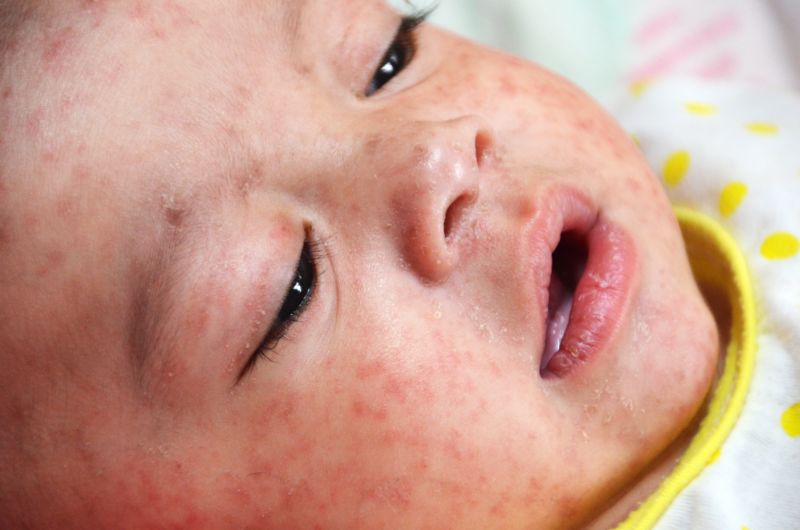
      Enlarge / A baby with measles. CDC The Centers for Disease Control and Prevention is putting clinicians on alert about the growing r...

      Popular Posts