Rechercher dans ce blog

Saturday, February 4, 2023

Infographic: A global look at cancer - Al Jazeera English

[unable to retrieve full-text content]

  1. Infographic: A global look at cancer  Al Jazeera English
  2. World Cancer Screening Day is Feb. 4  CBS Colorado
  3. World Cancer Day 2023: Cancer in under 40s is rising; MUST WATCH  Times Of India
  4. How sedentary lifestyle is making us vulnerable to cancer, here's what doctors say | Mint  Mint
  5. World Cancer Day | Lung cancer a concern in SA  eNCA
  6. View Full Coverage on Google News


Health - Latest - Google News
February 04, 2023 at 07:10AM
https://ift.tt/A5Cr6Rc

Infographic: A global look at cancer - Al Jazeera English
Health - Latest - Google News
https://ift.tt/bfzG7r4

Friday, February 3, 2023

Eye drops recalled after US drug-resistant bacteria outbreak - The Seattle Times

[unable to retrieve full-text content]

  1. Eye drops recalled after US drug-resistant bacteria outbreak  The Seattle Times
  2. Eye Drops Are Recalled After Being Linked to Vision Loss and 1 Death  The New York Times
  3. Eye drop manufacturer issues recall amid CDC investigation of infections, death  CNN
  4. Indian Firm Suspends Production Of Eye Drops Linked To Death In US | The News  NDTV
  5. View Full Coverage on Google News


Health - Latest - Google News
February 03, 2023 at 10:05PM
https://ift.tt/Es0ut5Q

Eye drops recalled after US drug-resistant bacteria outbreak - The Seattle Times
Health - Latest - Google News
https://ift.tt/VIZcvkn

Eye drops recalled after drug-resistant bacteria outbreak; at least 1 dead - syracuse.com

[unable to retrieve full-text content]

  1. Eye drops recalled after drug-resistant bacteria outbreak; at least 1 dead  syracuse.com
  2. Eye Drops Are Recalled After Being Linked to Vision Loss and 1 Death  The New York Times
  3. Eye drop manufacturer issues recall amid CDC investigation of infections, death  CNN
  4. Indian Company Recalls Eyedrops Linked To Infection Death In US  NDTV
  5. View Full Coverage on Google News


Health - Latest - Google News
February 03, 2023 at 06:45PM
https://ift.tt/IrWgJTi

Eye drops recalled after drug-resistant bacteria outbreak; at least 1 dead - syracuse.com
Health - Latest - Google News
https://ift.tt/VIZcvkn

Eye Drops Are Recalled After Being Linked to Vision Loss and 1 Death - The New York Times

[unable to retrieve full-text content]

  1. Eye Drops Are Recalled After Being Linked to Vision Loss and 1 Death  The New York Times
  2. Eye drop manufacturer issues recall amid CDC investigation of infections, death  CNN
  3. Extremely drug-resistant germ found in eye drops infects 55 in 12 states; 1 dead  Ars Technica
  4. Eye Drops Linked To US Drug-Resistant Bacteria Outbreak  HuffPost
  5. View Full Coverage on Google News


Health - Latest - Google News
February 03, 2023 at 01:54AM
https://ift.tt/mLoDduA

Eye Drops Are Recalled After Being Linked to Vision Loss and 1 Death - The New York Times
Health - Latest - Google News
https://ift.tt/VIZcvkn

Thursday, February 2, 2023

Covid Booster and Omicron: Who Should Get a Shot Now? - The New York Times

If you are high-risk, the answer is straightforward. If you are low-risk, there is less consensus.

Three years into the pandemic, it has become evident that Covid-19 isn’t going anywhere, and neither are vaccine boosters.

Last week, an advisory committee to the Food and Drug Administration unanimously agreed that the vaccine and booster process for Covid-19 needs to be simplified in terms of which version of the shot is offered and when and how often people should receive it. There was less consensus about what that simplified process will look like.

The F.D.A.’s desire to streamline vaccine recommendations is a reflection of just how complicated and confusing they have become.

When the bivalent booster, which targets both the original coronavirus strain and the BA.4/BA.5 Omicron subvariants, was rolled out in September 2022, there was little data about how well it would work. But the basis for the decision was relatively clear: The virus is evolving, and so should the vaccine. Over the past few months, as the results of initial studies have come in, the picture has gotten murkier.

The good news is the bivalent booster does appear to provide protection against severe infection, which is critical for high-risk individuals. It “is doing a much better job of protection, both for symptomatic infections” and hospitalizations, said Dr. Eric Topol, executive vice president of Scripps Research.

The relative benefit for low-risk populations, who are unlikely to die or be hospitalized from Covid-19, is less clear. There are also questions of how often people should get boosted and how the vaccine should be updated as the virus evolves.

Here’s what we currently know about the bivalent booster and how to decide when — and if — you should get your next shot.

For people who are high-risk — namely adults age 50 and older and people who are immunocompromised or have an underlying condition — the evidence is straightforward: If you haven’t gotten the bivalent booster, you should. Just make sure it’s been at least three months since your last shot or Covid infection.

Supporting this recommendation is data presented by Pfizer and Moderna at the F.D.A. meeting, along with four studies published in January in the New England Journal of Medicine. That research found that people who received the bivalent booster had an increase in antibody levels. This suggests it improved immune defenses against the virus, but it didn’t protect against the new strains as well as it did against the old ones.

The biggest jump was in antibodies that target the original strain of the coronavirus (although that version is no longer circulating, so it’s unclear how helpful those antibodies are). Antibodies that target BA.5, which was the dominant strain last summer and fall, also increased substantially. The smallest boost was seen for antibodies that defend against some of the newer Omicron subvariants that have more antibody-evading mutations, such as BQ.1.1 and XBB (the current dominant strain, XBB.1.5, wasn’t circulating when the experiments were conducted).

“There’s a clear step down” in protection as the variants continue to progress, said Dr. Dan Barouch, a professor of medicine at Harvard Medical School who led one of the studies.

When it comes to protecting against severe disease, the bivalent booster fares well in the real world, research from the Centers for Disease Control and Prevention shows. One study found that it was at least 38 percent effective at preventing hospitalization for Covid-19, and the more time that had passed since someone’s previous vaccine dose, the more the bivalent booster helped. Similarly, a second study, focusing on adults 65 and older, found that people who had received the bivalent booster an average of 30 days prior were 73 percent less likely to be hospitalized than those who’d received only the original vaccine or the vaccine plus the initial single-strain (or monovalent) booster an average of nearly a year prior.

However, it’s hard to know whether the added benefit of the bivalent booster was because it increased protection against the Omicron subvariants or because less time had passed since people got it. Antibodies wane over time — that’s why the C.D.C. and F.D.A. started recommending boosters in the first place — so it’s not surprising people would be better protected the more recently they’d had a shot.

In either case, Dr. Barouch said, “for people at high risk of severe complications of Covid-19, it makes a lot of sense to get boosted because it has shown a reduction of severe disease, at least for a brief period of time.”

The boosters also appear to be safe in an overwhelming majority of cases. Last month, the F.D.A. and C.D.C. issued a joint statement that said there was preliminary evidence the bivalent booster may raise the risk of stroke in adults over the age of 65. However, updated data revealed that it was because the comparison group had fewer strokes than normal, not because the recently boosted group had more.

For people who are under 50 and don’t have an increased risk of severe disease, there’s more of a debate about whether another shot is worth it. The booster is still effective, but getting it is less critical.

One recent study evaluating the bivalent booster in people over the age of 12 showed that it worked equally well in individuals of all ages. The researchers compared how people fared during the three months after they received a monovalent booster (May to August 2022) with the three months after people received a bivalent booster (September to December 2022). They found that the monovalent booster was 25 percent effective at preventing hospitalization or death, while the bivalent booster was 62 percent effective.

Although the booster worked for everyone, experts say because older adults are much more likely to be hospitalized for Covid-19, they will experience a greater benefit. “Even if this effectiveness is the same, it’s still more important for older people to get boosted because their absolute risk is higher,” said Danyu Lin, a professor of biostatistics at the University of North Carolina at Chapel Hill who led the research.

A C.D.C. study looking at whether the bivalent booster protects against infection in people aged 18 to 49 was also encouraging. Compared with people who received between two and four doses of the original vaccine, people who got the bivalent booster were roughly 50 percent less likely to have a symptomatic infection from either BA.5 or XBB/XBB.1.5.

However, as with the original vaccine, the bivalent booster slightly increases the risk of myocarditis, inflammation of the heart muscle, in people aged 18 to 35. As a result, some experts are hesitant to recommend more booster doses to this group.

“If you’re young, say you’re 35, 40, you’re otherwise healthy, you’ve already gotten vaccinated and boosted and probably had an infection or two in the past, I think that person is pretty well protected for quite some time,” said Dr. David Ho, a professor of medicine at Columbia University who led one of the antibody studies. “Until more data is available, I would not compel such a person to get an annual vaccination.”

The F.D.A. has suggested that, for most Americans, the booster could be given annually in the fall, like the flu vaccine, and high-risk individuals could still receive multiple doses a year. It’s not clear when, or if, it will formally recommend this approach.

Dr. Lin has unpublished research comparing outcomes by the number of booster doses people receive per year. His data shows that people who average less than one booster a year have higher hospitalization and death rates than people who get one or more doses. There is a much smaller difference between one and more than one booster dose per year. He said this suggested that an annual booster was sufficient for most people; however, for older adults, even the small benefit derived from multiple boosters a year is probably worthwhile.

Based on all of the recent findings, there is consensus that if you are at high risk, getting a vaccine booster at least annually, and possibly more frequently, continues to be valuable. For young, healthy people, though, the decision of when to get a booster, or whether to get one at all, is more individual. The C.D.C. and F.D.A. recommend boosters for everyone, but some experts are less bullish on the idea.

“I think if you haven’t had a booster in the last six months, and if you’re over age 50 or even over age 40, you’re going to get some added protection from winding up in the hospital or even dying,” Dr. Topol said. “The case between age 5 and 40 is less strong because those people” are rarely hospitalized.

“The expert opinion is divided on whether young, healthy people should get boosted,” said Dr. Barouch. “Everybody agrees that the relative benefit is higher in the people who are at highest risk of disease.”

Adblock test (Why?)


Health - Latest - Google News
February 02, 2023 at 05:00PM
https://ift.tt/Z3I7AOq

Covid Booster and Omicron: Who Should Get a Shot Now? - The New York Times
Health - Latest - Google News
https://ift.tt/5bLYDag

Mpox is almost gone in the US, leaving lessons and mysteries in its wake - CNN

CNN  — 

The US public health emergency declaration for mpox, formerly known as monkeypox, ends Tuesday.

The outbreak, which once seemed to be spiraling out of control, has quietly wound down. The virus isn’t completely gone, but for more than a month, the average number of daily new cases reported to the US Centers for Disease Control and Prevention has hovered in the single digits, plummeting from an August peak of about 450 cases a day.

Still, the US led the world in cases during the 2022-23 outbreak. More than 30,000 people in the US have been diagnosed with mpox, including 23 who died.

Cases are also down across Europe, the Western Pacific and Asia but still rising in some South American countries, according to the latest data from the World Health Organization.

It wasn’t always a given that we’d get here. When mpox went global in 2022, doctors had too few doses of a new and unproven vaccine, an untested treatment, a dearth of diagnostic testing and a difficult line to walk in their messaging, which needed to be geared to an at-risk population that has been stigmatized and ignored in public health crises before.

Experts say the outbreak has taught the world a lot about this infection, which had only occasionally been seen outside Africa.

But even with so much learned, there are lingering mysteries too – like where this virus comes from and why it suddenly began to spread from the Central and West African countries where it’s usually found to more than 100 other nations.

How long has it been spreading?

Before May 2022, when clusters of people with unusual rashes began appearing in clinics in the UK and Europe, the country reporting the most cases of mpox was the Democratic Republic of Congo, or DRC.

There, cases have been steadily building since the 1970s, according to a study in the CDC’s Morbidity and Mortality Weekly Report.

In the DRC, people in rural villages depend on wild animals for meat. Many mpox infections there are thought to be the result of contact with an animal to which the virus has adapted; this animal host is not known but is assumed to be a rodent.

For years, experts who studied African outbreaks observed a phenomenon known as stuttering chains of transmission: “infections that managed to transmit themselves or be transmitted from person to person to a limited degree, a certain number of links in that chain of transmission, and then suddenly just aren’t able to sustain themselves in humans,” said Stephen Morse, an epidemiologist at Columbia University’s Mailman School of Public Health.

Informally, scientists kept track, and Morse says that for years, the record for links in a mpox chain was about four.

“Traditionally, it always burned itself out,” he said.

Then the chains started getting longer.

In 2017, Nigeria – which hadn’t had a confirmed case of mpox in more than four decades – suddenly saw a resurgence of the virus, with more than 200 cases reported that year.

“People have speculated maybe it was a change in the virus that allowed it to be made better-adapted to humans,” Morse said.

From 2018 through 2021, eight cases of mpox were reported outside Africa. All were in men ages 30 to 50, and all had traveled from Nigeria. Three reported that the rashes had started in their groin area. One went on to infect a health care provider. Another infected two family members.

This Nigerian outbreak helped experts realize that mpox could efficiently spread between people.

It also hinted that the infection could be sexually transmitted, but investigators couldn’t confirm this route of spread, possibly because of the stigma involved in sharing information about sexual contact.

In early May 2022, health officials in the UK began reporting confirmed cases of mpox. One of the people had recently traveled to Nigeria, but others had not, indicating that it was spreading in the community.

Later, other countries would report cases that had started even earlier, in April.

Investigators concluded that mpox had been silently spreading before they caught up to it.

Declaring an emergency

In early summer, as US case numbers began to grow, the public health response bore some uncomfortable similarities to the early days of Covid-19. People with suspicious rashes complained that it was too hard to get tested because a limited supply was being rationed. Because the virus had so rarely appeared outside certain countries in Africa, most doctors weren’t sure how to recognize mpox or how to test for it and didn’t understand all its routes of spread.

A new vaccine was available, and the government had placed orders for it, but most of those doses weren’t in the United States. Beyond that, its efficacy against mpox had been studied only in animals, so no one knew whether it would actually work in humans.

There was an experimental treatment, Tpoxx, but it too was unproven, and doctors could get it only after filling out reams of paperwork required by the government for compassionate use.

Some just gave up.

“Tpoxx was hard to get,” said Dr. Jeffrey Klausner, a clinical professor of public health at the University of Southern California’s Keck School of Medicine.

“I was scrambling to find places that could prescribe it because my own institution just became a bureaucratic nightmare. So I basically would be referring people for treatment outside my own institution to be able to get monkeypox treatment,” he said.

Finally, in August, the federal government declared a public health emergency. This allowed federal agencies to access pots of money set aside for emergencies. It also allows the government to shift funds from one purpose to another to help cover costs of the response – and it helped raise awareness among doctors that mpox was something to watch for.

The government also set up a task force led by Robert Fenton, a logistics expert from the Federal Emergency Management Agency, and Dr. Demetre Daskalakis, director of the CDC’s Division of HIV and AIDS Research.

Daskalakis is openly gay and sex-positive, right down to his Instagram account, which mixes suit-and-tie shots from White House briefings with photos revealing his many tattoos.

“Dr. Daskalakis … really walks on water in most of the gay community, and then [Fenton is] a logistics expert, and I think that combination of leadership was the right answer,” Klausner said.

Mpox as a sexually transmitted infection

Early on, after the CDC identified men who have sex with men as being at highest risk of infection, officials warned of close physical contact, the kind that often happens with sexual activity. They also noted that people could be infected through contact with contaminated surfaces like sheets or towels.

But they stopped short of calling it a sexually transmitted infection, a move that some saw as calculated.

“In this outbreak, in this time and context to Europe, United States and Australia, was definitely sexually transmitted,” said Klausner, who points out that many men got rashes on their genitals and that infectious virus was cultured in semen.

Klausner believes vague descriptions about how the virus spread were intentional, in order to garner resources needed for the response.

“People felt that if they called it an STD from the get-go, it was going to create stigma, and because of the stigma of the type of sex that was occurring – oral sex, anal sex, anal sex between same-sex male partners – there may not have been the same kind of federal response,” Klausner said. “So it was actually a political calculation to garner the resources necessary to have a substantial response to be vague about how it spread.”

This ambiguity created room for misinformation and confusion, said Tony Hoang, executive director of Equality California, a nonprofit advocacy group for LGBTQ civil rights.

“I think there was a balancing dance of not wanting to create stigma, in terms of who is actually the highest rates of transmission without being forthright,” Hoang said.

Hoang’s group launched its own public information campaign, combining information from the CDC on HIV and mpox. The messaging stressed that sex was the risky behavior and made sure to explain that light brushes or touches weren’t likely to pass the infection, he said.

Klausner thinks the CDC could have done better on messaging.

“By giving vague, nonspecific information and making comments like ‘everyone’s potentially at risk’ or ‘there’s possible spread through sharing a bed, clothing or close dancing’ … that kind of dilutes the message, and people who engage in risk behavior that does put them at risk get confused, and they say ‘well, maybe this isn’t really a route of spread,’ ” he said.

Cases came down, but why?

In July and August, when the US was reporting hundreds of new mpox cases each day, health officials were worried that the virus might be here to stay.

“There were concerns that there would be ongoing transmission and that ongoing transmission would become endemic in the United States like other STIs: gonorrhea, chlamydia, syphilis. We have not seen that occur,” said Dr. Jonathan Mermin, director of the CDC’s National Center for HIV, Viral Hepatitis, STD, and TB Prevention.

“We are now seeing three to four cases a day in the United States, and it continues to decline. And we see the possibility of getting to zero as real,” he said.

At the peak of the outbreak, officials scrambled to vaccinate the population at highest risk – men who have sex with men – in the hopes of limiting both severity of infections and transmission. But no one was sure whether this strategy would work.

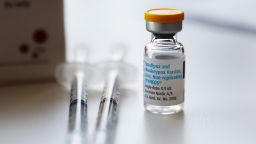
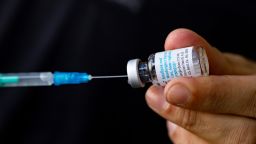
The Jynneos vaccine was approved by the US Food and Drug Administration in 2019 to prevent monkeypox and smallpox in people at high risk of those infections.

At that time, the plan was to bank it in the Strategic National Stockpile as a countermeasure in case smallpox was weaponized. The approval for mpox, a virus closely related to smallpox, was tacked on because the US had seen a limited outbreak of these infections in 2003, tied to the importation of exotic rodents as pets.

Jynneos had passed safety tests in humans. In lab studies, it protected primates and mice from mpox infections. But researchers only learn how effective vaccines are during infectious disease outbreaks, and Jynneos has never been put through its paces during an outbreak.

“We were left, when this started, with that great unknown: Does this vaccine work? And is it safe in large numbers?” Mermin said.

Beyond those uncertainties, there wasn’t enough to go around, and infectious disease experts feared that a shortage of the vaccine might thwart any effort to stop the outbreak.

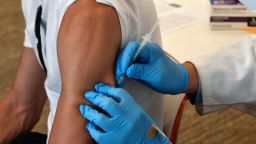
So public health officials announced a change in strategy: Instead of injecting a full dose under the skin, or subcutaneously, they would inject just one-fifth of that dose between the skin’s upper layers, or intradermally.

An early study in the trials of the vaccine had suggested that intradermal dosing could be effective, but it was a risk. Again, no one was sure this dose-sparing strategy would work.

Ultimately, all of these gambles appear to have paid off.

Early studies of vaccine effectiveness show that the Jynneos vaccine protected men from mpox infections. According to CDC data, people who were unvaccinated were almost 10 times as likely to be diagnosed with the infection as those who got the recommended two doses.

Men who had two doses were about 69% less likely, and men with a single dose were about 37% less likely, to have an mpox infection that needed medical attention compared with those who were unvaccinated, according to the CDC.

Mermin says studies have since showed that the vaccine worked well no matter if was given into the skin or under the skin – another win.

Still, the vaccine is almost certainly not the entire reason cases have plunged, simply because not enough people have gotten it. The CDC estimates that 2 million people in the United States are eligible for mpox vaccination. Mermin says that about 700,000 have had a first dose – about 36% of the eligible population.

So it’s unlikely that vaccination was the only reason for the steep decline in cases. CDC modeling suggests that behavior change may have played a substantial role, too.

In an online survey of men who have sex with men conducted in August, half of participants indicated that they had reduced their number of partners and one-time sexual encounters, behaviors that could cut the growth of new infections by 20% to 30%.

If that’s the case, some experts worry that the US could see monkeypox flare up again as the weather warms.

“The party season was during the summer, during the height of the outbreak, and we’re in the dead of winter. So there’s a possibility that behavior change may not able to be sustained,” said Gregg Gonsalves, an epidemiologist at the Yale School of Public Health.

Although we’re clearly in a much better position than we were last summer, he says, public health officials shouldn’t make this a “mission accomplished” moment.

“Now, put your foot on the accelerator. Let’s get the rest of these cases,” Gonsalves said.

Work isn’t over

Mermin says that’s exactly what the CDC intends to do. It isn’t finished with the response but intends to switch to “a ground game.”

“So much of our work in the next few months will be setting up structures so that getting vaccinated is easy,” he said.

Nearly 40% of mpox cases in the United States were diagnosed in people who also had HIV, Mermin said. So the CDC is going to make sure Jynneos vaccines are available as a routine part of care at HIV clinics and STI clinics that offer pre-exposure prophylaxis, or PrEP, for HIV.

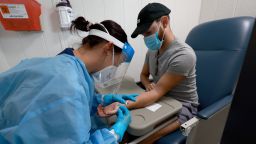
Mermin said officials are also going to continue to go to LGBTQ festivals and events to offer on-site vaccinations.

Additionally, they’re going to study people who’ve been vaccinated and infected to see whether they remain immune – something else that’s still a big unknown.

Experts say that’s just one of many questions that need a closer look. Another is just how long the virus had been spreading outside Africa before the world noticed.

“We’re starting to see some data that suggests that asymptomatic infection and transmission is possible, and that certainly will change how we how we think about this virus and and risk,” said Anne Rimoin, an epidemiologist at the Fielding School of Public Health at UCLA.

When researchers at a sexual health clinic in Belgium rescreened more than 200 nasal and oral swabs they had taken in May 2022 to test for the STIs chlamydia and gonorrhea, they found positive mpox cases that had gone undiagnosed. Three of the people reported no symptoms, while another reported a painful rash, which was misdiagnosed as herpes. Their study was published in the journal Nature Medicine.

“Mild and asymptomatic infections may have indeed delayed the detection of the outbreak,” study author Christophe Van Dijck of the Laboratory of Medical Microbiology at the University of Antwerp in Belgium said in an email to CNN.

Get CNN Health's weekly newsletter

Sign up here to get The Results Are In with Dr. Sanjay Gupta every Tuesday from the CNN Health team.

    While researchers tackle those pursuits, advocacy groups say they aren’t ready to relax.

    Hoang says Equality California is pushing the CDC to address continuing racial disparities in mpox vaccination and treatment, particularly in rural areas.

    He’s not worried that gay men will drop their guard now that the emergency has expired..

    “We’ve learned that we have to take health into our own hands, and I do think that we will remain vigilant as a community for this outbreak and future outbreaks,” Hoang said.

    Adblock test (Why?)


    Health - Latest - Google News
    January 31, 2023 at 08:04PM
    https://ift.tt/kaL2IGv

    Mpox is almost gone in the US, leaving lessons and mysteries in its wake - CNN
    Health - Latest - Google News
    https://ift.tt/5bLYDag

    Wednesday, February 1, 2023

    CDC says an eye drop brand may be connected to drug-resistant bacterial infections - Fox News

    A brand of over-the-counter eye drops may be linked to a bacterial infection that left one person dead and three others with permanent vision loss, according to the Centers for Disease Control and Prevention.

    The CDC has identified at least 50 people in 11 states with Pseudomonas aeruginosa, which is a type of bacterium resistant to most antibiotics. So far, there have been cases in California, Colorado, Connecticut, Florida, New Jersey, New Mexico, New York, Nevada, Texas, Utah and Washington.

    The agency said it is investigating, and that a majority of people affected reported using preservative-free EzriCare Artificial Tears before they became infected, according to a Jan. 20 statement.

    Among the reported cases, 11 people developed eye infections, including at least three who were blinded in one eye. Others who became ill had respiratory infections or urinary tract infections, and one person died after the bacterium entered their bloodstream.

    YEARLY COVID VACCINE AS PROPOSED BY FDA? ‘CART BEFORE THE HORSE,’ SAYS DOCTOR 

    A brand of over-the-counter eyedrops may be linked to a bacterial infection that left one person dead and three others with permanent vision loss, according to the Center for Disease Control and Prevention.

    A brand of over-the-counter eyedrops may be linked to a bacterial infection that left one person dead and three others with permanent vision loss, according to the Center for Disease Control and Prevention. (iStock)

    It remains unclear at this time if those affected had underlying eye conditions, such as glaucoma or cataracts, that would have made them more susceptible. Eye infection symptoms include pain, swelling, discharge, redness, blurry vision, sensitivity to light and the feeling that an object is stuck in the eye.

    Pseudomonas aeruginosa bacteria are commonly found in water, soil and on the hands of otherwise healthy people. These infections typically take place in hospitals among people with weakened immune systems. This type of bacterium is often resistant to standard antibiotics.

    The CDC has identified at least 50 people in 11 states with Pseudomonas aeruginosa, which is a type of bacterium resistant to most antibiotics.

    The CDC has identified at least 50 people in 11 states with Pseudomonas aeruginosa, which is a type of bacterium resistant to most antibiotics. (iStock)

    The eye drops in question are labeled as preservative-free, meaning the product does not contain anything that could prevent microbiological growth. 

    It is possible that the drops were contaminated during the manufacturing process or when a person with the bacteria on their skin opened the container.

    The CDC discovered the bacteria in the eye drop bottles and is conducting tests to determine whether that bacteria matches the strain found in patients.

    RON DESANTIS PUSHES FOR SWEEPING PROTECTIONS AGAINST COVID-19 MANDATES IN FLORIDA

    Eye infection symptoms include pain, swelling, discharge, redness, blurry vision, sensitivity to light and the feeling that an object is stuck in the eye.

    Eye infection symptoms include pain, swelling, discharge, redness, blurry vision, sensitivity to light and the feeling that an object is stuck in the eye. (iStock)

    CLICK HERE TO GET THE FOX NEWS APP

    EzriCare Artificial Tears had not been recalled as of Tuesday evening. 

    The CDC is recommending that clinicians and patients stop using the product until the investigation and laboratory analysis are complete.

    Adblock test (Why?)


    Health - Latest - Google News
    February 01, 2023 at 01:18PM
    https://ift.tt/z346xI2

    CDC says an eye drop brand may be connected to drug-resistant bacterial infections - Fox News
    Health - Latest - Google News
    https://ift.tt/CVkWIHf

    Featured Post

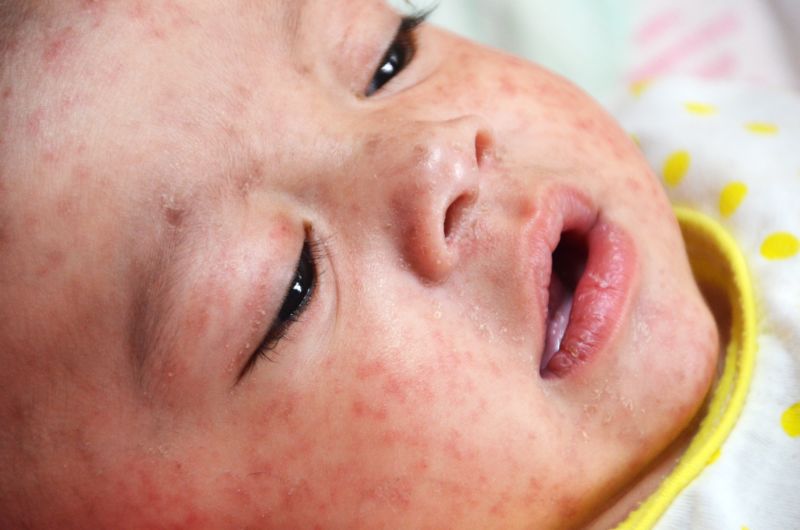
    Measles is “growing global threat,” CDC tells doctors in alert message - Ars Technica

    Enlarge / A baby with measles. CDC The Centers for Disease Control and Prevention is putting clinicians on alert about the growing r...

    Popular Posts