Rechercher dans ce blog

Thursday, May 4, 2023

An RSV vaccine has been approved by the FDA. It’s a huge deal. - Vox.com

On Wednesday, the Food and Drug Administration approved the first vaccine that protects against respiratory syncytial virus, otherwise known as RSV.

This is a big moment in the fight against a major scourge. Researchers have been working to create an RSV vaccine for more than half a century. And it’s not an exaggeration to say RSV vaccines could save hundreds of thousands of lives each year on a global scale.

RSV generally causes cold symptoms, but can also lead to severe lung inflammation or infection in very young and very old people. Each year, it causes up to 160,000 hospitalizations and 10,000 deaths among older Americans, and as many as 55,000 adult deaths globally. People with heart and lung disease and weakened immune systems are at the highest risk for severe RSV disease.

RSV season usually starts in the autumn and is worst in the winter. The vaccine, known as Arexvy, was approved for adults 60 and over, will likely be recommended by the CDC in June and available in time for people to receive it this fall, according to reporting in the New York Times.

Young babies, especially newborns born prematurely, are also at high risk for bad disease due to RSV: Annually, the virus causes up to 80,000 hospitalizations and 300 deaths in American children under 5, and leads to 2 million outpatient visits. The virus also leads to an estimated 120,000 infant deaths worldwide each year.

Right now, this news does not impact pediatric populations. But there’s hope on the horizon: Several vaccines that would protect babies and children — and a number of other adult vaccines — are currently either under FDA review or at earlier stages of development.

RSV was a major contributor to the “tripledemic“ that flooded hospitals last winter. As these vaccines come to market, they could dramatically change the face of cold and flu season for the better.

For now, here’s what you need to know.

The vaccine is highly effective and has generally mild side effects

Arexvy, which is made by drug manufacturer GSK, is one of two adult RSV vaccines the FDA reviewed at a March 1 meeting. In trials, the vaccine reduced the risk of lower respiratory tract illness in adults over 60 by nearly 83 percent, and the risk of severe illness by 94 percent.

The vaccine, which is given as a single injection, is built using the kind of conventional technology that preceded mRNA technology used to create many Covid-19 vaccines. It’s built using a chunk of the RSV virus and a couple of additional molecules. The result is called a recombinant vaccine because it combines pieces of a virus with other products that stimulate the immune system. Other vaccines built with this technology include the ones used to prevent whooping cough, meningitis, and shingles.

Side effects related to the vaccine were generally mild and resolved within one to two days. The most common side effect was mild to moderate pain at the injection site, and a smaller number of people reported fatigue after the injection.

The FDA will monitor for severe side effects

For the most part, the Arexvy vaccine appears to be safe. However, the FDA has its eye on a few uncommon side effects that it will watch for carefully as more and more people get the vaccine. Although these were very rare among people who took part in the vaccine trials, they’re severe enough to merit close monitoring.

In one trial, where each group had 12,500 participants, 10 Arexvy recipients and four people who got a placebo had atrial fibrillation, an irregular and rapid heart rhythm that can lead clots to form in the heart. (The condition is extremely common among older adults and sometimes reverses itself; it’s treatable with blood thinners when it does not.) One participant in this trial developed Guillain-Barré syndrome, a condition in which the immune system attacks nerve cells, leading to weakness and sometimes paralysis.

In another trial with 2,500 people each in the Arexvy and placebo groups, two people who received the vaccine developed an inflammatory condition affecting the brain and spinal cord, one of whom died.

The FDA is requiring GSK to monitor for the incidence of all these conditions among people who get the vaccine going forward.

As ever, the question for the agency is whether the vaccine’s side effect risks are greater than RSV risks. Time will help answer that question.

This is a huge win!

People first began trying to develop an RSV vaccine in the 1960s. Why did it take so long to make it work?

RSV’s surface proteins are shape-shifters, taking different forms depending on whether they’ve invaded — or fused to — a human cell. To complicate matters, their pre-fusion shape is wildly unstable. That meant that for a long time, researchers’ only option was to use the protein’s post-fusion shapes as targets for new vaccines.

As a result, for years, RSV vaccines could only recognize viral particles after they’d invaded cells — too late to make much of a difference. To make a better vaccine, scientists really needed a clear picture of what those surface proteins looked like before cell invasion.

In 2013, structural biologist Jason McLellan, now at the University of Texas at Austin, figured out how to get that picture: He worked out a way to stabilize a surface protein in its pre-fusion form, then described it in great detail. That discovery meant researchers could now create vaccines that targeted an earlier stage of RSV infection — and they did.

Arexvy is just the first downstream result of this discovery to be approved by the FDA, and more will likely follow soon. Pfizer’s RSV vaccine for adults will probably be approved later this month; Moderna has said it’s expecting its adult vaccine to be authorized in the first half of this year; and multiple companies are working on vaccines to protect babies and toddlers under 2.

Overall, we’re in for a lot more good news about RSV vaccines in the near future.

Adblock test (Why?)


Health - Latest - Google News
May 05, 2023 at 12:33AM
https://ift.tt/k0wIRKD

An RSV vaccine has been approved by the FDA. It’s a huge deal. - Vox.com
Health - Latest - Google News
https://ift.tt/8EYaRvd

An RSV vaccine has been approved by the FDA. It’s a huge deal. - Vox.com

On Wednesday, the Food and Drug Administration approved the first vaccine that protects against respiratory syncytial virus, otherwise known as RSV.

This is a big moment in the fight against a major scourge. Researchers have been working to create an RSV vaccine for more than half a century. And it’s not an exaggeration to say RSV vaccines could save hundreds of thousands of lives each year on a global scale.

RSV generally causes cold symptoms, but can also lead to severe lung inflammation or infection in very young and very old people. Each year, it causes up to 160,000 hospitalizations and 10,000 deaths among older Americans, and as many as 55,000 adult deaths globally. People with heart and lung disease and weakened immune systems are at the highest risk for severe RSV disease.

RSV season usually starts in the autumn and is worst in the winter. The vaccine, known as Arexvy, was approved for adults 60 and over, will likely be recommended by the CDC in June and available in time for people to receive it this fall, according to reporting in the New York Times.

Young babies, especially newborns born prematurely, are also at high risk for bad disease due to RSV: Annually, the virus causes up to 80,000 hospitalizations and 300 deaths in American children under 5, and leads to 2 million outpatient visits. The virus also leads to an estimated 120,000 infant deaths worldwide each year.

Right now, this news does not impact pediatric populations. But there’s hope on the horizon: Several vaccines that would protect babies and children — and a number of other adult vaccines — are currently either under FDA review or at earlier stages of development.

RSV was a major contributor to the “tripledemic“ that flooded hospitals last winter. As these vaccines come to market, they could dramatically change the face of cold and flu season for the better.

For now, here’s what you need to know.

The vaccine is highly effective and has generally mild side effects

Arexvy, which is made by drug manufacturer GSK, is one of two adult RSV vaccines the FDA reviewed at a March 1 meeting. In trials, the vaccine reduced the risk of lower respiratory tract illness in adults over 60 by nearly 83 percent, and the risk of severe illness by 94 percent.

The vaccine, which is given as a single injection, is built using the kind of conventional technology that preceded mRNA technology used to create many Covid-19 vaccines. It’s built using a chunk of the RSV virus and a couple of additional molecules. The result is called a recombinant vaccine because it combines pieces of a virus with other products that stimulate the immune system. Other vaccines built with this technology include the ones used to prevent whooping cough, meningitis, and shingles.

Side effects related to the vaccine were generally mild and resolved within one to two days. The most common side effect was mild to moderate pain at the injection site, and a smaller number of people reported fatigue after the injection.

The FDA will monitor for severe side effects

For the most part, the Arexvy vaccine appears to be safe. However, the FDA has its eye on a few uncommon side effects that it will watch for carefully as more and more people get the vaccine. Although these were very rare among people who took part in the vaccine trials, they’re severe enough to merit close monitoring.

In one trial, where each group had 12,500 participants, 10 Arexvy recipients and four people who got a placebo had atrial fibrillation, an irregular and rapid heart rhythm that can lead clots to form in the heart. (The condition is extremely common among older adults and sometimes reverses itself; it’s treatable with blood thinners when it does not.) One participant in this trial developed Guillain-Barré syndrome, a condition in which the immune system attacks nerve cells, leading to weakness and sometimes paralysis.

In another trial with 2,500 people each in the Arexvy and placebo groups, two people who received the vaccine developed an inflammatory condition affecting the brain and spinal cord, one of whom died.

The FDA is requiring GSK to monitor for the incidence of all these conditions among people who get the vaccine going forward.

As ever, the question for the agency is whether the vaccine’s side effect risks are greater than RSV risks. Time will help answer that question.

This is a huge win!

People first began trying to develop an RSV vaccine in the 1960s. Why did it take so long to make it work?

RSV’s surface proteins are shape-shifters, taking different forms depending on whether they’ve invaded — or fused to — a human cell. To complicate matters, their pre-fusion shape is wildly unstable. That meant that for a long time, researchers’ only option was to use the protein’s post-fusion shapes as targets for new vaccines.

As a result, for years, RSV vaccines could only recognize viral particles after they’d invaded cells — too late to make much of a difference. To make a better vaccine, scientists really needed a clear picture of what those surface proteins looked like before cell invasion.

In 2013, structural biologist Jason McLellan, now at the University of Texas at Austin, figured out how to get that picture: He worked out a way to stabilize a surface protein in its pre-fusion form, then described it in great detail. That discovery meant researchers could now create vaccines that targeted an earlier stage of RSV infection — and they did.

Arexvy is just the first downstream result of this discovery to be approved by the FDA, and more will likely follow soon. Pfizer’s RSV vaccine for adults will probably be approved later this month; Moderna has said it’s expecting its adult vaccine to be authorized in the first half of this year; and multiple companies are working on vaccines to protect babies and toddlers under 2.

Overall, we’re in for a lot more good news about RSV vaccines in the near future.

Adblock test (Why?)


Health - Latest - Google News
May 05, 2023 at 12:33AM
https://ift.tt/H98IF0Q

An RSV vaccine has been approved by the FDA. It’s a huge deal. - Vox.com
Health - Latest - Google News
https://ift.tt/6LY7Ii5

Wednesday, May 3, 2023

CDC Investigates COVID Outbreak Linked To Its Conference - HuffPost

The Centers for Disease Control and Prevention is reportedly investigating a COVID-19 outbreak linked to the health agency’s annual conference held in Atlanta late last month.

As of Tuesday, 35 people who attended this year’s Epidemic Intelligence Service conference have tested positive for COVID-19, the CDC has confirmed.

“CDC is working with the Georgia Department of Health to conduct a rapid epidemiological assessment of confirmed COVID-19 cases that appear to be connected to the 2023 EIS Conference to determine transmission patterns,” Kristen Nordlund, a spokesperson for the CDC, told The Washington Post.

People who were at the conference told the outlet public health guidelines recommended by health officials earlier in the pandemic, including wearing masks and maintaining social distance, weren’t followed.

The CDC did not immediately respond to a HuffPost request for comment.

The EIS conference took place in Georgia from April 24 to 27, and it was the first time in four years that the event was held in-person.

The event offers an opportunity for public health officials to gather and hear about scientific investigations and developments made by EIS officers to drive improvements in the field.

As of Tuesday, the CDC recorded a weekly total of 88,330 COVID-19 cases and a weekly total of 1,052 COVID-related deaths.

While those figures are much lower than at the height of the pandemic, officials have warned that the real number of cases may be higher as fewer Americans get tested and not all report their results to health authorities.

The Biden administration is set to lift most remaining COVID-19 rules next week, including vaccination requirements for international travelers, when the national public health emergency will expire.

Go To Homepage

Adblock test (Why?)


Health - Latest - Google News
May 03, 2023 at 08:51PM
https://ift.tt/CyzNV89

CDC Investigates COVID Outbreak Linked To Its Conference - HuffPost
Health - Latest - Google News
https://ift.tt/6LY7Ii5

Tuesday, May 2, 2023

Doctor: ‘BE FAST,’ know stroke warning signs - WOODTV.com

[unable to retrieve full-text content]

Doctor: ‘BE FAST,’ know stroke warning signs  WOODTV.comView Full Coverage on Google News

Health - Latest - Google News
May 03, 2023 at 02:13AM
https://ift.tt/A5aX8Zc

Doctor: ‘BE FAST,’ know stroke warning signs - WOODTV.com
Health - Latest - Google News
https://ift.tt/cT9PNAh

Doctor: ‘BE FAST,’ know stroke warning signs - WOODTV.com

[unable to retrieve full-text content]

  1. Doctor: ‘BE FAST,’ know stroke warning signs  WOODTV.com
  2. American Stroke Association says up to 60% of stroke survivors develop memory, thinking problems  CBS Philadelphia
  3. Stroke continue to be leading cause of death among Americans, here's signs you need to know  WKOW
  4. What you need to know about strokes, what to do if someone is having a stroke  KCRG-TV9: Your Trusted Local News Source
  5. Study Finds 1 in 3 Stroke Survivors Develop Dementia  Healthline
  6. View Full Coverage on Google News


Health - Latest - Google News
May 03, 2023 at 02:13AM
https://ift.tt/A5aX8Zc

Doctor: ‘BE FAST,’ know stroke warning signs - WOODTV.com
Health - Latest - Google News
https://ift.tt/cT9PNAh

One Dose of HPV Vaccine Prevents Infection for at Least Three Years - The New York Times

Protection may last even longer, scientists reported. The finding may be a boon to low-income countries, where cervical cancer takes an enormous toll.

A single dose of the human papillomavirus vaccine is highly effective at preventing infections over three years, most likely lowering rates of cervical cancer and other diseases linked to the virus, according to a new study in Kenya.

A single-dose strategy would dramatically extend supplies of the vaccine, lower costs and simplify distribution, which would make vaccination a more viable option in countries with limited resources, experts said.

HPV is a sexually transmitted infection linked to cervical cancer and other malignancies. Health officials in many countries, including the United States, recommend two doses of the vaccine for adolescent girls younger than 15, and three doses for those who are older.

But observational data has long suggested that a single dose offers effective protection against HPV for at least a decade. The new results are the first confirmation from a gold-standard clinical trial that a single dose may be as effective as two or three doses, at least over three years.

Results of a direct comparison of one- and two-dose regimens will not be available until 2025.

At least 24 countries, including Mexico, Tonga and Guyana, have shifted to the one-dose approach, according to the World Health Organization.

The new evidence may convince more countries to adopt the strategy.

“What we had predicted was that this would be most interesting for the low- or middle-income countries,” said Paul Bloem, a senior adviser on HPV vaccination programs at the W.H.O. But high-income countries like Britain and Australia were among the first to change their policies, he noted.

The W.H.O. estimates that if widely deployed, a single-dose strategy could prevent 60 million cervical cancer cases and 45 million deaths worldwide over the next 100 years.

Cervical cancer is the fourth most common type of cancer in women worldwide, with an estimated 604,000 new cases in 2020, according to the W.H.O. The disease killed an estimated 342,000 women in 2020, more than the number who died during pregnancy or childbirth.

“This is a real killer of women,” said Dr. Seth Berkley, chief executive of Gavi, which funds immunization programs in lower-income nations.

“It is also a disease that really kills women in the prime of their lives,” he added, “and does it in a really horrible way.”

More than 95 percent of cervical cancer is caused by sexually transmitted HPV. Multiple strains of the virus are prevalent, but subtypes 16 and 18 are responsible for 70 percent of cervical cancers.

The HPV vaccine debuted in 2006 and is a “near-perfect prevention intervention for cervical cancer and other HPV-associated cancers,” said Dr. Ruanne Barnabas, chief of the division of infectious diseases at Massachusetts General Hospital, who led the new study.

The Food and Drug Administration approved the vaccine that year in the United States, and since then infections with the viral strains that cause cancers have dropped by more than 80 percent in the country, according to the Centers for Disease Control and Prevention.

Still, about 13,000 Americans are diagnosed with cervical cancer each year; about 4,000 women die of the disease annually.

HPV’s toll is much higher in low- and middle-income countries, where women have limited access to screening for cervical cancer or treatments for the disease. Roughly 90 percent of the deaths from cervical cancer in 2020 were among women who lived in resource-poor countries.

In Kenya, the vaccine is currently given in two doses. But only 33 percent of girls ages 9 to 14 receive the first dose, and only 16 percent return for the second. By contrast, more than 78 percent of adolescent girls in the United States received at least one dose of the vaccine in 2021.

A single-dose vaccination regimen is much easier to implement on a large scale and opens up more channels of delivery, such as village-wide campaigns and mobile clinics.

“It allows an opportunity for creativity of the delivery machinery,” said Dr. Peter Dull, who leads HPV vaccine development at the Bill & Melinda Gates Foundation, which funded the study.

In the KEN SHE study, researchers randomly assigned 2,275 Kenyan women ages 15 to 20 to receive a single dose of the HPV vaccine targeting subtypes 16 and 18; an HPV vaccine targeting 16, 18 and seven other subtypes; or the meningococcal vaccine, as a control.

The scientists collected cervical and vaginal swabs from the women every six months and looked for persistent HPV infection up to 36 months.

The vaccine had an efficacy of 98 percent against the virus subtypes 16 and 18 over three years, and 96 percent against all cancer-causing strains, the study found. No serious side effects were reported.

Earlier results from the study, published last year, showed that a single dose of both vaccines was highly effective for 18 months.

Based in part on that evidence, last year the W.H.O. changed its recommendation to one or two doses for girls and young women ages 9 to 20 years, and two doses with a six-month interval for women over 21.

Programs funded by Gavi have so far reached only about one-third of their goal, in part because of a shortage in vaccine supply. Roughly 20 million doses were available in 2022, Dr. Berkley said, but that number is expected to more than triple by 2025.

Adblock test (Why?)


Health - Latest - Google News
May 03, 2023 at 02:47AM
https://ift.tt/MSJaX5n

One Dose of HPV Vaccine Prevents Infection for at Least Three Years - The New York Times
Health - Latest - Google News
https://ift.tt/cT9PNAh

Monday, May 1, 2023

Groundbreaking new AI can detect cancer earlier: study - New York Post

Doctors and scientists in the UK have reached a major breakthrough in fast-tracking cancer detection — all with the help of AI.

The new artificially intelligent algorithm — in development since 2020 — has the means to determine whether or not abnormal growths found on CT scans are cancerous, the Guardian reported.

“In the future, we hope it will improve early detection and potentially make cancer treatment more successful by highlighting high-risk patients and fast-tracking them to earlier intervention,” said researcher Dr. Benjamin Hunter, a clinical oncology registrar at the Royal Marsden National Health Service.

In particular, lungs of 500 patients were analyzed in a published study on the impressive technology.

“According to these initial results, our model appears to identify cancerous large lung nodules accurately,” said Hunter.

Doctors Richard Lee and Benjamin Hunter (center, right) have made a breakthrough with using artificial intelligence to detect cancer early.
Doctors Richard Lee (center) and Benjamin Hunter (right) have made a breakthrough with using artificial intelligence to detect cancer early.
The Royal Marsden NHS Foundation Trust

“Next, we plan to test the technology on patients with large lung nodules in clinic to see if it can accurately predict their risk of lung cancer.”

If success continues, this will also streamline the time it takes doctors to make critical decisions on proceeding with treatment — particularly with growths that are of medium risk — according to the outlet.

“Through this work, we hope to push boundaries to speed up the detection of the disease using innovative technologies such as AI,” said chief study investigator Dr. Richard Lee.

Lungs were studied as part of the major research, which has been ongoing since 2020.
Lungs were studied as part of the research, which has been ongoing since 2020.
Getty Images/iStockphoto

“People diagnosed with lung cancer at the earliest stage are much more likely to survive for five years, when compared with those whose cancer is caught late,” he added.

Three years ago, Lee explained that this study would also shed light on “subtle changes in patients,” which could explain certain behavioral aspects of their conditions.

“This means it is a priority we find ways to speed up the detection of the disease, and this study — which is the first to develop a radiomics model specifically focused on large lung nodules — could one day support clinicians in identifying high-risk patients.”

Adblock test (Why?)


Health - Latest - Google News
May 02, 2023 at 01:01AM
https://ift.tt/sK58YVC

Groundbreaking new AI can detect cancer earlier: study - New York Post
Health - Latest - Google News
https://ift.tt/2NYDBhp

Featured Post

Measles is “growing global threat,” CDC tells doctors in alert message - Ars Technica

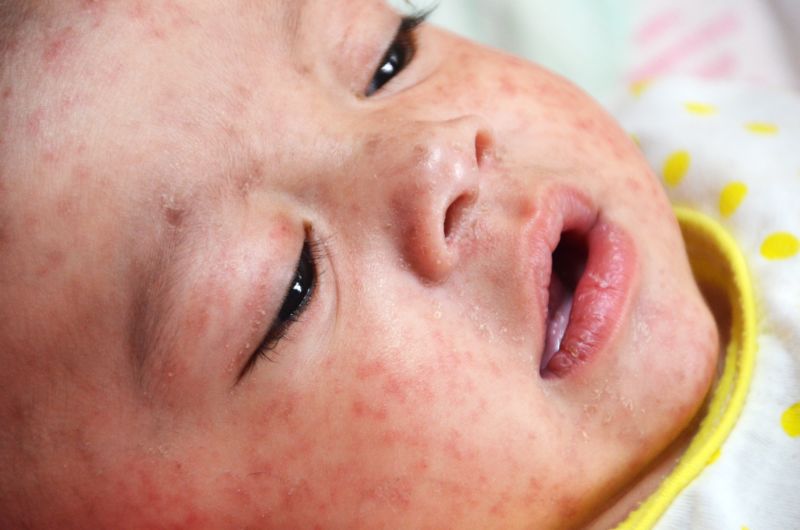
Enlarge / A baby with measles. CDC The Centers for Disease Control and Prevention is putting clinicians on alert about the growing r...

Popular Posts