Rechercher dans ce blog

Thursday, April 30, 2020

County asks residents to stick with virus precautions - Valley morning Star

Courtesy photo Equipped with masks and purple gloves, San Benito CISD personnel prepare instructional material for students.

The fact that the number of COVID-19 cases in Cameron County has remained lower than initially feared is likely attributable to shelter-in-place, travel restrictions, social distancing and other emergency mandates imposed to stem the flow of the virus, and the fact that most residents have abided by them, according to county Judge Eddie Treviño Jr., speaking at a Wednesday press conference.

Gov. Greg Abbott’s order, announced April 27, allowing restaurants, retail shops and certain other businesses to begin reopening starting May 1 takes away the county’s legal authority to require residents to abide by the mandates, which include wearing masks or facial coverings in public, though the county will continue to strongly recommend that residents keep observing the precautions that have kept the virus from spreading more, Treviño said.

“ We respect the office of the governor and we respect Gov. Abbott’s decision to implement these changes with regards to the reopening of the economy,” he said. “And we’re going to follow the orders and mandates. However, that does not mean that we will not be issuing our own recommendations. So everything that we’ve got in place, we’re going to continue in the form of a recommendation.”

The county judge also said the county’s midnight to 5 a.m. curfew expires on Friday.

Abbott’s order, along with his phased plan to reopen the state’s economy, “Texans Helping Texans,” is available on the county’s website. Starting May 1, restaurants, retail stores, libraries and museums, malls and movie theaters will be allowed to reopen to 25 percent occupancy as part of phase one. Remaining closed for the time being will be bars, gyms, public swimming pools, bowling alleys, video arcades and game rooms, massage businesses, tattoo parlors, piercing studios, cosmetology salons and barber shops.

Treviño said he’s heard from some restaurant owners who plan to reopen on May 1 but also from others who say they don’t intend to, not yet anyway.

“ They feel that they need to make sure that they’re able to reopen in a way that does not risk their employees or their customers or clients,” he said. “I think that is an extremely smart thing to do, and a very, very cautious thing to do. … We don’t want to reopen or jump too quickly from one point to the next.”

The numbers Treviño discussed at Wednesday’s press conference revealed the county had 387 confirmed cases of coronavirus out of 907 people tested through public labs. Of that number, 236 had tested negative, 171 individuals had cleared the virus and recovered, and 16 had died.

Treviño noted that the county went from 37 cases on April 1 to 387 on Wednesday, a roughly tenfold increase though good news in the sense that the county didn’t hit those numbers earlier. He credited the public’s adherence to social distancing, shelter-in-place and other mandates.

“ I want to thank everybody for their hard work getting us to this point,” Treviño said.

Meanwhile, all credible health experts advise that the push by states to reopen their economies must be accompanied by substantially more testing than has been done so far in order to avoid a second wave of infections. Less than 1 percent of Cameron County’s population has been tested through public and private labs. That’s roughly 4,000 residents — nowhere near where we should be but about on par with the rest of Texas and the nation, Treviño said, adding that comes down to a shortage of test kits. He said the county is working with the state on getting additional testing resources, if only on a temporary basis.

“ We don’t have an announcement yet, but we’re working on that and we’re hopeful that we (will) have some additional testing capabilities in the very near future,” Treviño said.

Without data from widespread testing, the county must rely on hospitals’ COVID-19 patient loads for clues on what the virus is doing, he said. So far hospitals have not seen a big surge in patients, and ideally that trend will continue as the number of new cases in the county appears to be leveling off, though not decreasing yet, Treviño said.

He feels that a lack of coordination with and guidance from the state health department and state department of emergency management continues to impede the county’s response, while the lack of federal action on creating a national testing strategy has left the United States lagging behind other nations in terms of testing.

“ Other countries, many of them, are ahead of us on a per-capita basis, and that’s what we should be working on,” Treviño said. “There’s no reason why our country, with the capability that we have from a scientific standpoint, should … be having a shortage of testing, nor of analysis. … We’ve known about this since day one. We’ve known about the lack of testing for two months, and we’re in the same boat. That’s where I think … federal leadership and support and guidance would have been beneficial. We’d be two months ahead as opposed to hearing this morning that hopefully they can have the tests for us in the next two months. We should be there now.”

sclark@brownsvilleherald.com

Let's block ads! (Why?)


"virus" - Google News
April 30, 2020 at 08:30PM
https://ift.tt/2SkfbpC

County asks residents to stick with virus precautions - Valley morning Star
"virus" - Google News
https://ift.tt/2OagXru

It's the 'First Glimmer of Hope' for a Real COVID-19 Treatment - Daily Beast

Doctors haven’t had a COVID-stopper in their arsenal. That might — might — be about to change. Thanks to a new National Institutes of Health study into the Ebola drug remdesivir, researchers now have real evidence that there’s a treatment for the disease that can get people out of the hospital faster, and save some lives. (If the early results hold up, of course.) 

What’s more, the early NIH results overturned some of the skepticism generated by a canceled study of the drug in China. 

The Daily Beast spoke to doctors at the University of Nebraska, which played a lead role in carrying out the trial of the anti-viral drug remdesivir. So what did they find? How can remdesivir help? And what are the next steps?

Let's block ads! (Why?)


Health - Latest - Google News
April 30, 2020 at 03:15PM
https://ift.tt/3f2E2bj

It's the 'First Glimmer of Hope' for a Real COVID-19 Treatment - Daily Beast
Health - Latest - Google News
https://ift.tt/2zrj9Ud

Fauci Expects FDA Decision Soon; Europe Slumps: Virus Update - Yahoo Finance

Fauci Expects FDA Decision Soon; Europe Slumps: Virus Update

(Bloomberg) -- China rejected U.S. President Donald Trump’s claim that Beijing was trying to damage his re-election chances with its handling of the coronavirus outbreak. Spain recorded steep declines in new cases, Germany is set to extend restrictions, and Britain will probably miss its daily testing target.

The European Central Bank intensified its response to the crisis as shutdowns pushed the region’s economy into a record contraction, and President Christine Lagarde gave a dour projection for this year. Millions more Americans filed for unemployment benefits.

The U.S. government’s top infectious-disease expert, Anthony Fauci, said he expects an FDA decision on remdesivir relatively soon. Gilead has more than 50,000 courses of the experimental Covid-19 therapy ready to ship as soon as the drug is authorized for emergency use by U.S. regulators.

Key Developments

Virus Tracker: global cases exceed 3.2 million; deaths top 228,000Dueling data on Gilead treatment leaves many questionsDead coronavirus particles muddy outcome of test resultsChina data shows global slump undercut nascent recoveryWorld embraces contact-tracing technology to fight Covid-19Road to easing lockdowns is paved with economic trade-offs

Subscribe to a daily update on the virus from Bloomberg’s Prognosis team here. Click VRUS on the terminal for news and data on the coronavirus.

Euro-Area Economy Could Shrink as Much as 12%: Lagarde (8:36 a.m. NY)

The economy could shrink from 5% to 12% this year, Lagarde said during the opening statement of the ECB’s monetary policy press conference in Frankfurt.

The ECB unveiled a further facility to inject liquidity into the economy after data showed the worst three-month contraction in a quarter of a century of data. It delivered a new lending salvo that includes a so-called “PELTRO” measure to further assist growth, and will keep asset purchases and interest rates unchanged.

The bank said the lowest interest rate on a program that gives banks incentives to lend to companies and households will fall to 50 basis points below the deposit rate, currently at -0.5%. Interest on the new, non-targeted facility will be 0.25% below the main refinancing rate that currently is zero.

Singapore Cases Must Ease Before Economy Restarts (7:41 a.m. NY)

Singapore Prime Minister Lee Hsien Loong cautioned that things won’t ever get back to the way they were before. He warned “significant structural changes” to the economy are likely even after the virus abates, with some industries disrupted permanently, companies having to change their business models to survive and some jobs simply disappearing. Many workers will have to accept pay cuts so their companies can survive, he said.

When Singapore does reopen, it won’t happen all at once, Lee said. Rather, it will reopen step by step, with critical industries and those connected to global supply chains going first. Places that draw crowds, such as entertainment outlets and large-scale sporting events, will have to wait.

Germany Sets Out Terms For Lufthansa Aid (7:35 a.m. NY)

Deutsche Lufthansa AG is expected to accept a significant government stake and state veto rights in exchange for a multibillion-euro package of assistance, according to people familiar with the matter.

While details are still being negotiated, the economy and finance ministries have ironed out disagreements that dragged on for weeks. The plan foresees Germany taking a least a 25% stake in the airline and receiving at least one seat on the firm’s supervisory board, the people said. The assistance could run to 10 billion euros ($11 billion).

Children May Be Just as Infectious as Adults (7:30 a.m. NY)

Children with the new coronavirus may be as infectious as adults, according to a study from Germany that recommends caution against an unlimited reopening of schools and kindergartens.

While children have a lower risk of developing severe illness from Covid-19, they may be no less capable of spreading it. Levels of virus in the respiratory tract -- the main route via which the pathogen is transmitted -- don’t appear significantly different across age groups, Christian Drosten, director of the Institute of Virology at Berlin’s Charite hospital, and colleagues found.

The WHO says more research is needed on the topic. For now, household transmission studies indicate that children are less likely to transmit Covid-19 to adults than the reverse, WHO epidemiologist Maria Van Kerkhove told reporters in Geneva on Wednesday.

Conoco Deepens Production Cuts (7:21 a.m. NY)

ConocoPhillips estimates that it will voluntarily curtail production by 420,000 net barrels per day. Cuts for May are estimated to be 230,000 barrels per day. Future decisions to curtail will be made on a month-to-month basis.

Shell, Europe’s largest oil company, earlier cut its dividend for the first time since at least the Second World War and signaled demand may not fully recover once the pandemic is over.

Fauci Expects FDA Decision on Remdesivir Soon (7:15 a.m. NY)

“It’s going to be really quickly,” Anthony Fauci, the head of National Institute of Allergy and Infectious Diseases, said on NBC’s Today Show about an emergency use authorization on remdesivir.

He said he spoke to the FDA Commissioner last night and they haven’t made a final decision but Fauci expects one relatively soon. “I do,” he said separately, when asked if a vaccine for coronavirus in January is in the realm of possibility.

McDonald’s Flags ‘Dramatic’ Changes in Behavior (7:10 a.m. NY)

The global crisis caused by the Covid-19 pandemic has significantly disrupted business, the company said. “The resulting operational impact brought on by several related factors, including restaurant closures, limited operations and dramatic changes in consumer behavior, led to a marked decline in sales during the second half of March and significantly affected the company’s first quarter results.”

Nissan Sunderland Production Won’t Start Until June (7 a.m. NY)

Vehicle Production at Nissan’s U.K. Sunderland plant will continue throughout May, and the company is currently planning a phased resumption of production in early June. Output has been suspended since March 17. The majority of employees at the plant will remain furloughed.

That comes as manufacturers from Volkswagen AG to Renault SA and Daimler AG are restarting factories in Europe with little visibility about how much actual demand there will be once customers emerge from restrictions. Aston Martin said last week it intends to reopen its St. Athan factory in Wales on May 5, while operations at its main site in Gaydon, England, “are planned to resume later.”

Japan’s Abe Signals Plans to Extend Emergency (6:45 a.m. NY)

Japanese Prime Minister Shinzo Abe signaled that he plans to extend a national state of emergency, saying that current conditions make it difficult to stick to the current end date of May 6. Abe told reporters in Tokyo it would be difficult to return to the previous way of life on May 7. The country’s parliament passed a $240 billion extra budget for this fiscal year, securing part of the funding for a record stimulus package and clearing a major hurdle for aid getting to small businesses.

Separately, Fuji News Network reported that Japan will call for creating a joint fund to combat the pandemic at a teleconference later in the day by Group of Seven finance chiefs. The fund’s main role would be helping make medicines and vaccines against the illness widely available in the world.

Continental Shelves Unit Spinoff (6:36 a.m. NY)

Continental AG said it’s postponing the planned spinoff of its Vitesco powertrain division due to market disruptions sparked by the coronavirus crisis. Continental won’t put the transaction up for a vote at its July 14 shareholder meeting, but still plans to pursue the spinoff at a later stage. Vitesco makes engine components, electronics and sensors.

Study Suggests Third of U.K. Covid-19 Hospital Patients Die (5:35 p.m. HK)

About a third of patients in U.K. hospitals with Covid-19 died from the disease, according to the findings of a study of more than 16,000 people with the virus. The research, which hasn’t been peer-reviewed and has yet to appear in a scientific journal, is an early insight into the deadliness of the virus in the U.K., which has one of the highest tolls from the pandemic in Europe.

Led by researchers from Edinburgh University, Liverpool University and Imperial College London, the study pulled information from 166 hospitals in England, Wales and Scotland about Covid-19 patients.

Italy May Remove More Curbs (5:22 p.m. HK)

Prime Minister Giuseppe Conte is preparing to further ease Italy’s lockdown beginning in mid-May if there is no spike in new virus cases. “We could continue easing the restrictive measures” by mid-May Conte said in parliament on Thursday. “If the contagion curve doesn’t grow, we are going to allow reopenings of shops, restaurants and services,” the premier said, warning that the country is not “free of pandemic yet.”

Spain Records Fewest Deaths in Six Weeks (5:16 p.m. HK)

Spain recorded steep declines in the number of new coronavirus deaths and cases, as the nation begins gradually relaxing a strict lockdown regime after weeks of confinement. The number of fatalities rose by 268 to 24,543 in the 24 hours through Thursday, the smallest increase in six weeks and compared with Wednesday’s of 325, according to Health Ministry data. Total infections rose by 1,309 to 213,435 after the previous day’s gain of 2,144.

Indonesia Cases Top 10,000 (5:13 p.m. HK)

Indonesia’s coronavirus cases exceeded 10,000 as infections showed no signs of slowing even with partial lockdowns and travel restrictions in the nation’s main cities. The number of confirmed cases rose by 347 to 10,118 on Thursday with the death toll jumping to 792.

While the number of people infected in the world’s fourth-most populous nation is fewer than those in China, India and Singapore, it has the highest mortality rate in the region, according to data from Johns Hopkins University. Confirmed cases have soared more than six-fold in April alone after the country reported its first cases only in early March.

Germany Could Help Neighboring Countries Test (5 p.m. HK)

Germany’s testing labs could in theory use some of their extra capacity to process samples from other European countries, Lothar Wieler, director of the Robert Koch Institute, said at a briefing in Berlin.

Some large laboratory groups span several countries, Wieler said. Though German labs processed about 467,000 coronavirus tests last week, they had capacity to process twice as many. RKI, the German public-health authority, is also encouraging doctors to test more. “The earlier we test, the better,” Wieler said.

Separately, the Netherlands declined an offer from a German lab to increase the country’s testing capacity by about 5,000 a day for a two-month period, Dutch broadcaster NOS reported, citing a spokesman for the diagnostics task force. The offer was made about two weeks ago and would have added to the country’s current capacity of about 7,000 daily tests.

Germany Poised to Prolong Most Curbs (4:40 p.m. HK)

German officials signaled there won’t be a significant further easing of restrictions on public life for at least another week as data showed coronavirus infections in Europe’s biggest economy rose the most in four days.

Chancellor Angela Merkel is due to consult with state premiers later on Thursday on whether to lift more of the curbs imposed to stop the disease from spreading. Helge Braun, who heads Merkel’s office, said limits on public contact will be extended at least until May 10, in line with a strategy already adopted by regions including Bavaria.

Both Braun and Stephan Weil, the premier of Lower Saxony, said that officials want to wait for data on the impact on the outbreak of this week’s reopening of some shops.

U.K. Concedes It Won’t Hit Testing Target (4:16 p.m. HK)

Justice Secretary Robert Buckland said on Thursday the government is unlikely to meet its deadline for carrying out 100,000 daily Covid-19 tests by the end of April. Capacity has dramatically increased, but officials have struggled to get people to testing centers. About 52,000 tests were carried out on Tuesday.

Prime Minister Boris Johnson will return to lead the U.K.’s daily televised coronavirus briefing on Thursday, with his government weighing options for easing a nationwide lockdown that officials warned will not be lifted any time soon. An effective testing regime is a crucial piece in the track-and-trace strategy outlined by officials to enable some lockdown restrictions to be lifted, as the government seeks to rebuild the battered U.K. economy.

Two-thirds of U.K. firms have applied to make use of the government’s wage subsidy program -- an indication of the widespread impact on businesses. More than half of firms that continue to trade reported a drop in turnover between April 6 and 19, with 1 in 4 saying it had dropped by more than half.

Separately, as part of a home testing program to track community spread across the U.K., 100,000 randomly selected people from 315 local authorities across England will be invited to provide nose and throat swabs.

China Says Not Interested in Interfering in U.S. (3:48 p.m. HK)

China has no interest in interfering in internal U.S. affairs, Foreign Ministry spokesman Geng Shuang said after Donald Trump blamed Beijing’s response to the coronavirus outbreak on a desire to see him lose in November. Geng said China is a victim of the virus, “not an accomplice”

Trump -- speaking in an Oval Office interview with Reuters published Wednesday -- didn’t provide evidence to support the claim that China would deliberately mishandle an outbreak that has killed more than 4,600 of its citizens. The president said that he was considering various ways to punish the Chinese government, which he has blamed for allowing the virus to spread across the world.

“China will do anything they can to have me lose this race,” Trump said in the interview. He didn’t say what punitive actions he might take, but added: “There are many things I can do.”

AstraZeneca to Partner With Oxford on Vaccine (2:32 p.m. HK)

AstraZeneca Plc agreed to make and distribute the a potential vaccine against the coronavirus pandemic that Oxford University scientists are working on. The experimental shot is already in early clinical tests and could reach late-stage trials by the middle of the year, ranking as one of the most advanced vaccine projects. Astra said in an email on Thursday it would pick up the development as well as manufacture and distribute the product.

For more articles like this, please visit us at bloomberg.com

Subscribe now to stay ahead with the most trusted business news source.

©2020 Bloomberg L.P.

Let's block ads! (Why?)


"virus" - Google News
April 30, 2020 at 08:06PM
https://ift.tt/3aLAx5X

Fauci Expects FDA Decision Soon; Europe Slumps: Virus Update - Yahoo Finance
"virus" - Google News
https://ift.tt/2OagXru

How Coronavirus Mutates and Spreads - The New York Times

The Coronavirus Genome

The coronavirus is an oily membrane packed with genetic instructions to make millions of copies of itself. The instructions are encoded in 30,000 “letters” of RNA — a, c, g and u — which the infected cell reads and translates into many kinds of virus proteins.

RNA instructions to make the ORF1a protein

ORF1b protein

Spike protein

Start of coronavirus genome

30,000 RNA letters

ORF1a protein

ORF1b protein

Start of coronavirus genome

30,000 RNA letters

30,000

RNA letters

M and E proteins

Spike protein

ORF1b protein

ORF1a protein

Start of the

coronavirus

genome

30,000

RNA letters

M and E proteins

Spike protein

ORF1b protein

ORF1a protein

Start of the

coronavirus

genome

A New Coronavirus Dec. 26

In December, a cluster of mysterious pneumonia cases appeared around a seafood market in Wuhan, China. In early January, researchers sequenced the first genome of a new coronavirus, which they isolated from a man who worked at the market. That first genome became the baseline for scientists to track the SARS-CoV-2 virus as it spreads around the world.

Genome Wuhan-Hu-1, collected on Dec. 26 from an early patient in Wuhan

Genome Wuhan-Hu-1, collected on Dec. 26 from an early patient in Wuhan

Genome Wuhan-Hu-1, collected on Dec. 26 from an early patient in Wuhan

Genome Wuhan-Hu-1, collected on Dec. 26 from an early patient in Wuhan

A Typo in the RNA Jan. 8

A cell infected by a coronavirus releases millions of new viruses, all carrying copies of the original genome. As the cell copies that genome, it sometimes makes mistakes, usually just a single wrong letter. These typos are called mutations. As coronaviruses spread from person to person, they randomly accumulate more mutations.

The genome below came from another early patient in Wuhan and was identical to the first case, except for one mutation. The 186th letter of RNA was u instead of c.

Genome WH-09, collected on Jan. 8 from another patient in Wuhan

&◀ 186th RNA letter changed

Genome WH-09, collected on Jan. 8 from another patient in Wuhan

&◀ 186th RNA letter changed

Genome WH-09, collected on Jan. 8 from another patient in Wuhan

186th

RNA letter

changed:

Genome WH-09, collected on Jan. 8 from another patient in Wuhan

186th RNA letter

changed:

When researchers compared several genomes from the Wuhan cluster of cases they found only a few new mutations, suggesting that the different genomes descended from a recent common ancestor. Viruses accumulate new mutations at a roughly regular rate, so the scientists were able to estimate that the origin of the outbreak was in China sometime around November 2019.

One Descendent, Two More Mutations Feb. 27

Outside of Wuhan, that same mutation in the 186th letter of RNA has been found in only one other sample, which was collected seven weeks later and 600 miles south in Guangzhou, China. The Guangzhou sample might be a direct descendent of the first Wuhan sample. Or they might be viral cousins, sharing a common ancestor.

During those seven weeks, the Guangzhou lineage jumped from person to person and went through several generations of new viruses. And along the way, it developed two new mutations: Two more letters of RNA changed to u.

Genome GZMU0030, collected on Feb. 27 in Guangzhou

&◀ Another RNA letter mutated

&◀ This mutation also changed an amino acid

Genome GZMU0030, collected on Feb. 27 in Guangzhou

&◀ Another RNA letter mutated

&◀ This mutation also changed an amino acid

Genome GZMU0030, collected on Feb. 27 in Guangzhou

Another RNA letter mutated. This mutation also changed an amino acid.

Genome GZMU0030, collected on Feb. 27 in Guangzhou

Another RNA letter mutated. This mutation also changed an amino acid.

When Do Mutations Matter?

Mutations will often change a gene without changing the protein it encodes.

Proteins are long chains of amino acids folded into different shapes. Each amino acid is encoded by three genetic letters, but in many cases a mutation to the third letter of a trio will still encode the same amino acid. These so-called “silent mutations” don’t change the resulting protein.

Silent mutation

Non-silent mutation

If the codon

mutates to

mutates to

the amino acid

won’t change:

will change to

(Threonine)

(Isoleucine)

Silent mutation

If the codon

mutates to

the amino acid

won’t change:

Non-silent mutation

mutates to

will change to

(Threonine)

(Isoleucine)

Silent mutation

If the codon

mutates to

the amino acid

won’t change:

Non-silent mutation

mutates to

will change to

(Threonine)

(Isoleucine)

“Non-silent” mutations do change a protein’s sequence, and the Guangzhou sample of the coronavirus acquired two non-silent mutations.

ORF1a protein

&◀ Amino acid change in the ORF1a protein

Amino acid change in the E protein &▶

ORF1a protein

&◀ Amino acid change in ORF1a

Amino acid change in E &▶

Amino acid change in the E protein

ORF1a protein

Amino acid change in the ORF1a protein

Amino acid change in the E protein

ORF1a protein

Amino acid change in the ORF1a protein

But proteins can be made of hundreds or thousands of amino acids. Changing a single amino acid often has no noticeable effect on their shape or how they work.

Some Mutations Disappear, Others Spread

As the months have passed, parts of the coronavirus genome have gained many mutations. Others have gained few, or none at all. This striking variation may hold important clues to coronavirus biology.

The parts of the genome that have accumulated many mutations are more flexible. They can tolerate changes to their genetic sequence without causing harm to the virus. The parts with few mutations are more brittle. Mutations in those parts may destroy the coronavirus by causing catastrophic changes to its proteins. Those essential regions may be especially good targets for attacking the virus with antiviral drugs.

Total number of amino acid substitutions found in 4,400 coronavirus genomes from Dec. to April

Longer lines may show places where the genome is more tolerant of mutations.

Gaps may show critical spots in the genome that cannot tolerate mutations.

Total number of amino acid changes in 4,400 coronavirus genomes from Dec. to April

Longer lines may show places where the genome is more tolerant of mutations.

Gaps may show critical spots in the genome that cannot tolerate mutations.

Total number of amino acid changes in 4,400 coronavirus genomes from Dec. to April

Longer lines may show places where the genome is more tolerant of mutations.

Gaps may show critical spots in the genome that cannot tolerate mutations.

Total number of amino acid changes in 4,400 coronavirus genomes from Dec. to April

Longer lines may show places where the genome is more tolerant of mutations.

Gaps may show critical spots in the genome that cannot tolerate mutations.

As mutations accumulate in coronavirus genomes, they allow scientists to track the spread of Covid-19 around the world.

The First American Case Jan. 15

On January 15, a man flew home to the Seattle area after visiting family in Wuhan. After a few days of mild symptoms he tested positive for Covid-19. He became the first confirmed case of Covid-19 in the United States.

A lung scan from the patient showed evidence of pneumonia.NEJM

The genome of his virus contained three single-letter mutations also found in viruses in China. They allowed scientists to trace the man’s infection to its source.

Genome WA1, collected on Jan. 19 from a man in the Seattle area who visited Wuhan

Genome WA1, collected on Jan. 19 from a man in the Seattle area who visited Wuhan

Genome WA1, collected on Jan. 19 from a man in the Seattle area who visited Wuhan

Genome WA1, collected on Jan. 19 from a man in the Seattle area who visited Wuhan

Identical genomes collected on Jan. 21 in Fujian and Guangdong provinces

Identical genomes collected on Jan. 21 in Fujian and Guangdong provinces

Identical genomes collected on Jan. 21 in Fujian and Guangdong provinces

Identical genomes collected on Jan. 21 in Fujian and Guangdong provinces

Seattle’s Hidden Epidemic Feb. 24

Five weeks later, a high school student in Snohomish County, Wash., developed flu-like symptoms. A nose swab revealed he had Covid-19. Scientists sequenced the genome of his coronavirus sample and found it shared the same distinctive mutations found in the first case in Washington, but also bore three additional mutations.

Genome WA2, collected on Feb. 24 from a high-school student in the Seattle area

Genome WA2, collected on Feb. 24 from a high-school student in the Seattle area

Genome WA2, collected on Feb. 24 from a high-school student in the Seattle area

Genome WA2, collected on Feb. 24 from a high-school student in the Seattle area

That combination of old and new mutations suggested that the student did not acquire the coronavirus from someone who had recently arrived from another country. Instead, the coronavirus was probably circulating undetected in the Seattle area for about five weeks, since mid-January.

Since then, viruses with a genetic link to the Washington cluster have now appeared in at least 14 states and several countries around the world, as well as nine cases on the Grand Princess cruise ship.

Genome collected on March 5 from two passengers on the Grand Princess cruise ship

Genome collected on March 5 from two passengers on the Grand Princess cruise ship

Genome collected on March 5 from two passengers on the Grand Princess cruise ship

Genome collected on March 5 from two passengers on the Grand Princess cruise ship

Early Transmission in California Feb. 26

A different version of the coronavirus was also secretly circulating in California. On Feb. 26, the C.D.C. announced that a patient in Solano County with no known ties to any previous case or overseas travel had tested positive.

A sample taken the next day revealed that the virus did not have the distinctive mutations found in Washington State. Instead, it only had a single mutation distinguishing it from the original Wuhan genome. That indicates that it got to California through a separate introduction from China.

Genome UC4, collected on Feb. 27 from a patient in Solano County, Calif.

Genome UC4, collected on Feb. 27 from a patient in Solano County, Calif.

Genome UC4, collected on Feb. 27 from a patient in Solano County, Calif.

Genome UC4, collected on Feb. 27 from a patient in Solano County, Calif.

One known and one unknown introduction

Solano County

One known and one unknown introduction

Solano County

One known and one unknown introduction

Solano County

One known and one unknown introduction

Solano County

Two healthcare workers who cared for the patient also became sick. Along with the patient’s mutation, their sample had additional mutations.

Genome UC2, collected on Feb. 27 from a healthcare worker who cared for the patient

Genome UC2, collected on Feb. 27 from a healthcare worker who cared for the patient

Genome UC2, collected on Feb. 27 from a healthcare worker who cared for the patient

Genome UC2, collected on Feb. 27 from a healthcare worker who cared for the patient

A Torrent of Viruses

In January and February, more people arrived in the United States carrying coronaviruses of their own. Some viruses carried mutations indicating they had arrived from China or other parts of Asia. But in New York City, the majority of viruses researchers isolated from patients were genetic matches to viruses that had been circulating in Europe.

Shanghai to Munich Jan. 19

On Jan. 19 — the same day the first Washington patient tested positive for Covid-19 — a woman from Shanghai landed in Munich. Not long before the trip, her parents from Wuhan had paid her a visit. By the time she got to Munich she felt only mild symptoms, which she put down as jet lag.

The woman was employed by a German auto parts supplier. The day after she arrived, she went to a company meeting. Several other employees at the meeting got sick and tested positive for Covid-19. The coronavirus genome from a German man at the meeting had mutations linking it back to China.

Genome BavPat1, collected on Jan. 28 from a German businessman in the Munich area

Genome BavPat1, collected on Jan. 28 from a German businessman in the Munich area

Genome BavPat1, collected on Jan. 28 from a German businessman in the Munich area

Genome BavPat1, collected on Jan. 28 from a German businessman in the Munich area

Genetically similar versions of the virus later spread into other parts of Europe, but it’s unclear if they came from this cluster of cases or from a different introduction.

Welcome to New York March 1

The first confirmed case of Covid-19 in New York was announced on March 1, after a woman living in Manhattan was infected while visiting Iran. Of all the viruses that scientists have studied in New York since then, none bears the mutations in her coronavirus genome. That indicates that her infection was not part of a continuing chain of transmissions.

Genome NY1-PV08001, collected on Feb. 29 from a woman in NYC who had traveled to Iran

Genome NY1-PV08001, collected on Feb. 29 from a woman in NYC who visited Iran

Genome NY1-PV08001, collected on Feb. 29 from a woman in NYC who visited Iran

Genome NY1-PV08001, collected on Feb. 29 from a woman in NYC who visited Iran

Instead, most of the New York coronaviruses that scientists have sequenced show genetic links to coronaviruses in Europe. Others came from Asia, and still others may have come from other parts of the United States.

Coronavirus infections genetically similar to samples circulating in:

Europe and North America

Washington

Asia and Oceania

Coronavirus infections genetically similar to samples circulating in:

Europe and North America

Washington

Asia and Oceania

Coronavirus infections genetically similar to samples circulating in:

Europe and

North America

Washington

Asia and

Oceania

Coronavirus infections genetically similar to samples circulating in:

Europe and

North America

Washington

Asia and

Oceania

Reintroductions and Deportations March and April

Soon, the United States and Europe became new sources for introductions to other countries. Dozens of Guatemalans sent on deportation flights from the U.S. later tested positive for the virus, and coronaviruses carrying mutations that arose in Europe have been reintroduced to Asia.

Genome BJ2460, one of three identical samples collected on March 14 in Beijing

Genome BJ2460, one of three identical samples collected on March 14 in Beijing

Genome BJ2460, one of three identical samples collected on March 14 in Beijing

Genome BJ2460, one of three identical samples collected on March 14 in Beijing

A nearly identical genome found in three people in Belgium, collected March 13–20

A nearly identical genome found in three people in Belgium, collected March 13–20

A nearly identical genome found in three people in Belgium, collected March 13–20

A nearly identical genome found in three people in Belgium, collected March 13–20

A Slow-Mutating Virus

At this point in the pandemic, coronavirus genomes with 10 or fewer mutations are common, and only a small number have over 20 mutations — which is still less than a tenth of a percent of the genome.

Genome VIC995, collected on March 31 from a woman in Victoria, Australia

Genome VIC995, collected on March 31 from a woman in Victoria, Australia

Genome VIC995, collected on March 31 from a woman in Victoria, Australia

Genome VIC995, collected on March 31 from a woman in Victoria, Australia

Over time, viruses can evolve into new strains — in other words, viral lineages that are significantly different from each other. Since January, researchers have sequenced many thousands of SARS-CoV-2 genomes and tracked all the mutations that have arisen. So far, they haven’t found compelling evidence that the mutations have had a significant change in how the virus affects us.

Total number of amino acid substitutions found in 4,400 coronavirus genomes from Dec. to April

Total number of amino acid changes in 4,400 coronavirus genomes from Dec. to April

Total number of amino acid changes in 4,400 coronavirus genomes from Dec. to April

Total number of amino acid changes in 4,400 coronavirus genomes from Dec. to April

In fact, researchers have found that the coronavirus is mutating relatively slowly compared to some other RNA viruses, in part because virus proteins acting as proofreaders are able to fix some mistakes. Each month, a lineage of coronaviruses might acquire only two single-letter mutations.

In the future, the coronavirus may pick up some mutations that help it evade our immune systems. But the slow mutation rate of the coronavirus means that these changes will emerge over the course of years.

That bodes well for vaccines currently in development for Covid-19. If people get vaccinated in 2021 against the new coronavirus, they may well enjoy a protection that lasts for years.

What We Don’t Know

Researchers have only sequenced a tiny fraction of the coronaviruses that now infect over three million people worldwide.

Sequencing more genomes will uncover more chapters in the virus’s history, and scientists are particularly eager to study mutations from regions where few genomes have been sequenced, such as Africa and South America.

Genomes tracked by

Nextstrain.org,

per country

Genomes tracked by

Nextstrain.org,

per country

Genomes tracked by

Nextstrain.org,

per country

Genomes tracked by

Nextstrain.org,

per country

Note: The four letters of DNA are A, C, G and T. In RNA molecules like the coronavirus genome, the T (thymine) is replaced with U (uracil).

Sources: Trevor Bedford, Sidney Bell et al., Nextstrain.org; Vaughan Cooper; Ana S. Gonzalez-Reiche et al., medRxiv; Nature; New England Journal of Medicine. Cahill-Keyes World Map projection by Gene Keyes.

Let's block ads! (Why?)


Health - Latest - Google News
April 30, 2020 at 04:01PM
https://ift.tt/3d5iTvx

How Coronavirus Mutates and Spreads - The New York Times
Health - Latest - Google News
https://ift.tt/2zrj9Ud

Featured Post

Measles is “growing global threat,” CDC tells doctors in alert message - Ars Technica

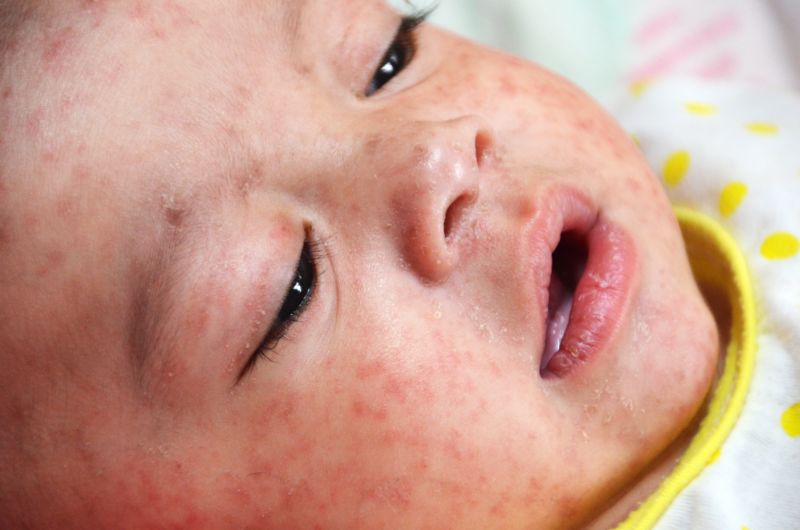
Enlarge / A baby with measles. CDC The Centers for Disease Control and Prevention is putting clinicians on alert about the growing r...

Popular Posts