Rechercher dans ce blog

Thursday, December 30, 2021

Omicron, U.S. Case Records and Covid-19: Live News Updates - The New York Times

Agustin Marcarian/Reuters

A few weeks ago, many Argentines thought the worst of the pandemic was behind them. Cases were down, vaccination rates were high and once-full intensive care units had plenty of beds to spare. The president’s spokeswoman, Gabriela Cerruti, tweeted in mid-November that “the pandemic is over.”

Then came Christmastime.

What had been a steady stream of new cases surged last week — and the numbers keep rising. It marks a startling turnaround for Argentina, and raises questions about what is to come for other countries in South America, a region that has already suffered greatly during the pandemic.

30,000 cases

7–day average

20,105

Source: Center for Systems Science and Engineering (CSSE) at Johns Hopkins University. The daily average is calculated with data that was reported in the last seven days.

Led by Brazil, which has the world’s second highest death toll, and Peru, which had an even higher per capita death rate, South America was the epicenter of the pandemic earlier this year. But infections fell sharply as vaccination rates soared.

“There is a real risk of a regional increase,” said Dr. Sylvain Aldighieri, the incident manager for Covid-19 for the Pan American Health Organization, a division of the World Health Organization.

Covid-19 cases have also been steadily increasing in Bolivia, with signs of a potential uptick in Uruguay and Paraguay.

Even though South America is in the middle of summer, when people spend more time outdoors, the holidays also bring an increase in travel. And there “has really been a decrease in the implementation of social distancing measures,” Dr. Aldighieri said.

In Argentina, both the Delta variant and the highly infectious Omicron variant are circulating, officials said, although Delta remains predominant.

Omicron has been detected in 25 countries and territories of Latin America and the Caribbean, but it will be weeks before its potential impact across the region becomes clear, Dr. Aldighieri said, adding that genomic sequencing is limited in many countries and Omicron will be coexisting with other variants.

Over the past week in Argentina, an average of 15,690 new cases have been reported daily, according to data compiled by The New York Times. From Monday to Tuesday, 33,902 new cases were reported, the highest figure since June 2, according to the Health Ministry. The city of Buenos Aires, and central Córdoba Province, which has been particularly hard-hit, reported their highest figures since the pandemic began.

Testing centers were nearly empty only weeks ago. Now lines are long, and the positivity rate is nearing a staggering 30 percent, according to Health Ministry figures.

Despite the sharp increase in cases, President Alberto Fernández dismissed on Tuesday the possibility of imposing mobility restrictions at the height of summer holidays. The country endured one of the world’s strictest quarantines early in the pandemic.

For now, officials are optimistic that the soaring numbers of cases have not translated into overrun intensive care units and higher death tolls.

“In comparison to other waves, the number we have now is of fewer than 1,000 people in intensive care units and the number of deaths is very stable,” the health minister, Carla Vizzotti, said in a radio interview on Tuesday, pushing citizens to get vaccinated as the best way to combat the uptick.

Even though South America got a later start than much of the world in inoculating its population, it now has a higher vaccination rate than Europe, North America and Asia, and significantly lower vaccine skepticism.

Chile has fully vaccinated 87 percent of its population, one of the highest rates in the world. Argentina’s population is now 72 percent fully vaccinated, and Brazil’s is 68 percent. By comparison, the United States has fully vaccinated 62 percent of its people.

Adblock test (Why?)


COVID-19 - Latest - Google News
December 30, 2021 at 08:28PM
https://ift.tt/3EDrOkX

Omicron, U.S. Case Records and Covid-19: Live News Updates - The New York Times
COVID-19 - Latest - Google News
https://ift.tt/2VQ2gy8

Elderly siblings found dead in Pennsylvania home all died of COVID, coroner says - New York Post

Three elderly siblings found dead at a Pennsylvania home two months ago all died from COVID-19, a coroner said Wednesday.

The two brothers, 70-year-old Richard Kinsey and 72-year-old Donald Kinsey, and their sister, 68-year-old Ruth Kinsey, were discovered lifeless on the property near Johnstown on Oct. 25, authorities said.

“They were positive for COVID-19, the lungs were heavy and congested,” Cambria County Coroner Jeff Lees told the Associated Press.

Lees made the ruling based on autopsies, toxicology tests and microbiology examinations.

“They were people that were sick,” the coroner said.

The case had mystified authorities as the siblings showed no signs of trauma when they were found.

Early on in the investigation, police were looking into the possibility that deadly gas was to blame for the deaths, the Tribune-Democrat reported.

Lees said he was unsure if the relatives were vaccinated.

With Post wires

Adblock test (Why?)


COVID-19 - Latest - Google News
December 30, 2021 at 08:21AM
https://ift.tt/3pDxw24

Elderly siblings found dead in Pennsylvania home all died of COVID, coroner says - New York Post
COVID-19 - Latest - Google News
https://ift.tt/2VQ2gy8

WHO warns new Covid variants could emerge that are fully resistant to vaccines as pandemic drags on - CNBC

World Health Organization (WHO) Director-General Tedros Adhanom Ghebreyesus talks during a daily press briefing on COVID-19 virus at the WHO headquaters in Geneva on March 11, 2020.
Fabrice Coffrini | AFP | Getty Images

The World Health Organization warned Wednesday that new coronavirus variants could emerge during the pandemic that render the current vaccines useless.

"As this pandemic drags on, it's possible that new variants could evade our countermeasures and become fully resistant to current vaccines or past infection, necessitating vaccine adaptations," WHO Director-General Tedros Adhanom Ghebreyesus said at a press conference in Geneva.

Tedros sounded that alarm as Covid cases hit record highs in many nations, including in the U.S. The latest surge, coming more than 21 months after WHO first declared Covid a pandemic, is fueled by the spread of the new and highly transmissible omicron variant.

Tedros reiterated his frequent calls for nations to work together to improve global supplies and access to Covid vaccines and other crucial health equipment.

He also slammed the "populism" and "short-term nationalism" of some political leaders that he said has "undermined equity and created the ideal conditions for the emergence of new variants."

"Misinformation and disinformation, often spread by a small number of people, have been a constant distraction undermining science and trust in lifesaving health tools," the world health leader said.

He noted that "in the huge waves of cases currently seen in Europe and in many countries around the world, misinformation which has driven vaccine hesitancy is now translating to the unvaccinated disproportionately dying."

Covid vaccines such as Pfizer and BioNTech's shots are still effective at preventing severe disease from omicron, experts say, but they are much less effective at preventing infection from omicron. Booster shots, on the other hand, significantly increase protection from symptomatic disease caused by omicron.

If a vaccine-resistant strain of the virus emerges, manufacturers will have to tweak their shots, which "would potentially mean a new supply shortage," Tedros warned Wednesday.

It is important for nations to build up their local manufacturing supply of vaccines before that happens, he said.

"This virus will continue to evolve and threaten our health system if we don't improve the collective response," Tedros said. "I'm highly concerned that omicron, being more transmissible, circulating at the same time as delta, is leading to a tsunami of cases."

Vaccine supplies are currently improving, he said, while repeating his criticism that rich countries' booster-shot programs are making it harder for poor nations to obtain any vaccines. That growing inequity could prolong the pandemic.

Despite the ongoing public-health threat and the possibility of future challenges, Tedros said he is "optimistic" the acute stage of the pandemic can end in 2022.

Adblock test (Why?)


COVID-19 - Latest - Google News
December 29, 2021 at 11:08PM
https://ift.tt/3mLorTb

WHO warns new Covid variants could emerge that are fully resistant to vaccines as pandemic drags on - CNBC
COVID-19 - Latest - Google News
https://ift.tt/2VQ2gy8

Woman Isolates in Airplane Bathroom for 5 Hours After Testing Positive for COVID Mid-Flight - PEOPLE

Woman Isolates in Bathroom After Testing Positive For COVID Mid-Flight | PEOPLE.com

this link is to an external site that may or may not meet accessibility guidelines.

Adblock test (Why?)


COVID-19 - Latest - Google News
December 30, 2021 at 07:40AM
https://ift.tt/3eDKerg

Woman Isolates in Airplane Bathroom for 5 Hours After Testing Positive for COVID Mid-Flight - PEOPLE
COVID-19 - Latest - Google News
https://ift.tt/2VQ2gy8

Wednesday, December 29, 2021

Omicron is 'not the same disease' as previous Covid variants, Oxford University scientist says - CNBC

Christmas shoppers in London on Dec. 23, 2021.
Hasan Esen | Anadolu Agency | Getty Images

LONDON — Horrific scenes seen in previous Covid-19 waves are "now history," according to John Bell, a regius professor of medicine at the University of Oxford and the U.K. government's life sciences advisor.

Speaking to BBC Radio 4 on Tuesday, Bell analyzed data from the U.K., where cases are breaking records and hospital admissions are at their highest since March. He said that the number of people in ICUs who are vaccinated remains "very, very low."

"The incidence of severe disease and death from this disease [Covid] has basically not changed since we all got vaccinated and that's really important to remember," he told the BBC.

"The horrific scenes that we saw a year ago — intensive care units being full, lots of people dying prematurely — that is now history in my view and I think we should be reassured that that's likely to continue."

Discussing the new omicron variant, he added: "The disease does appear to be less severe, and many people spend a relatively short time in hospital. They don't need high-flow oxygen, average length of stay is apparently three days, this is not the same disease as we were seeing a year ago."

A U.K. government study published Thursday said that people are far less likely to be admitted to the hospital with the Covid omicron variant than with the previous delta strain.

The U.K. Health Security Agency said individuals with omicron are estimated to be between 31% and 45% less likely to attend emergency departments compared with those with delta, and 50% to 70% less likely to require admission to a hospital.

The analysis is "preliminary and highly uncertain" owing to the small numbers of omicron cases currently in hospitals, but it does tally with similar findings from scientists in South Africa and research teams at Imperial College London and the University of Edinburgh.

Although the number of daily deaths remains low and initial research suggests that the omicron variant is not as severe as other Covid strains, health experts have repeatedly warned that the sheer number of infections could lead to mounting fatalities and an overwhelmed health-care system.

Danny Altmann, professor of immunology at Imperial College London, told CNBC via email last week that even if omicron does prove to be "milder" than other strains, the potential caseload could double or triple the number of people needing hospitalization in the U.K., where the virus is rampant — with particular risk to the unvaccinated.

Looking at the U.K. specifically, he said: "At a time when NHS (National Health Service) are a) massively depleted by omicron and b) massively stretched and fatigued after two thankless years on the frontline, this would be untenable," adding there are "no green shoots yet."

U.K. leader Boris Johnson on Monday held off on imposing any new Covid-19 restrictions for England, at least before the end of this year.

Scotland, Wales and Northern Ireland have already started new curbs to limit the spread of the omicron variant, but England has stuck with current stay-at-home orders and increased mask-wearing.

Bell said Tuesday that Johnson's lack of action on Monday was "probably fine" and noted that people's behavior in England had changed anyway, with many being "pretty responsible." Hospital admissions are still below 400 a day in London, which is a seen as a crucial threshold for the government.

The U.K. has reported more than 12.4 million infections — with another 129,471 on Tuesday — and at least 148,488 deaths since the onset of the pandemic in early 2020, according to data complied by Johns Hopkins University.

— CNBC's Elliot Smith and Ryan Browne contributed to this article.

Adblock test (Why?)


COVID-19 - Latest - Google News
December 29, 2021 at 04:26PM
https://ift.tt/3qQcHQD

Omicron is 'not the same disease' as previous Covid variants, Oxford University scientist says - CNBC
COVID-19 - Latest - Google News
https://ift.tt/2VQ2gy8
Omicron prompts rethink of vaccine impact, COVID-19 mandates: Morning Brief - Yahoo Finance

This article first appeared in the Morning Brief. Get the Morning Brief sent directly to your inbox every Monday to Friday by 6:30 a.m. ET. Subscribe

Wednesday, December 29, 2021

Mandates have curbed almost everything except COVID-19 cases 

Someone has to say it, and I derive no pleasure from doing so. But here goes:

The Omicron wave is exposing the limits of COVID-19 restrictions, which are clearly failing. These include ferociously debated vaccine passports and masking policies that have done little, if anything, to tame skyrocketing numbers throttling the Northeast. 

Hard-hit travel, leisure and small businesses — especially restaurants — are bearing the brunt of questionable protocols that clearly need rethinking, if not scrapping outright. And for the record, it’s not just America. China's aggressive zero-COVID policies that have exacerbated global supply chain problems aren’t doing much to curb the spread there, either.

“At this point, vaccine mandates are more disempowering to business than empowering,” Denise Graziano, CEO of Graziano Associates, a marketing communications firm, told the Morning Brief in an email.

“Policies, tools and communication must adapt to where we are now two full years into the pandemic, Graziano added. “Vaccines have been invaluable to bring us to this point, but mandating drives away customers, good employees, job candidates, and creates more division inside (and outside) of organizations.”

Previously, the Morning Brief has written about the double-edged sword of mandates, and how they militate against the impulses of people who (vaccinated or not) are erring on the side of freedom of movement.

Over the holiday weekend, an Atlantic article underscored how America’s “soft lockdown” is leading to voluntary shutdowns. As the virus-averse avoid public spaces, it's become a drag on the economy and spending. 

The article also highlighted how the preponderance of Omicron-fueled breakout infections, and the attendant shutdowns of (highly vaccinated) New York City venues, Apple Stores and Broadway shows, are undermining illusions of safety. It's also questioning an underlying premise that effectively cleaved society into castes of vaccinated and unvaccinated.

The chill is mostly being felt among beleaguered bars and restaurants. In NYC, one of the nation’s strictest vaccine mandates has sparked mixed reactions from a diverse array of businesses, but with a common thread: lost business, and upset or confused customers.

And we haven’t even scratched the surface of the shifting definition behind what constitutes “fully vaccinated” as the campaign for a third (or fourth?) jab gets underway. Some eateries have openly embraced boosters as “the only way to go,” as Yahoo Finance’s Brooke DiPalma reported last week.

But others are pushing back, such as Brooklyn Dumpling Shop owner Stratis Morfogen — famed for using a contraption called “The Monster” to make his popular bites. It goes without saying that year three of the pandemic is shaping up to be as complicated as ever.

Meanwhile, dining rooms, largely empty, are reaping the whirlwind of soft lockdowns.

“We're seeing [reservations] trending roughly towards around 30% to 45% per night in cancellations, either the day before or day of, which is incredibly detrimental to restaurants,” David Nayfeld, a San Francisco chef and restaurateur, told Yahoo Finance’s Dani Romero last week.

Still, the legality of states and local governments imposing vaccine mandates has been upheld by the Supreme Court. That argument got an unexpected endorsement this week from President Joe Biden, who said the COVID surge had “no federal solution,” even as his own mandates have been challenged in court.

“For a long time we left people to make their own decisions, and that didn’t work so well,” Sharona Hoffman, a law professor and co-director of the Law-Medicine Center at Case Western Reserve University, told the Morning Brief in an interview.

“We did not have the vaccination rates we hoped for, and it's understandable that mandates came into play,” Hoffman said.

As for the vaccine hesitant, she added that “it's one thing to reject medical care when it only affects you, it’s another thing to endanger others.” Likening mandates to speed limits and bans on public smoking, Hoffman said that “even if there isn’t a state mandate, it’s within the rights of private businesses to make a safe place to go to.”

Yet it’s undeniable that key service industries have been caught in a downdraft of COVID-weary and cynical patrons, worker shortages (in part viewed as the impetus behind the Centers for Disease Control shortening the quarantine time for those who test positive for the virus), and heated skirmishes on land, and in the air.

Even highly vaccinated areas are confronting the limits of politically charged COVID protocols. Mask requirements have been openly dismissed by Connecticut’s Democratic Governor Ned Lamont, whose state is also in the throes of a COVID surge.

We have now arrived at a place where even those ostensibly supportive of mandates are slowly coming around to the realization that there’s only so much that can be done in the face of an airborne virus that’s become more communicable.

In practice, that means adequately managing risk for those most vulnerable, and contextualizing shock-horror spikes in raw case numbers, while relying on the rapid advances in treatments to blunt COVID’s worst effects as people move about, hopefully less encumbered by restrictions.

“Beyond vaccines, treatment options are becoming more available," Georgetown University health law professor Rik Mehta told Yahoo Finance Live on Monday. "That will keep people that are vaccinated and unvaccinated out of the hospitals, and from developing severe infection. That’s going to be a game changer for this.”

By Javier E. David, editor at Yahoo Finance. Follow him at @Teflongeek

What to watch today

Economy

  • 8:30 a.m. ET: Advance Goods Trade Balance, November (-$88.1 billion expected, -$82.9 billion in October)

  • 8:30 a.m. ET: Wholesale Inventories, month-over-month, November preliminary (1.5% expected, 2.3% in October)

  • 8:30 a.m. ET: Retail Inventories, month-over-month, November (0.5% expected, 0.1% in October)

  • 10:00 a.m. ET: Pending Home Sales, month-over-month, November (0.8% expected, 7.5% in October)

Earnings

Politics

Top News

Tesla's Musk exercises all of his stock options expiring next year [Reuters]

Rivian delays deliveries of pickup, SUV with big battery packs to 2023 [Reuters]

James Cayne, Bear Stearns CEO through rise and fall, dies at 87 [Bloomberg]

ProShares plans new metaverse ETF as demand for funds surges [Bloomberg]

Yahoo Finance Highlights

AMC Entertainment is Yahoo Finance's 2021 top trending ticker

These COVID relief provisions are set to expire before Jan. 1

Oil prices are headed beyond $80 in 2022: analyst

Read the latest financial and business news from Yahoo Finance

Follow Yahoo Finance on Twitter, Instagram, YouTube, Facebook, Flipboard, and LinkedIn

Adblock test (Why?)


COVID-19 - Latest - Google News
December 29, 2021 at 05:58PM
https://ift.tt/3pzOm1M

Omicron prompts rethink of vaccine impact, COVID-19 mandates: Morning Brief - Yahoo Finance
COVID-19 - Latest - Google News
https://ift.tt/2VQ2gy8
Mapping COVID-19 transmission by state: These areas of the US are seeing the most cases - USA TODAY

Here are some shocking stats and numbers about the COVID-19 pandemic in 2021

From vaccinations to variants, here are some of the most shocking pandemic stats from 2021.

Staff video, USA TODAY

Amid another holiday season in the COVID-19 pandemic, Americans are once again trying to figure out how to safely gather and travel.

The latest threat is the omicron variant, which accounts for more than 73% of new COVID-19 infections in the nation and has been canceling major events as well as forcing schools to go virtual. 

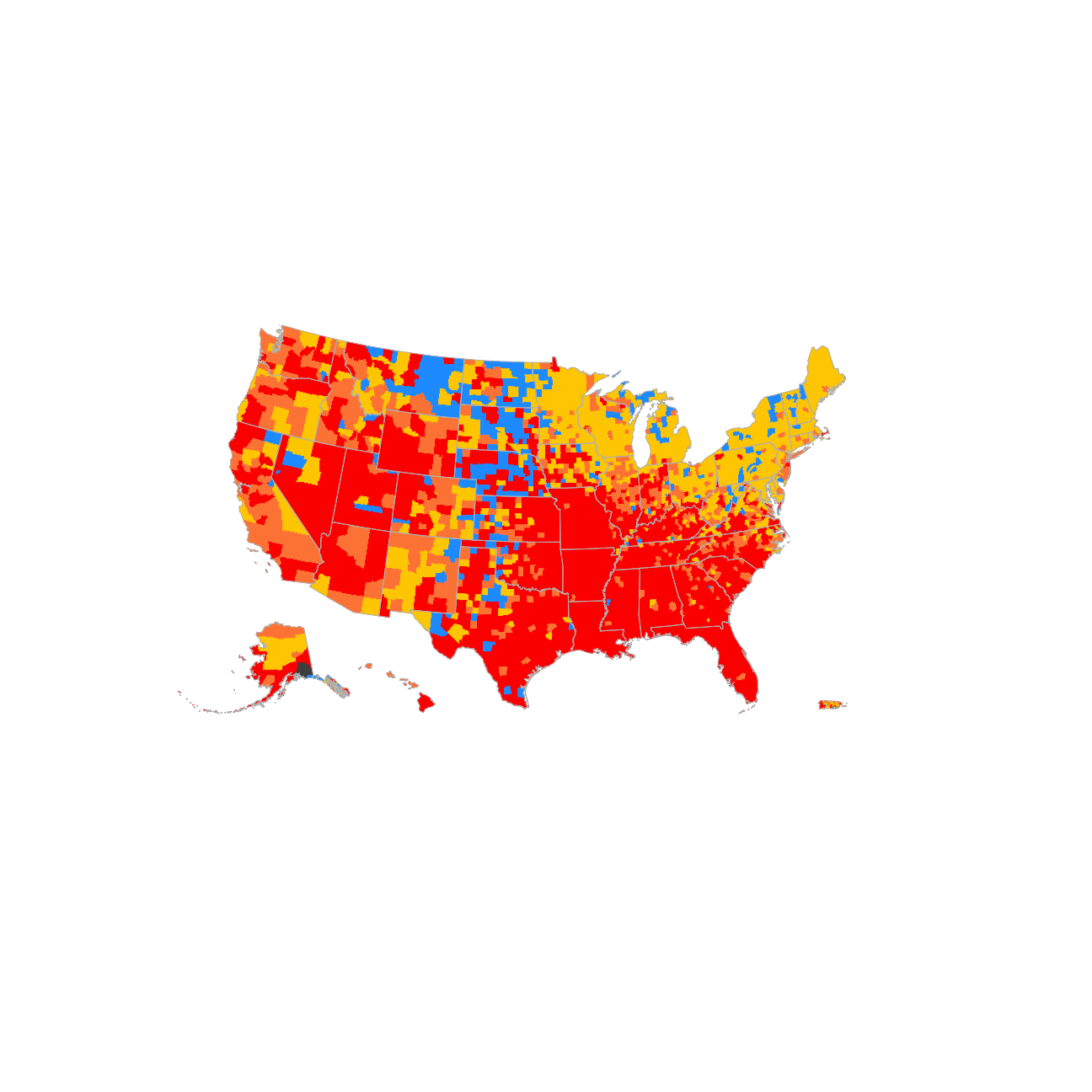
Most of the U.S. is in the red, showing high rates of transmission. Northern states such as New York, Illinois, Wisconsin as well as Florida, Georgia, Alabama are among areas hardest hit. Areas reporting lower transmission include underpopulated areas such as Wheeler County, Oregon, Trinity, Country, California and Wayne County, Mississippi. 

Vaccination efforts also vary by area. Vermont, Puerto Rico, Rhode Island, Maine and Connecticut continue to report the highest COVID-19 vaccination rates while Idaho, Alabama and Wyoming report the lowest.

Need a COVID booster?: A guide to mixing and matching Pfizer, Moderna, J&J booster shots

New COVID treatments are coming: Will they help combat the omicron onslaught

The U.S. has recorded more than 52.7 million confirmed COVID-19 cases and more than 818,000 deaths, according to Johns Hopkins University data. Global totals total more than 281.5 million cases and 5.4 million deaths. More than 205 million Americans – 61.8% –  are fully vaccinated, according to the CDC.

Map of COVID-19 transmission levels by county

As the omicron coronavirus variant accounts for the majority of new cases, the CDC is altering their medications and defense against the virus. The Food and Drug Administration authorized on Dec. 22 the use of Pfizer's Paxlovid, a series of pills, taken at home that prevent nearly 90% of severe COVID-19 among those at high risk.

And on Dec. 23, the FDA authorized use of a second antiviral, molnupiravir, which appears to prevent progression to severe disease about 30% of the time.

"As we face omicron, the nation's medicine cabinet of treatments gives us more options to protect the American people," said Jeff Zients, the White House Coronavirus Response Coordinator. "We have tools to keep people safe and we will continue to use them.

The demand of molnupiravir is coming from all states, including Texas where supplies are already low. The Texas Department of State Health Services announced on Dec. 27 that its regional infusion centers in Austin, El Paso, Fort Worth, San Antonio and The Woodlands have run out of the monoclonal antibody sotrovimab.

CDC continues to recommend wearing a mask in public indoor settings in areas of high community transmission, regardless of vaccination status.

Here's how the ratings break down overall by county:

The Centers for Disease Control and Prevention on Dec. 27 decreased the time it recommends people should isolate after testing positive for COVID-19 and quarantine after coming into contact with someone who tests positive. 

The new recommendations are for:

Isolation: For those who are infected with COVID-19, isolation starts the day a person tests positive. The CDC now recommends isolating for five days and going back to normal activities if a person is not showing any symptoms after that period. Originally, the isolation period was 10 days. 

Quarantine: For those who come in close contact with someone who tests positive for COVID-19.  The CDC is now recommending those who are vaccinated and received a booster shot can skip quarantining if they wear a face mask for at least 10 days. If a person is vaccinated and has not gotten a booster, or if they are partly vaccinated or not vaccinated at all, the CDC recommends a five-day quarantine, then wearing a mask in public for an additional five days.

Learn more: Changes to CDC quarantine guidelines

SOURCE USA TODAY Network reporting and research; Centers for Disease Control and Prevention; Kaiser Health News; Associated Press; nature.com

Contributed: Karen Weintraub, Janie Haseman, Mitchel Thorson, Javier Zarracina and Ramon Padilla USA TODAY,

Published Updated

Adblock test (Why?)


COVID-19 - Latest - Google News
December 29, 2021 at 02:26AM
https://ift.tt/3exUS2N

Mapping COVID-19 transmission by state: These areas of the US are seeing the most cases - USA TODAY
COVID-19 - Latest - Google News
https://ift.tt/2VQ2gy8

Featured Post

Measles is “growing global threat,” CDC tells doctors in alert message - Ars Technica

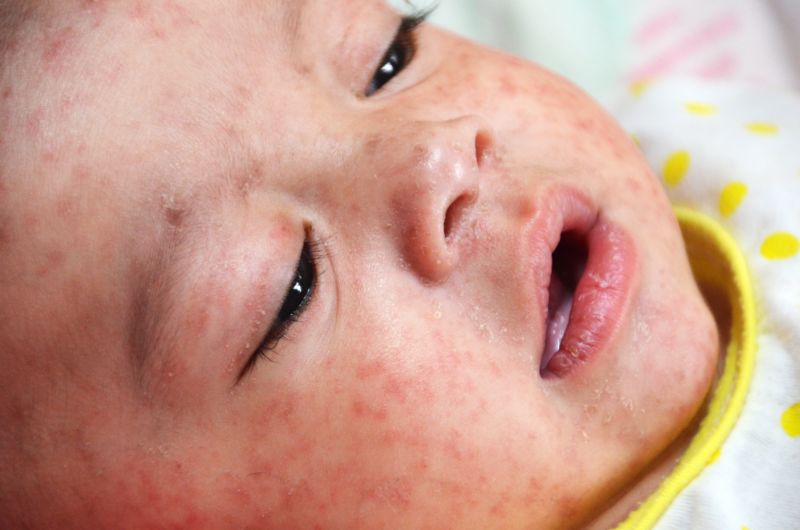
Enlarge / A baby with measles. CDC The Centers for Disease Control and Prevention is putting clinicians on alert about the growing r...

Popular Posts