Monday, April 24, 2023

Why long COVID could be a ticking time bomb for public health - Salon

The 1918 influenza pandemic, commonly referred to as the Spanish Flu, infected approximately one-third (500 million) of the world's population (then 1.8 billion) and killed an estimated 50 million. With such a high mortality rate, even among young and healthy individuals, this acute infectious disease took its toll, erasing from existence nearly 3% of all people on Earth. But the damage did not stop there: across the globe, survivors of the initial viral infection reported "long flu" symptoms — profound fatigue, brain fog, depression, tremors, sleeplessness, and a litany of neurological disorders.
While the initial pandemic forced governments to organize a response to the sudden crisis, an epidemic of chronic illness may not raise alarms that spur us into immediate action.
This "long flu," an echo of sorts of the Spanish Flu epidemic itself, has its parallel in long COVID today — a similar cluster of symptoms that persist in those who were previously infected with COVID-19. And the similarities suggest that what we think of as long COVID is not necessarily a novel condition, but merely one more instance of the medical aftermath that accompanies certain infections.
The medical establishment calls this condition post-acute infection syndrome (PAIS). Back in 1918, these mysteriously persistent long flu symptoms wreaked havoc on human health and local economies. For example, many claim that debilitating lethargy caused by this post-viral syndrome led to the "famine of corms" in the region that is Tanzania today, as farmers lacked the energy to plant, harvest, and shear months after getting sick.
Around the same time, cases of a new brain-attacking disease called encephalitis lethargica started to emerge, affecting up to one million people worldwide. The cause of encephalitis lethargica remains one of the largest medical mysteries of the 20th century, though some scientists contend that the Spanish Flu may have been the trigger. The condition was colloquially known as "sleeping sickness," as those infected developed extreme fatigue, neurocognitive impairments, psychiatric illness, and movement disorders. A subset of these individuals fell into a semi-comatose state that lasted for decades. About one-third of encephalitis lethargica patients eventually died from respiratory failure caused by neurological dysfunction, while many survivors continued to suffer from ongoing Parkinson's-disease-like (neurocognitive) symptoms.
In 1969, as chronicled in his book "Awakenings," the neurologist Oliver Sacks discovered that temporary remission of these chronic symptoms, coined post-encephalitic parkinsonism, could be achieved through the use of the Parkinson's drug L-DOPA. Like with Parkinson's disease itself, the benefits of the drug wore off over time, but the finding indicated that encephalitis lethargica impacted the substantia nigra (the part of the brain that helps control movement).
We now have a plethora of information suggesting that COVID-19 is the latest addition to the list of infections spawning post-acute infection syndrome.
Although the medical community has long known that acute infectious diseases are not always entirely self-limiting, chronic sequelae (meaning the secondary symptoms that appear after an infection) receive little attention, remain under-researched, and continue to be misdiagnosed and overlooked by doctors. According to a study published in the scientific journal Nature, post-acute infection syndrome is associated with a number of infections, including Epstein Barr virus, cytomegalovirus, Lyme disease, Q fever, West Nile virus, Dengue fever, and the aforementioned influenza. Often presenting well after the initial infection, post-acute infection syndrome manifests as a complex and variable disorder, typically entailing severe fatigue, gastrointestinal issues, confused sensory perception, and neurocognitive abnormalities.
Despite the growing pool of data from patients suffering from post-acute infection syndrome, a comprehensive explanation of the biological mechanisms by which the syndrome's symptoms arise has yet to be established. This lack of scientific understanding creates an untold degree of hardship for those dealing with severe and chronic sequelae of infections. Worse, when doctors cannot find a biological explanation for reported symptoms, patients are often left with little recourse and the feeling that their doctor believes the cause of their suffering is rooted in mental illness.
Years into our current pandemic, we now have a plethora of information suggesting that COVID-19 is the latest addition to the list of infections spawning post-acute infection syndrome; that is, "long COVID." Multinational surveys have been conducted, with thousands upon thousands of adult participants reporting that recovery from an initial COVID infection took more than 35 weeks. Some of these studies highlight the fact that new ailments are reported 6-12 months after an initial COVID infection, which most commonly include fatigue, post-exertional malaise, and cognitive dysfunction.
According to the CDC, in June 2022, almost one in five American adults who had COVID-19 still had long COVID. This statistic seems to be borne out by my anecdotal experience; I have met with and spoken to many people around the world who have lost their sense of smell, had to take medical leave, been fired from work, seen a drop in their focus during school, experienced overwhelming exhaustion and migraines, or become depressed after being infected with COVID. My home state's newspapers recently shared the sad medical saga of a man, Charlie Vallee, whom I grew up with in Vermont. After only mild respiratory symptoms during his initial bout of COVID-19, Vallee went on to develop such severe long COVID symptoms, including brain fog, that he left his job as an intelligence officer in D.C. and tragically took his own life. His family has set up a foundation to fund long COVID research in the hopes of one day understanding how this pernicious form of post-acute infection syndrome can cause an otherwise happy and healthy individual to die by suicide.
In other words, long COVID is affecting more people than we likely know. And it eerily parallels other post-acute infection syndrome scenarios throughout history, including those potentially linked to epidemics of parkinsonism. In other words, the threat of long COVID could lead to a future public health catastrophe, much as the "long" effects of the Spanish Flu did a hundred years ago. Unfortunately, the pharmaceutical and medical community are not approaching long COVID with the same fervor that they had for COVID-19. As a result, there is a real danger that a broad-scale investigation into the origin of long COVID is postponed or neglected by funding agencies and the medical establishment.
While the initial pandemic forced governments to organize a response to the sudden crisis, an epidemic of chronic illness may not raise alarms that spur us into immediate action. Like climate change, a gradually-evolving threat, especially one perceived to be far away, is much harder to address. But the threat here is not that far off, as emerging science reveals — which is why it is of grave importance that we push for an explanatory theory of long COVID (and post-acute infection syndrome) that can fully account for the totality of symptoms observed after an initial infection with SARS-CoV-2 despite no clinical findings of active infection.
The science behind long COVID
Multiple studies published in the journal Nature (one published last year and one published in February of this year) explain how COVID-19 has the ability to trigger the aggregation of proteins within the human body. The research suggests that SARS-CoV-2 can cause normal proteins to abnormally misfold. These misfolded proteins are known as "amyloids," which are toxic to cells when they build up.
Specifically, amyloids occur when proteins misfold into twisted clumps and form long fibers, hindering cellular function. These so-called clumps can start stacking excessively, creating harmful deposits in the body — sort of like cholesterol in the bloodstream but at the cellular level. When misfolding of a protein named "alpha-synuclein" in the nervous system occurs, the amyloid buildup this causes in a neuron can lead to the formation of what is known as a "Lewy body," which is resistant to breakdown and clearance. Think of it as plaque buildup in the nervous system. Lewy bodies spread as pieces of these amyloids break away and seed the formation of new Lewy bodies in neighboring neurons.
The scariest thing about this? Misfolded alpha-synuclein is a hallmark of Parkinson's disease, Lewy body dementia, multiple system atrophy, and pure autonomic failure — all neurodegenerative diseases collectively known as synucleinopathies. And what can cause alpha-synuclein misfolding? Genetic mutations, exposure to certain toxins, and infections. COVID-19 may be one such infection — and that means long COVID symptoms may be a reflection of a developing neurological disorder.
Alarmingly, two studies published by the Mayo Clinic and the Medical University Innsbruck corroborate the findings in the Nature articles, recording signs of dream-enactment sleep disorder among one-third of patients after being infected with COVID-19. Over 80% of patients with dream-enactment sleep disorder go on to develop a Parkinson's-like disease within two decades.
So we need to ask the question: is the recent rise of dream-enactment sleep disorder after COVID related to neurodegeneration? Preliminary research from Stanford University and Beth Israel Deaconess Medical Center suggests that this may be the case, as disease-causing clumps of alpha-synuclein have been discovered in some long COVID patients.
So how does all of this connect? Basically, if dream-enactment sleep disorder is more common in those who have had COVID, and the vast majority of those who suffer from this kind of sleep disorder ultimately develop neurological diseases like Parkinson's, then COVID-19 could lead to an explosion of these diseases in the coming years.
This is not mere speculation; animal models further substantiate these claims. For example, a study of macaques demonstrated that SARS-CoV-2 induces Lewy body formation (a feature of Parkinson's disease), even after an asymptomatic infection. And, whether or not COVID is determined to be a direct cause of Parkinson's, it could also accelerate the disease course in patients who are predisposed. This was exemplified by a study performed by infecting mice with COVID-19, which found that the virus made the brain more susceptible to toxic compounds known to cause Parkinson's disease. The lead researcher on this study, Richard Smeyne, PhD, who serves as Chair of the Department of Neuroscience at Thomas Jefferson University and Director of the Jefferson Comprehensive Movement Disorder Center reviewed this article before publication, affirming what has been outlined and reiterating his study's findings: "Should the predicted risk from SARS-CoV-2 manifest, the diverse consequences would represent a substantial burden on patients, families, and society."
Dr. Smeyne elaborated on the seriousness of these findings, telling Salon, "Our studies in mice predict a 30-50% increase in Parkinson's risk for those moderately to severely infected with the Alpha variant. While on an individual basis this only changes a person's risk from 2% to 3% for developing Parkinson's, over the whole of the population we would expect to see millions more develop Parkinon's disease than would have if not for their COVID infection."
"We still have to examine if the newer strains of SARS-CoV-2 also have the potential to increase the risk for Parkinson's disease."
A prominent theory for explaining Parkinson's disease, put forth by Heiko Braak, a German doctor who studies Parkinson's, aligns well with all these long COVID findings. It states that Parkinson's is caused by a pathogen affecting either the nasal cavity or digestive system, thereby first initiating protein misfolding in the peripheral nervous system before spreading into the brain later on (sometimes decades later). This is why the onset of Parkinson's often entails autonomic dysfunction — which means involuntary processes like heart rate, blood pressure, respiration, etc. are compromised. As autonomic dysfunction is a common symptom of long COVID, it is thus possible that the post-acute infection syndrome mechanism responsible for long COVID progresses to the central nervous system over time and could eventually present as Parkinson's disease or a similar disorder.
In other words, while long COVID is not caused by the lingering viral remnants of COVID-19 per se, the initial infection could be precipitating amyloid buildup and Lewy body formation. If this is so, long COVID would mimic a chronic or slowly-evolving infection caused by the virus, similar to other post-acute infection syndrome cases, with the symptoms fluctuating and emerging unpredictably as the amyloids slowly spread throughout the nervous system.
Want more health and science stories in your inbox? Subscribe to Salon's weekly newsletter The Vulgar Scientist.
Braak's hypothesis was based on autopsy data, which indicated a distinct pattern of aggregated alpha-synuclein in those who died from/with Parkinson's disease. However, according to Dr. Smeyne, "As of yet, there is no good non-invasive marker for alpha-synuclein aggregation in living patients, which is why The Michael J. Fox Foundation is offering a $2 million prize to any person or group that successfully develops such a marker."
The way forward
To investigate these claims, larger studies need to evaluate patients with long COVID for markers of Parkinson's-like diseases, such as misfolded alpha-synuclein. A clinical trial is currently underway to do just that — so that the history of post-encephalitic parkinsonism in the years following the Spanish Flu does not repeat itself. Considering the mounting evidence, it is crucial that we address the long COVID public health emergency promptly, to provide answers to those suffering from long COVID and prevent a potential increase in "post-COVID parkinsonism."
When asked about his outlook for the future, Dr. Smeyne said, "We are entering a period where we will have to learn to live with COVID being present as a fact of life. This means we still have to examine if the newer strains of SARS-CoV-2 also have the potential to increase the risk for Parkinson's disease and whether vaccination against this virus can reduce the increased Parkinson's risk, as has been shown following vaccination against influenza. Once we determine the answers to these questions, we can begin to look at other ways to interfere with the process."
Salon then asked what it will take to definitively prove whether COVID-19 can trigger a Parkinson's-like disease and whether long COVID is in fact the early stages of such a disease. Dr. Smeyne responded, "My best guess is we will need anywhere from five to ten years from the initial outbreak to see any statistically measurable effect."
Encouragingly, Dr. Smeyne went on to say, "One bright spot in these observations is that there is a considerable period, often about a decade, between viral exposure and the development of a neurological disease like Parkinson's. And there are currently scientists devoting their lives' efforts to find ways to solve this problem — the lag between exposure and disease gives me hope that we will find a way to stop the progression from infection to disease in its tracks."
There have been more than 760 million globally documented cases of COVID-19, with the real number of cases, including asymptomatic cases, presumably much higher. More than 750 million have survived, but, as reported, long COVID is occurring in 20-30% of these cases, meaning that hundreds of millions of people could be at higher risk of developing Parkinson's disease or other neurodegenerative issues later in life. If it comes to pass, the public health resources required to help will be astronomical. It behooves us to study long COVID now, lest we end up in such a crisis.
Read more
about long COVID and Parkinson's
Health - Latest - Google News
April 24, 2023 at 11:00PM
https://ift.tt/Ex6uTLP
Why long COVID could be a ticking time bomb for public health - Salon
Health - Latest - Google News
https://ift.tt/r9Z7Pqe
Sunday, April 23, 2023
Method of Stopping Hair From Going Gray Might Finally Have Been Discovered - Good News Network

The tell-tale sign of aging—gray hair—is something that many women and men have tried to hide for generations. Now, researchers have found that certain stem cells have a unique ability to move within hair follicles, which could maintain the original pigment in the strands.
They found that as our hair ages, sheds, and repeatedly grows back, more of these stem cells become stuck in a compartment called the hair follicle bulge. They remain here and fail to travel back to their original location in the compartment, where proteins would have helped them regenerate into pigment cells—thus helping hairs keep their color.
The study, led by researchers at the NYU Grossman School of Medicine, observed the physically-aged hairs of mice and found that more and more stem cells became stuck when aging. These cells were also found to remain incapable of regenerating or maturing into pigment-producing hairs that keep their color.
The scientists hope the new research may lead to the necessary answers for keeping hair healthy and colored long into old age.
The study focused on cells in the skin of mice which can also be found in humans, called ‘melanocyte stem cells’ or McSCs.
POPULAR: Cure for Baldness Could Be on the Horizon as Hair Cells Are Generated in a Lab
Our hair color is controlled by whether non-functional—but continually multiplying—pools of McSCs within hair follicles receive the signal necessary to become mature cells responsible for making the protein pigments.
The NYU study published this week in Nature found the McSCs are ‘plastic’ or adaptable, meaning that during normal hair growth, they continually move back and forth on the maturity axis as they move between compartments of the developing hair follicle.
It is inside these compartments that the McSCs are exposed to differing levels of maturity-influencing protein signals, which transform the cells between their most primitive stem cell state to the next stage of their maturation.
The scientists found that increasing numbers of McSCs get stuck—and once stuck, the McSCs remain in the bulge and fail to mature into the transit state that would help them travel back to their original location in the germ compartment where proteins could help them to regenerate into pigment cells.
RELATED: FDA Approves First Alopecia Drug That Restores Hair Growth in Many Patients
The researchers say McSC adaptability is not present in other self-regenerating stem cells, such as those making up the hair follicle itself, which are known to move in only one direction along an established timeline as they mature, which helps explain in part why hair can keep growing even while its pigmentation fails.
“Our study adds to our basic understanding of how melanocyte stem cells work to color hair,” said the study’s lead investigator, Dr Qi Sun, a postdoctoral fellow at NYU Langone Health. “The newfound mechanisms raise the possibility that the same fixed-positioning of melanocyte stem cells may exist in humans.”
“If so, it presents a potential pathway for reversing or preventing the graying of human hair by helping jammed cells to move again between developing hair follicle compartments.”

Earlier work by scientists at NYU showed that “WNT signaling was needed to stimulate the McSCs to mature and produce pigment”. That study had also shown that McSCs were many trillions of times less exposed to WNT signaling in the hair follicle bulge than in the hair germ compartment, which is situated directly below the bulge.
LOOK AT YOUR STRESS: Stress Can Accelerate Grays, But Hair Color Can Be Restored When Stress is Eliminated, Scientists Find
In the latest experiments, the NYU team ‘physically’ aged the hair of mice by plucking them out and forcing them to regrow. The number of hair follicles with McSCs lodged in the follicle bulge increased from 15 percent before plucking to nearly half afterward.
These cells remained incapable of either regenerating or maturing into pigment-producing melanocytes.
The stuck McSCs were found to have ceased their regenerative behavior as they were no longer exposed to enough WNT protein signaling and were unable to produce pigment in new hair follicles, which continued to grow.
In contrast, McSCs which continued to move back and forth between the follicle bulge and hair germ retained their ability to regenerate as McSCs, mature into melanocytes, and produce pigment over the entire study period of two years.
“It is the loss of chameleon-like function in melanocyte stem cells that may be responsible for graying and loss of hair color,” added Dr Mayumi Ito, a Langone Health professor.
MORE BREAKTHROUGHS: MIT Researchers Reverse Hearing Loss By Regenerating Inner Ear Hair Growth
“These findings suggest that melanocyte stem cell motility and reversible differentiation are key to keeping hair healthy and colored.”
The team now plans to investigate the potential means of restoring the motility of McSCs or physically moving them back to their germ compartment where they can produce pigment—thus stopping hairs from turning gray.
IF YOU HATE Gray Hair, Share The Good News With Friends on Social Media…
Health - Latest - Google News
April 23, 2023 at 11:49PM
https://ift.tt/7z1KJfG
Method of Stopping Hair From Going Gray Might Finally Have Been Discovered - Good News Network
Health - Latest - Google News
https://ift.tt/r9Z7Pqe
Saturday, April 22, 2023
Narcan nasal spray maker aims for over-the-counter price of less than $50 - CNN
Emergent, the maker of the opioid overdose antidote Narcan, said in a statement Thursday that it is aiming for an out-of-pocket price of less than $50 for its nasal spray product now that the US Food and Drug Administration allows for over-the-counter sales.
Public interest groups such as government agencies, nonprofits and first responders pay less than $50, on average, for a kit of two 4-milligram doses, the company says. The wholesale price is $125 per kit. “A goal for the out-of-pocket retailer price is to be consistent with our public interest pricing … although retail price is set by individual retailers.”

In an April 6 letter to Emergent, Sen. Richard Blumenthal of Connecticut asked the company to respond by Thursday with “the affordable OTC Narcan list price that your company intends to set.”
“Currently, your product is reported as having a wholesale price as high as $120 for two doses, with significant variation in price depending on location and insurance coverage. Individuals without insurance – about one fifth of people with opioid use disorder are uninsured – will be forced to bear the full cost. Even individuals with insurance and low co-pays can struggle to afford Narcan,” he wrote. “I ask you to commit to work with public health experts, addiction specialists, and community activists to develop and determine a list price for OTC Narcan that makes it affordable and accessible for those who need it most.”
In a response letter Thursday, Emergent emphasized the importance of continued federal funding for substance abuse treatment and prevention programs, including opioid response initiatives that distribute Narcan, and for private insurers, Medicare and Medicaid to consider their coverage of the medication.
Emergent aims to have Narcan available online and in stores by late summer.
Harm-reduction experts have said the price of naloxone, the overdose antidote medication in Narcan, has inhibited its accessibility for people who need it most and will probably still be out of reach for many, despite a potential price drop with OTC availability.

Dr. Rahul Gupta, director of the White House’s Office of National Drug Control Policy, said when the FDA approved OTC naloxone last month that the administration is asking Emergent to keep the price low.
“We’ve got to make sure that these life-saving medications, as well as treatment, is accessible across no matter where you live, rural or urban, rich or poor,” he said.
Narcan works by blocking the effects of opioids on the brain and restoring breathing. For the most effectiveness, it must be given as soon as signs of overdose appear.
The drug works on someone only if there are opioids in their system. It won’t work on any other type of drug overdose, but it won’t have adverse effects if given to someone who hasn’t taken opioids.
Each kit contains two doses in case the person overdosing does not respond to the first dose. However, Emergent says most overdoses can be reversed with a single dose. The product can be administered to anyone, even children and babies.
More than a million people have died of drug overdoses in the two decades since the US Centers for Disease Control and Prevention began collecting that data. Many of those deaths were due to opioids. Deaths from opioid overdoses rose more than 17% in just one year, from about 69,000 in 2020 to about 81,020 in 2021, the CDC found.
Get CNN Health's weekly newsletter
Sign up here to get The Results Are In with Dr. Sanjay Gupta every Tuesday from the CNN Health team.
Opioid deaths are the leading cause of accidental death in the US. Most are among adults, but children are also dying, largely after ingesting synthetic opioids such as fentanyl. Between 1999 and 2016, nearly 9,000 children and adolescents died of opioid poisoning, with the highest annual rates among adolescents 15 to 19, the CDC says.
About 1.2 million doses of naloxone were dispensed by retail pharmacies in 2021, according to data published by the American Medical Association – nearly nine times more than were dispensed five years earlier.
CNN’s Nadia Kounang, Jen Christensen and Deidre McPhillips contributed to this report.
Health - Latest - Google News
April 21, 2023 at 05:59AM
https://ift.tt/Ilq3X8F
Narcan nasal spray maker aims for over-the-counter price of less than $50 - CNN
Health - Latest - Google News
https://ift.tt/OurNDPH
My mother got cancer a month before I went to Lewis & Clark College - Insider
- My mother was diagnosed with cancer one month before I departed for college.
- At first, I struggled to connect with fellow students and relied on unhealthy coping mechanisms.
- Once I started opening up, I found a group of friends who understood what I was going through.
My mother was my greatest cheerleader. She grew up without a lot of money, so she worked tirelessly when she was young to provide for herself. She wasn't able to get a college education, so she insisted that I go. My mom wanted nothing more than to see me succeed.
In 2016, our dream came true when I enrolled in Lewis & Clark College in Portland, Oregon. But one month before I was supposed to leave home for the college dorms, my 43-year-old mother was diagnosed with colorectal cancer. In an instant, my family's world, which had previously been predictable, was now precarious and uncertain.
My mother still insisted that her diagnosis not derail my college plans, so I went. From a distance, I watched as my mother went through treatments and surgeries — all defining my college experience.
At first, I struggled to fit in with the other freshmen
When I first arrived on campus, I felt a bit like a monkey in a business suit; I was outside of my comfort zone. In this new environment, I felt reluctant to connect with other students.
For starters, I didn't really know what to talk to them about. I wanted to talk about my mother's chemotherapy and the final trip we took together as a family. But those stories wouldn't exactly make me the life of the party.
My emotions around my mother's diagnosis often weighed more heavily on my mind than worrying about fitting in with my peers. For the first semester, I opted to stay quiet and keep to myself.
I quickly realized the typical college environment doesn't foster healthy coping mechanisms
It seemed all around me people were hooking up, drinking, and experimenting with drugs. Like many of my peers, I participated in some of these seemingly normal college activities. But in time, I realized I was leaning too much on these activities to cope — and they only functioned as a temporary respite.
I had to switch gears. I opted instead for weekend trips in Oregon's nature, and I got involved in academic projects that inspired me. Both offered me healthier coping mechanisms. Finding these safe spaces grounded me in reality while processing the difficult events back home.
Eventually, I found the right friends who I opened up to
I started to open up to acquaintances and learned some were experiencing similar things and coping quietly, too. Society's expectation that grief and sadness should be managed behind closed doors only discourages genuine connection.
Throughout my four years in college, I was very fortunate to find accepting friends who helped uplift me from my grief when I was ready to talk. These friends sat with me while I waited anxiously to hear the outcomes of surgeries, scans, and clinical-trial appointments.
I learned that having a "chosen family" was the most natural remedy to my loneliness. With them by my side, I was less alone, and it made me realize I shouldn't have been so hesitant to share in the first place.
I'm glad I got to go to college and that my mother got to see me graduate
I'm grateful that I could achieve this goal before my mother passed. I am grateful for the lessons about vulnerability and connection that cancer taught me; it brought me friends who are now permanent fixtures in my life.
I am also grateful that my mother fought so courageously and that we had four treasured years together after her initial diagnosis. Most of all, I am grateful for the 21 years of love we shared in this lifetime.
I always think back to the time my mom visited me while I was in college. We shared a beautiful long weekend, eating at my favorite restaurants and walking along the Oregon coast. When she finally met all my friends I'd told her about over the phone, I could tell it made her happy.
"You've made a life for yourself, and you have friends who love you," she told me on that trip. "I feel at peace to see you have all you need."
Health - Latest - Google News
April 22, 2023 at 06:08PM
https://ift.tt/l5xgraA
My mother got cancer a month before I went to Lewis & Clark College - Insider
Health - Latest - Google News
https://ift.tt/OurNDPH
Friday, April 21, 2023
Why Does Hair Turn Gray? Research Uncovers Role of “Stuck” Stem Cells - SciTechDaily

A study by NYU Grossman School of Medicine researchers reveals that melanocyte stem cells (McSCs) are essential for hair color maintenance but lose their ability to move between growth compartments in hair follicles as people age. This loss of mobility results in hair graying. McSCs are plastic, meaning they continually shift between maturity stages and compartments within hair follicles. However, as hair ages and regrows repeatedly, more McSCs become stuck in the hair follicle bulge and are unable to mature into pigment-producing cells. Researchers believe that restoring the motility of McSCs or moving them back to their germ compartment could potentially reverse or prevent hair graying in humans.
A study by NYU Grossman School of Medicine researchers found that melanocyte stem cells (McSCs) lose their ability to move between hair follicle compartments as people age, leading to hair graying. Restoring McSC motility or moving them back to their germ compartment could potentially reverse or prevent hair graying in humans.
Certain stem cells have a unique ability to move between growth compartments in hair follicles, but get stuck as people age and so lose their ability to mature and maintain hair color, a new study shows.
Led by researchers from NYU Grossman School of Medicine, the new work focused on cells in the skin of mice and also found in humans called melanocyte stem cells, or McSCs. Hair color is controlled by whether nonfunctional but continually multiplying pools of McSCs within hair follicles get the signal to become mature cells that make the protein pigments responsible for color.
Publishing in the journal Nature on April 19, the new study showed that McSCs are remarkably plastic. This means that during normal hair growth, such cells continually move back and forth on the maturity axis as they transit between compartments of the developing hair follicle. It is inside these compartments where McSCs are exposed to different levels of maturity-influencing protein signals.
Specifically, the research team found that McSCs transform between their most primitive stem cell state and the next stage of their maturation, the transit-amplifying state, and depending on their location.
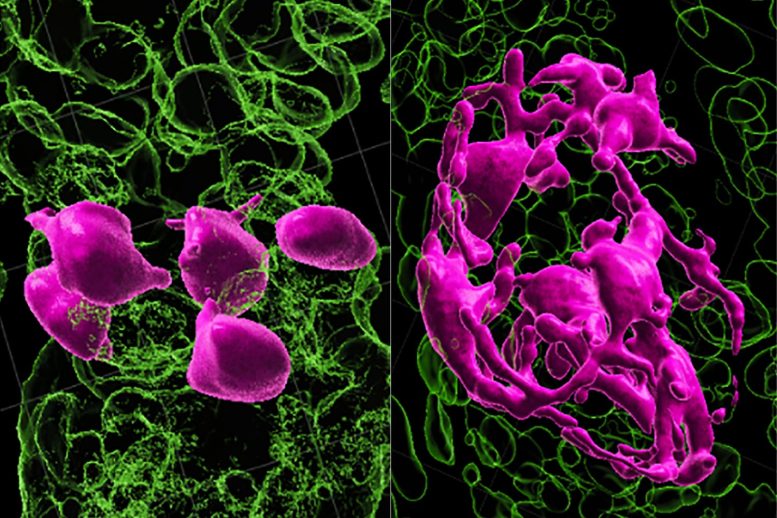
Hair-coloring stem cells (at left, in pink) need to be in the hair germ compartment in order to be activated (at right) to develop into pigment. Credit: Courtesy of Springer-Nature Publishing or the journal Nature
The researchers found that as hair ages, sheds, and then repeatedly grows back, increasing numbers of McSCs get stuck in the stem cell compartment called the hair follicle bulge. There, they remain, do not mature into the transit-amplifying state, and do not travel back to their original location in the germ compartment, where WNT proteins would have prodded them to regenerate into pigment cells.
“Our study adds to our basic understanding of how melanocyte stem cells work to color hair,” said study lead investigator Qi Sun, PhD, a postdoctoral fellow at NYU Langone Health. “The newfound mechanisms raise the possibility that the same fixed-positioning of melanocyte stem cells may exist in humans. If so, it presents a potential pathway for reversing or preventing the graying of human hair by helping jammed cells to move again between developing hair follicle compartments.”
Researchers say McSC plasticity is not present in other self-regenerating stem cells, such as those making up the hair follicle itself, which are known to move in only one direction along an established timeline as they mature. For example, transit-amplifying hair follicle cells never revert to their original stem cell state. This helps explain in part why hair can keep growing even while its pigmentation fails, says Sun.
Earlier work by the same research team at NYU showed that WNT signaling was needed to stimulate the McSCs to mature and produce pigment. That study had also shown that McSCs were many trillions of times less exposed to WNT signaling in the hair follicle bulge than in the hair germ compartment, which is situated directly below the bulge.
In the latest experiments in mice whose hair was physically aged by plucking and forced regrowth, the number of hair follicles with McSCs lodged in the follicle bulge increased from 15% before plucking to nearly half after forced aging. These cells remained incapable of regenerating or maturing into pigment-producing melanocytes.
The stuck McSCs, the researchers found, ceased their regenerative behavior as they were no longer exposed to much WNT signaling and hence their ability to produce pigment in new hair follicles, which continued to grow.
By contrast, other McSCs that continued to move back and forth between the follicle bulge and hair germ retained their ability to regenerate as McSCs, mature into melanocytes, and produce pigment over the entire study period of two years.
“It is the loss of chameleon-like function in melanocyte stem cells that may be responsible for graying and loss of hair color,” said study senior investigator Mayumi Ito, PhD, a professor in the Ronald O. Perelman Department of Dermatology and the Department of Cell Biology at NYU Langone Health.
“These findings suggest that melanocyte stem cell motility and reversible differentiation are key to keeping hair healthy and colored,” said Ito, who is also a professor in the Department of Cell Biology at NYU Langone.
Ito says the team has plans to investigate means of restoring motility of McSCs or of physically moving them back to their germ compartment, where they can produce pigment.
For the study, researchers used recent 3D-intravital-imaging and scRNA-seq techniques to track cells in almost real time as they aged and moved within each hair follicle.
Reference: “Dedifferentiation maintains melanocyte stem cells in a dynamic niche” by Qi Sun, Wendy Lee, Hai Hu, Tatsuya Ogawa, Sophie De Leon, Ioanna Katehis, Chae Ho Lim, Makoto Takeo, Michael Cammer, M. Mark Taketo, Denise L. Gay, Sarah E. Millar and Mayumi Ito, 19 April 2023, Nature.
DOI: 10.1038/s41586-023-05960-6
Funding for the study was provided by National Institutes of Health grants P30CA016087, S10OD021747, R01AR059768, R01AR074995, and U54CA263001; and Department of Defense grants W81XWH2110435 and W81XWH2110510.
Besides Sun and Ito, other NYU Langone researchers involved in this study are co-investigators Wendy Lee, Hai Hu, Tatsuya Ogawa, Sophie De Leon, Ioanna Katehis, Chae Ho Lim, Makoto Takeo, Michael Cammer, and Denise Gay. Other study co-investigators are M. Mark Taketo, at Kyoto University in Japan, and Sarah Millar, at Icahn School of Medicine at Mount Sinai in New York City.
Health - Latest - Google News
April 21, 2023 at 03:26PM
https://ift.tt/Al1V7g8
Why Does Hair Turn Gray? Research Uncovers Role of “Stuck” Stem Cells - SciTechDaily
Health - Latest - Google News
https://ift.tt/Ckjh7pu
Thursday, April 20, 2023
Scientists identify mind-body nexus in human brain - Nasdaq
[unable to retrieve full-text content]
- Scientists identify mind-body nexus in human brain Nasdaq
- A somato-cognitive action network alternates with effector regions in motor cortex Nature.com
- New data show that an old model of the brain's motor cortex is incomplete WUSF Public Media
- Why the Brain’s Connections to the Body Are Crisscrossed Quanta Magazine
- View Full Coverage on Google News
Health - Latest - Google News
April 20, 2023 at 01:44AM
https://ift.tt/5RyMQHn
Scientists identify mind-body nexus in human brain - Nasdaq
Health - Latest - Google News
https://ift.tt/85LVRcl
Featured Post
Measles is “growing global threat,” CDC tells doctors in alert message - Ars Technica
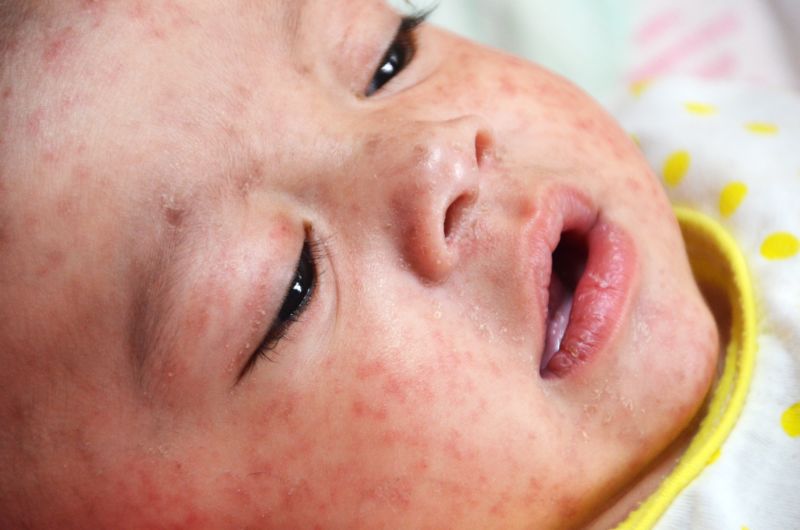
Enlarge / A baby with measles. CDC The Centers for Disease Control and Prevention is putting clinicians on alert about the growing r...
Popular Posts
-
Enlarge / A baby with measles. CDC The Centers for Disease Control and Prevention is putting clinicians on alert about the growing r...
-
With cases swelling in 49 states and hospitalizations on the rise, the U.S. is seeing a “pandemic of the unvaccinated” in parts of the c...
-
"Today's submission for Emergency Use Authorization of our investigational single-shot COVID-19 vaccine is a pivotal step toward ...


